Review: The Last Policeman

17316519
Review for "The Last Policeman" by Ben H. Winters (2013)

Rating: 3 out of 5 stars

The premise of this book is indeed an appealing one: solving a murder in a crumbling world that’s only months away from certain annihilation from an asteroid called Maia. Harry Palace is a rookie cop who encounters a insurance agent’s body hanging in a McDonald’s, quickly dismissed by his peers as another suicide, as there’s plenty of those to go around these days. Palace, however, suspects something more. He begins investigating the man’s death as a murder, and digs up far more than he bargained for.

Perhaps I expected more chaos, more action…I don’t know. What I got here was a depressing, uncompelling narrator and a ho-hum story. We understand that Palace is driven to do the right thing in a world that could care less, but I found his character unconvincing, unmovable, and just plain boring. The plot is also terribly slow, as there wasn’t enough meat in this story to keep me satisfied in waiting until the end. Then I get to the end and there’s the answer to the mystery and that’s just kinda…it. Blah.

I loved the setting of this story, which I why I won’t go lower than 3 stars here. I just wish the character here was meatier, more interesting. General curiosity draws me to the other two books in this series (this is the first in a trilogy and I’m a sucker for apocalyptic fiction) but right now I think I’ll chill on this one.

Review: Mexico

30120297
Review for "Mexico" by Josh Barkan (2017)
Rating: 1 out of 5 stars

Josh Barkan’s “Mexico” is a collection of short stories from people (mostly Americans) of all walks of life living and working around modern-day Mexico City. Running throughout these selections is the theme of violence, mostly from drug dealers, gangs, cartels, and other figures involved in the narcotics trade. In “The Kidnapping,” an American becomes a victim of a violent abduction by a cartel. “The Chef and El Chapo” is about a chef who is forced to cook for the infamous criminal, and “The Sharpshooter” is about a U.S. government agent on a secret mission sent to kill, well, you guessed it…a narco criminal.

Needless to say, I didn’t like this book. In today’s political climate just the mention of the word Mexico is used to connote all things wrong with immigration, the War on Drugs, the American economy, and life in general. Do we Yankees really need more scary stories about what a crime-laden, drug filled place Mexico is? I went into this volume of stories knowing that the majority of it would be about violence, but after reading it my opinion is the same. There’s nothing new here, just a lot of non-emotional storytelling about the dregs of society and the people caught in its grip. It’s yet another narrow, limited view of a multi-faceted country with beautiful and hardworking people, the majority of which are NOT a part of the narco trade.

And there was something else that bothered me…Josh Barkan is a white, Ivy League educated world traveler. The back flap tells us he lives in Mexico City, yet I’m not impressed with this fact. Although the book is titled Mexico, it’s main characters are white people in Mexico, who speak from a self-imposed position of privileged authority. The Mexicans in this volume are mere props, one-dimensional characters from which white folks learn their life lessons about the evils of world. It’s a colonialist’s wet dream, and I hated it.

Do yourself a favor and don’t read this.

Review: The Story of Vicente, Who Murdered His Mother, His Father, and His Sister: Life and Death in Juarez

I’ve been on a nonfiction reading kick lately. A little real life adventure never hurt anyone anyone, does it? Anyway, on to my next book…

25614446
Review for "The Story of Vicente, Who Murdered His Mother, His Father, and His Sister: Life and Death in Juarez" by Sandra Rodriguez Nieto (2015)

Rating: 3.5 out of 5 stars

True crime/investigative journalism book that uses the murder by a young man of his parents and sister to explore many of the issues that plague Juarez, the infamous Mexican border city that’s only miles away from El Paso, Texas. Only the first few chapters discuss the actual details of the crime and what happens to Vicente in the aftermath (he only got a measly five years in prison, btw). It’s not Vicente’s fate that drives this book as much as its overarching message: that when violence occurs in a place with impunity, it effects everyone–including a 16-year-old who decides to slaughter his family.

Nieto spends the majority of the book breaking down the rampant political corruption, cartel wars, gang conflicts, and the other cogs of the machine that are the cause of the epidemic violence that go on in Juarez. At the height of the violence in 2010, there were 20 homicides a day and 8 kidnappings. It’s pretty shocking stuff. Brutal kidnappings, dead bodies left in the street, in front of schools, in neighborhoods. Criminals that walk right out of prison because well, umm, the guards left the door open. Oops. There’s also a chapter that discusses the joke of a police department Juarez has. How does a city rack up thousands of murders in one year? It’s because they don’t even bother to investigate. Case received, case closed. Next…

I recommend this book for anyone interested in current issues, particularly in Mexico.

Review: Boy Erased

26109438
Review for "Boy Erased" by Garrard Conley (2016)

Rating: 4 out of 5 stars

Just finished this book. Wiping away the tears. Whew…my allergies.

This is a beautifully written book. From the first couple of pages I was completely enthralled, not wanting to do anything but turn to the next page. Garrard Conley certainly has a way with words, his beautiful sentences coming from a place of so much pain and isolation, sadness that I did not have to be an LGBTQ individual to understand, to feel in the very depths of my soul.

This story is all about Garrard, a boy growing up in a super religious Missionary Baptist family in Arkansas, the son of a pastor. From the time he is an adolescent, he knows he is gay. He tries to pray it away, to talk to God about it, all to no avail. When he is ‘outed’ to his parents by a phone call while at college, his parents suggest a ‘cure’ for his ‘problem.’ With nowhere else to turn, he attends several sessions of Love in Action, a “sexual re-orientation” program that uses ‘conversation therapy’ to change gays and lesbians to back to straight people.

This book is not a linear narrative. Scenes from Conley’s life are interpersed with his memories of ex-gay therapy, and a couple of times I found myself putting the book down and thinking to myself: do people really believe this shit? According to LIA, homosexuality is a sickness, a result of the past sins of our family members, sexual abuse, a lack of sports participation, subconscious effeminizing influences, and too much of our mother’s meddling. It’s crazy. But at no time does Conley demonize the people who clearly wronged him, he simply tells the story in a way that leaves you no choice but to listen and feel. I loved that about this book.

I’d recommend this book to people who are interested in a narrative of the intersectionality of LGBTQ identity and religion. I am a Christian, and even though I am of a progressive and inclusive mindset, I gained a much deeper understanding for LGBTQ individuals who grew up in deeply religious communities.

Review: The Postmortal

10673576
Review for "The Postmortal" by Drew Magary (2011)

Rating: 3 out of 5 stars

“The Postmortal” is an interesting lil’ science fiction novel with a dystopian slant (and I’m a sucker for anything dystopian, lemme tell ya). The premise of this book is what drew me to it: a world in which a cure is discovered for aging. With an injection, recipients will never age past the day they received their “cure,” and the only death they can anticipate will not be a natural one, but a violent one that they either bring to themselves or someone else brings upon them.

We follow one character, John, as he receives the cure in the beginning of the novel, sometime in his early 30’s. The book tracks his trajectory over the next 80+ years through his journal entries (apparently being shared with us from a time even farther in the future) as the society around him pretty much goes straight to hell. The cure for old age has deleterious effects on not only society, but the world as we see the fallout from the fact that people aren’t dying naturally anymore. The world becomes overpopulated, random violence and terrorism increases, resources become scarce, and people begin doing what’s known as “cycle” marriages. Sure it’s weird, but I liked this aspect of the book. If you’re into dystopian lit, as I’ve stated that I am, nothing fascinates you more than watching the planet inch itself toward doom. Seriously.

What I didn’t like was the main character, and really all of the characters in this book. Everyone felt rather flat and as bland as dishwater. Society is crumbling around them, yet none of the characters seemed to care, going about their daily business without alarm or feeling the slightest bit scared. As a reader, you’re far more invested in their future than they are, which doesn’t make for the best reading and completely disengaged me from this book.

Once again, this isn’t a bad read, but one I wouldn’t necessarily recommend if you’re into an all-around good read.

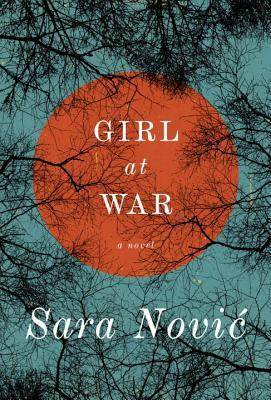
Review: Girl at War

23209971
Review for "Girl at War" by Sara Novic (2015)

Rating: 3 out of 5 stars

This book begins with a girl character at the dawn of the Croatian War for Independence, sometime in the early 90’s. Ana goes to school and spends the days with her friends as air strikes in her village become more frequent and news of impending destruction take over her parents’ fears. Eventually her sister’s illness forces the family to seek help beyond their country’s borders, and what follows after this is one of the most horrifying experiences that I’ve ever read about. In the tragedy’s aftermath, Ana leaves the country and finds her way to America.

The rest of this book was a bit of puzzle for me. As an adult, Ana’s tone is mostly cold and disengaged. While I can understand that the character’s detachment is an element of the story (as well as an effect of her war experiences), I just couldn’t embrace it. The writing is excellent, and I certainly learned more about Croatia than I knew in the past, but I came away from the book just feeling…I don’t know…empty. Like I was looking at a grand, beautiful picture, but not really a part of the emotions in which it was created in.

Three stars. I certainly will not rule out reading anything from this author in the future

Review: Difficult Women

30644520
Review for "Difficult Women" by Roxane Gay (2017)

Rating: 3 out of 5 stars

Lemme say this first: I love Roxane Gay. She’s a fearless writer, and has a great sense of humor on social media. I liked her collection of essays, Bad Feminist, and her novel, An Untamed State, was nothing short of sensational. When I got approved to read her latest book of short stories through NetGalley, I was absolutely thrilled.

Needless to say, this collection of stories is ummm…well, less than thrilling.

This book is hard to quantify. There are a lot of stories here (twenty-one, to be exact) and they range in length from a couple of pages to over twenty. Some of the stories use fantasy and elements of magical realism, others skip all of that and are very much rooted in reality. There are a lot of recurring themes in this book, many of which were highly disturbing to read about. For one, there is a lot of occurrences of rape in this book. A lot. Physical abuse and masochism are also prominent–scenes of not just women being arbitrarily beaten by the men in their lives, but women characters who actually want to be beaten, raped, abused, punished. It’s bizarre. And it’s in story after story here. After a while it just gets exhausting, but perhaps that was the whole point. I didn’t like it.

More prominent themes: the relationship between twins (male and female), siblings, desolate surroundings, interracial relationships, loss. There’s also a lot of sex. I repeat, a lot of sex. Just about every story has some pretty graphic sex content. Not that I care, but damn, Roxane, I didn’t think you rolled like that…lol.

I won’t go through all of the stories here but I will say that “I Will Follow You,” “Difficult Women,” and “Strange Gods” were probably my top three faves. Overall, this is three stars for me because I just found the themes and the characters far too bleak for me to connect with it. I didn’t care so much for the content as I would like to hear the conversation that will probably come up in circles who read this book. Either way, I’ll continue to read Ms. Roxane Gay, she’s definitely a talent to be reckoned with.

[Note: A free digital copy of this book was provided to me by the publisher, Grove Atlantic, and NetGalley in exchange for an honest review.]

Review: The Most Dangerous Place on Earth

 32737635
Review for "The Most Dangerous Place on Earth" by Lindsey Lee Johnson (to be published on 10 January 2017)

Rating: 4 out of 5 stars

Happy New Year!!! I’ve got a goal of 130 books this year, up from 125 from last year. It’s highly likely I’ll accomplish it, given my classes and my personal schedule. Of course, you guys will be along for the ride, getting all the best of my reading adventures!

Anywho, this book’s four stars. Solid.

This novel begins with a group of young people in the 8th grade living with their parents in a small enclave near San Francisco. They are children of privilege–not Park Avenue or Hollywood Hills rich–but they are definitely living the life of affluence with parents who work long hours in high paying jobs. They have nice homes and luxury cars, high academic expectations. Credit cards given to sons and daughters with no spending limits. As 8th graders, they are learning their place in the world, as well as establishing cliques and pecking orders, of which their classmate Tristan Bloch happens to be at the bottom of. This book follows the next several years of the lives of the students who eventually bully and cyber-harass Tristan to his suicide.

There are also teachers in this novel, and the story follows the stories of two in particular: Molly Nicoll, an idealistic, early twenty-something teacher fresh out of college who can’t wait to teach and get to know her students, and Mr. Ellison, a creep who also loves his students (literally). Miss Nicoll’s evolution throughout the course of her first year of teaching is interspersed throughout the book in short vignettes.

Each student has a chapter that is told from a third-person point of view. Although I liked hearing their voices and backstories, the kids here were nothing more than your classic stock characters in a typical high school drama. There’s the jock, the pretty girl, the bad boy, the plain Jane athlete, the whip-smart drug-dealing slacker, the hippie, and the boy overachiever. Interestingly, the boy overachiever (and the only minority character in the whole book) happened to be Asian. Because all Asians are super-smart, right? Gtfoh.

Despite the lack of character development, the writing here is pretty extraordinary. It’s a quick and engaging read that kept me engrossed for the entire time while reading it. I actually finished this book way ahead of schedule, just because I liked it so much.

Definitely worth a peep. Check it out!

[Note: A free digital copy was provided to me by the publisher, Random House, and NetGalley in exchange for an honest review.]

Review: Lotus

30078655
Review for "Lotus" by Lijia Zhang (to be published on 10 January 2017)
Rating: 3 out of 5 stars

‘Lotus’ is a buildungsroman of a young woman from present-day China. With her mother dead and her father living as an abusive drunk, Lotus dreams of a better life and leaves her rural village to seek work in one of the large factories on the coast. Nearly all of her money goes home to care for her younger brother, who also dreams of leaving the village and enrolling in college. When a fire breaks out at the factory, she does not return home but remains in the city and finds work as a ji, a prostitute, at a low-budget massage parlor.

Enter Bing, an older, middle aged photographer. He’s divorced with a young daughter. He begins taking photos of the ji he encounters in his ramshackle neighborhood and finds his calling in telling their stories to the world. One of the ji that he photographs is Lotus. Together they eventually form a relationship that transform both of their lives.

This story is told through the dual perspective of Lotus and Bing. Personally I liked Lotus’ chapters a lot better, they’re crisper and, in my opinion, a lot more interesting. Bing grows too as a person, though not in the same manner as Lotus. This novel documents how these young women, the ji navigate the perils of modern China–corrupt police, filial responsibility, their assigned roles as the lowest of the low in society.

There’s quite a few sex scenes in this book (ooh la la!), although I don’t think their purpose here is to titillate the reader. Although the main character’s work and experiences as a prostitute are emphasized, it’s not the bulk of the novel, which I liked. There’s also a lot of general scenes that could have been edited out just for clarity, though that’s forgivable for now (this is a galley copy, btw).

Three stars and a half stars here.

[Note: A free digital copy was provided by the publisher and NetGalley in exchange for an honest review.]

Review: Horrorstor

13129925
Review for "Horrorstor" by Grady Hendrix (2014)

Rating: 3.75 out of 5 stars

I worked in a department store for almost 3 years. You name it and I’ve seen it–screaming kids who ruin displays, rude customers, disgusting things found in dressing rooms, thieves, bosses that love to scream at you, and the hell that comes with the Worst Day of the Year (otherwise known to the average person as Black Friday). I’ve worked early mornings, late nights in retail. I’ve been in the store when they turn the lights off and the alarms on, and let’s face it: stores can be very creepy places.

Enter Horrorstor, a horror novel about the goings-on at Orsk, an Ikea knockoff furniture store in suburban Ohio. Amy is a ‘substandard’ performing retail drone summoned by her boss, Basil, to investigate the strange goings-on after dark on the sales floor. It’s a neat little book, with color photographs, catalogue drawings, diagrams, and descriptions of Scandinavian-sounding furniture. This is my second book by Grady Hendrix (the other being My Best Friend’s Exorcism) and he has a knack for just good ol’ plain, standard, cheap horror: cheesy dialogue, the girl who stupidly runs back into danger, etc. Nothing happens here that you don’t expect, so it’s all totally fun and readable because anyone who takes this book seriously is nuts.

3.75 just for the hell of it, because I’d definitely read this again. I’d frame this book if I could.