Review: The Heavenly Table

27245902

Review for “The Heavenly Table” by Donald Ray Pollock (2016)

Rating: 3 out of 5 stars

At this point in my reading life, I’ll read anything that Donald Ray Pollock writes. The tone of his writing is darkly refreshing, and his characters are always fascinatingly dysfunctional with just the right amount of humor so that you don’t take them too seriously. He’s a master of transgressive fiction, with the power to create people that manage to draw you in and repulse you at the same time.

“The Heavenly Table” is also one such novel. It is set in 1917, and features a farmer named Pearl and his three sons–Cane, Cob, and Chimney. Very early in the novel (and this is not a spoiler), Pearl dies and his three sons decide to strike out on their own dangerous path across the countryside. Meanwhile, the Fiddler family begins their own search for their wayward son, Eddie, who has run away from home. Both sets of characters eventually meet in a way that’s somewhat predictable, with dozens of other characters introduced in between. Typical of Pollock’s style, there are a plethora of other stories explored here: a homicidal barkeeper, a pimp who runs his business out of a barn, a Black male drifter by the name of Sugar, a outhouse inspector, a nefarious Army lieutenant, and so on.

As much as I wanted to like this, this book is not as good as his first novel, The Devil All the Time, and definitely not as good as his collection of short stories, Knockemstiff. For me, there are far too many characters that the plot became way too scattered and was worn so thin by the middle of the book that I found myself skimming pages until the end. Not the way I like to read, so this was a 3 for me. If you’re new to Donald Ray Pollock’s writing I would start with his other books first, they’re way more entertaining.

Review: The Devil All the Time

10108463

Review for “The Devil All the Time” by Donald Ray Pollock (2011)

Rating: 4.5 out of 5 stars

Even though this is only my second time reading Donald Ray Pollock, he’s quickly becoming one of my favorite writers. He continues to create such interesting casts of characters, and this one’s is no exception. This book is very much in the same vein as his first volume of short stories, Knockemstiff–poor, rural people in desperate situations. This book’s got a little bit of everything: a man who sacrifices animals and other roadkill to rid his wife of cancer, along with his morally conflicted son, who’s willing to sacrifice everything for a sense of peace. There’s a spider-eating preacher and his guitar-playing sidekick who are convinced they can raise people from the dead, and a murderous husband and wife duo that pick up male hitchhikers, torture and photograph them, and kill them.

The beginning of this novel starts off strong, but I had to admit that by the middle of the book I was a little hesitant to continue because wasn’t sure where this book was going. The characters don’t appear connected, other than their desolate settings. I am glad I was patient, because everything came together so spectacularly by the end that I couldn’t believe I was looking at the last page. The way the plot twists and tangles together is reminiscent of Cormac McCarthy’s No Country for Old Men, with characters on separate paths who manage to meet together dynamically by the book’s end.

I’m anxious to read more of Donald Ray Pollock’s writing. Four and a half stars, no complaints at all.

Review: Another Brooklyn

27213163

Review for “Another Brooklyn” by Jacqueline Woodson (2016)

Rating: 5 out of 5 stars

This is not just a novel. It’s poetry, it’s memory. It’s a testament to Black girlhood.

With events written in non-linear, prose style, Another Brooklyn is the story of August, a young academic who travels to her Brooklyn home to attend her father’s funeral. She runs into an old friend on a train and from there, you are transported back to specific memories of August’s childhood in the 1970’s. Brooklyn, we learn, was a place where she found the friendship of three other Black girls, each from a different home situation. There are memories of growing up without a mother, of DJ parties, of first love, and so many other things that to describe them all is to give this book away and not let you experience this great novel for yourself. My only complaint was that this book was not long enough. It’s a short (less than 200 pages), but I could have read Woodson’s gorgeous prose for another 200 pages, that’s how great this book is.

Another Brooklyn deserves all of the Top Ten lists and press it’s getting. A must read!

Review: How to Set a Fire and Why

25430304

Review for “How to Set a Fire and Why” by Jesse Ball (2016)

Rating: 4 out of 5 stars

Hey. It’s been a while. The fall semester has started. I’ve been reading, but for those who follow this site, I only give you my best reviews. That means if I read a book and can’t find anything to say about it or write a decent review, you’ll see nothing here.

Anywho, I think I’ve broken my dry spell with this one. This is such a nice, dark little read. I was definitely impressed.

Immediately the first thing you note about this book is that teenager Lucia Stanton has been dealt a really shitty hand in life. Her father is dead, the only memento she has of him is his Zippo lighter, which she clutches onto for dear life. Her mother is in a mental hospital with an unspecified mental illness in which she doesn’t recognize her own daughter. When the story opens, she has been expelled from her current high school for stabbing a boy with a pencil. The bright spot of this book is the relationship Lucia has with her aunt, with whom she finds acceptance, and together they squat in a tiny garage with one bed. Her aunt finds her another high school where she falls into favor with a group of kids who set fires for anarchist purposes.

The brilliance of this book is in the characterization of Lucia. She is a bundle of contradictions. She is cynical, whip smart, angry, and completely authentic. I normally don’t go for quirky, “philosophical” teen narrators (I’m probably one of the few people in the world that doesn’t find anything special about Holden Caulfield) but I LOVED Lucia’s voice. She rewrites her club’s arsonist manifesto, she plans big fires–and all of it makes perfect sense because her aunt is a proud anarchist, as was her mother. Hell-raising is one of the few things in which Lucia has as a family legacy. Lucia is self destructive, yet her unapologetic brand of self-destructiveness never grated on me or made me want to put the book down.

I feel like I can’t write enough to do this book justice. It’s engaging and smart. It’s written for adults, but I can definitely see its appeal as a YA novel.

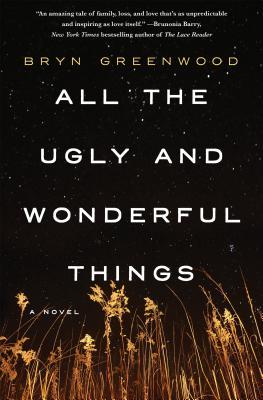
Review: All the Ugly and Wonderful Things

26114135

Review for “All the Ugly and Wonderful Things” by Bryn Greenwood (2016)

Rating: 2 out of 5 stars

I can’t get behind this book. Sorry.

It starts off somewhat promising: a young girl named Wavy and her little brother growing up in an abusive household with their shitty, meth-addicted parents who casually neglect them in search of their next fix. Wavy bounces between several family members and foster homes until she meets Kellen, a tattooed biker with a shady past who works in her father’s “business,” cooking and manufacturing methamphetamine. Kellen begins to look out and care for Wavy and her brother, and they eventually form a relationship.

This book spans about 15 years in Wavy’s life. There are a lot of different perspectives from those directly and indirectly involved with the main characters (teachers, relatives, etc) and a lot of variation between first and third person narratives–some I liked, others not so much. The writing was ok, but it lacked conciseness, making it feel it was way longer than its 353 pages. There was a quite a bit of drag in this novel for that reason, so I started skimming after the halfway point. Bleh.

Lemme also say this for those who don’t know: this is a love story. A love story that happens to take place between a little girl and, in this case, a grown man. They ‘fall in love’ when Wavy is about 8, and Kellen is in his 20’s. There are cringe-worthy sexual scenes that do take place when Wavy is a kid, and for that reason I should state that this is probably not a book for everyone. Ultimately, it’s not the book for me either. I won’t psychoanalyze the author’s reason for writing this, but I just felt the relationship dynamic was too weird for me to even begin to appreciate.

[Note: This book was provided to me by NetGalley and the publisher as a free digital copy in exchange for an honest review.]

Review: Guapa

25739241

Review for “Guapa” by Saleem Haddad (2016)

Rating: 4 out of 5 stars

Ever since I saw this book on a Buzzfeed “Books to Read in 2016” list earlier this year, I knew I had to get a hold of this. Despite having read many Middle Eastern lit books before, I have to admit that much of this region of the world is still a mystery to me–the people, their customs, ideology, and of course, their Islamic religion–and my curiosity always calls me back to this setting to find out more. When I learned that this book had a gay character, I knew I had struck gold here with a unique character in a unique, often misunderstood setting.

Guapa follows twenty-four hours in the life of Rasa, a young, twenty-something gay man in an unnamed Middle Eastern country. He lives with his domineering grandmother and works for a small company that provides language translation services to Westerners. At the beginning of this story, Rasa’s grandmother catches him in bed with his lover, Taymour, and Rasa flees the apartment he shares with her in shame. From a series of flashbacks and present-day storytelling, we learn about the numerous conflicts Rasa deals with: his mother’s abandonment when he was a child, his father’s death, his time in America and the beginnings of his political activism, various social upheavals in his home country. We also get a glimpse into his relationship with Maj, a politically aware drag queen who performs at a local underground gay bar. The story also examines Rasa’s coming to terms with his own sexuality at a young age, and finally, his relationship with Taymour.

This story is split into three parts. The first part deals with Rasa’s present, the second part goes back to his past. There was some momentum lost with the second part and a lot of boring details, although the upper hand was quickly gained again in the third and last section. I won’t tell you what the third part consists of (it’s too spoiler-y), other than to say that it brought the entire book into perspective.

I highly recommend this book, especially if you have an interest in how marginalized characters discover their identity in the face of cultural taboos. Not bad for a first time author. At all.

Review: Into the Forest

8103848

Review for “Into the Forest” by Jean Hegland (1998)

Rating: 4 out of 5 stars

This is a beautiful book. I haven’t seen the movie yet with Evan Rachel Wood and Ellen Page, but I know I’ll have to, because this one is full of Win, folks.

Into the Forest is the story of two teenaged sisters, Nell and Eva, who live in a house with their parents on a large plot of land deep in the redwood forests of California. They are several miles from their nearest neighbor, and 30 miles from the closest town. The sisters live an idyllic, sheltered existence–both are home schooled and allowed to explore the forest as they please. Eva practices ballet dancing, while Nell retreats into a world of books, hoping to get into Harvard.

Eventually, things begin to change. The power goes out, along with family’s phone and all other methods of communication. Gas and food become scarce. Stores and banks close. Mail delivery stops. People in town begin dying of illnesses, and antibiotics are ineffective. There are rumors of war and riots in the larger cities, and rumors, rumors of danger everywhere. The exact reason for society’s collapse is never completely explained, but the story arc of what’s happening around this family is certainly compelling, as I found myself over and over thinking: wow, this really could happen. Although we’re told these events are taking place in a ‘not so distant future,’ I couldn’t shake the feeling like all of this could happen tomorrow, and all it would take is a large-scale power grid collapse. It’s the perfect post-apocalyptic scenario, but with a non post-apocalyptic feel. Now the nerd in me would have enjoyed a little more info about the means to the world’s end, but this family was already isolated before all the bad stuff happened anyway. With this, you skip a lot of the post-apocalyptic hubbub and get more of a family drama, along with the brilliantly complicated relationship of these two sisters.

Some time after the outage, both of the girls’ parents die and the sisters are left to fend for themselves in their forest home. This section of the book is what made it 4 instead of 5 stars for me. There are a lot of technical details about plants and animals and gardening that honestly did not hold my attention, and I found myself skipping page after page. I completely understand the author’s need to make the story believable, as well as set up the narrative of how the girls survived with limited resources…but multiple paragraphs on squash harvesting and how to hunt and skin a wild boar? Umm, no thanks. But if I’m ever stuck in a redwood forest with nothing to eat, I’ll reach for this book…

Overall, I love how lyrical this book was. I never lost the imagery of a lush, green forest with huge trees and two girls going at it alone. The story is told by Nell through a journal and there are no chapter breaks, but I didn’t care. I wasn’t bothered by the open ending either. There was one scene that was kinda icky, but I’ll let it go for now. Hopefully it won’t be in the movie. Hopefully.

If you’re going to see the movie, please read this book. If you’re not going to see the movie, read this book anyway. Now if you’ll excuse me while I binge watch episodes of Doomsday Preppers…

Review: Loving Donovan

21535387

Review for “Loving Donovan” by Bernice McFadden (2015)

Rating: 4 out of 5 stars

This is a male-female love story with a unique structure–a section for “Her” that follows the female character, Campbell, from childhood to young adulthood; another for “Him” that follows the male character, Donovan, for roughly the same period in his life, and finally a section for “Them,” that documents Campbell and Donovan’s romance.

First off, there are no secrets in this book. We know from the first page that this is a couple that’s doomed and ultimately not going to work out. This is not the story of what happens in the end, but how and why each character gets there. Each in their 30’s, both characters are wounded, hurt, and just plain wrong for one another. Both have had lives full of disappointment–abuse, adultery, divorce–and each character’s family and friends’ lives don’t fare much better. It’s a uniquely African American story about a circle of dysfunction; a generational curse. It’s a reminder that each of us carries around a personal history,’ghosts’ from the past, that ultimately influences the success or failure of future romantic relationships.

It’s an engrossing story, but I wish it had gone a little more in-depth. The ending felt kinda rushed and another 30 pages of detail would not have spoiled this book in the least. It’s a decent book, which never stopped moving from start to finish. As I’ve said in some other reviews I’ll be publishing here soon, Bernice McFadden is quickly becoming one of my favorite writers. This book doesn’t disappoint.

Review: Dear Nobody: The True Diary of Mary Rose

18704925

Review for “Dear Nobody: The True Diary of Mary Rose” by Gillian McCain and Legs McNeil (2014)

Rating: 4 out of 5 stars

Dear Nobody was published after the 1999 death of the author, a girl named Mary Rose, who reportedly kept a 600+ page journal. This condensed version of her diaries chronicle roughly about 3 years of her life in harrowing detail as she struggles with low self esteem, drug addiction, sexual assaults, and living with cystic fibrosis. As a writer I was impressed with her ideas, the complicated pattern of her thoughts, the intricate way she expressed them. There’s not much of a narrative flow here, but that’s ok. I came into this fully expecting for Mary Rose to be happy one moment, and completely subdued in the next. Welcome to adolescence, folks…

With that said, this journal had a lot of extremely disturbing content. Mary Rose had a shitty home life, shitty parents, and no one to talk to about it. For 75% of the book, she’s either drunk or thinking about drinking, high or under the influence of some other drug. Her addiction is sad to watch. You watch her move from tragedy to tragedy in an increasing fog of drugs and alcohol and in the company of people (including her own family) who could have cared less about her. In between all of the drama she’s constantly in and out the hospital, fighting infections and just plain fighting for her life. You desperately want to hug her, to help her, to stop her from falling into an abyss. Whew.

I felt like the book was realistic, but I’m not quite sure if I believe that what’s presented here is exactly as she wrote it. The spelling is perfect, there’s no typos. Although the collaborators who put the book together claim that not a single word of text was changed, I have a hard time believing that it wasn’t touched by an editor in some form or another. If she was in the impaired mental state that she constantly refers to being in, I’m sure there’s a hiccup somewhere. But I’ll digress…

Anyway, do read this. This book is the Go Ask Alice for all of us who laughed and rolled our eyes 25 years ago at the end of that book and were still waiting for a real journal to happen out there. Look no further.