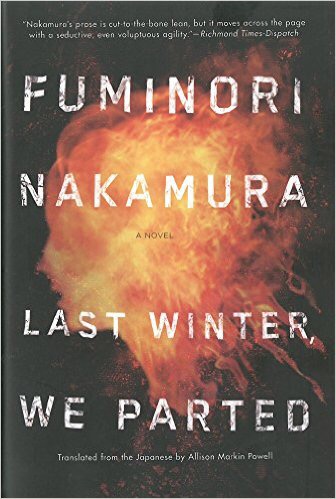
Review: Last Winter, We Parted

  
Review for “Last Winter, We Parted” by Fuminori Nakamura (2014)

Rating: 2 out of 5 stars

I love Japanese fiction–it’s dark, mysterious, poetic. It takes risks, it terrifies, it ponders the universe. It pushes you out of your comfort zone of comfortable characters and predictable plots. I try to read a diverse selection of literature, but I do admit I have a soft spot for Japanese writers.

Unfortunately, I didn’t like this book. The plot is alright enough: a writer goes to interview a convicted killer, a renowned photographer named Kiharazaka who is on death row for the murder of two women by setting them ablaze. His investigation leads him to a doll maker who makes life sized dolls (weird), to an underground group of life sized doll lovers (weirder), and eventually into a sexual relationship with the condemned man’s sister (the weirdest). He tries to back out of the project, but he is so obsessed by the photographer’s story that he can’t wrench himself free. There is a twist at the end that I won’t give away–other than to say that it’s kookier than a David Lynch movie, and I’ve watched a lot of those. 

Even though the writer was obsessed with Kiharazaka’s story, I wasn’t. There is nothing in this book to engage you, the writing is bland and lacks variety. If I had a stiff drink for every time the author writes that the main character has to “light a cigarette,” “smile,” or “look concerned” I’d be more than three sheets to the wind by page 25. The characters move about the story as lifeless, one dimensional beings. There is an attempt by the author to create a back story, but it’s nothing short of dull and just plain confusing. The structure of this novel also presents a problem, because it mixes the protagonist’s first person narration with Kiharazaka’s narration, as well as related documents and diaries from other characters. It was damn near impossible for me to figure out who was saying what. 

The only reason I didn’t give this book one star is because I recognize that this book was translated from Japanese. This is often the problem with foreign novels, some styles and nuances of the story are simply not going to be carried over and understood, no matter how sincere the translator’s intention. I understand the author’s main point behind this book, but the poor execution here can’t be ignored. Would not read again.

Review: Vinegar Hill

  
Review for A. Manette Ansay’s “Vinegar Hill” (1994)

Rating: 4 out of 5 stars

I am going to start this review by saying that the fact that “Vinegar Hill” was an Oprah’s Book Club pick didn’t deter me from reading it. I think a lot of people are passing up some great books because of the stigma of bad quality that surrounds her book club, even to this day. I’ve read several of her club offerings and found them to be hit or miss–much in the same fashion as any random book you’d find in literary fiction. Do people seriously expect EVERY book that Oprah recommends will be great? Perhaps, due to her larger than life persona, we expect too much of Oprah. Books are still a matter of personal preference, and Oprah’s tastes don’t always have to match mine. Lol, please…

Anyway, I actually really liked this book. A lot of reviewers use the words “bleak” and “depressing” to describe the tone of this book, and these words are very accurate. The story centers on Ellen and James, a married couple with two children, who fall on hard financial times and are forced to move in with James’ parents. Their home is a harsh, loveless place, where secrets are kept and Fritz (James’ father) rules through cruelty and intimidation. The whole time I read this I could feel the tension in the house building and building until Ellen makes a drastic choice and you’re able to find some sense of relief at the end. 

I also thought Ms. Ansay did an excellent job with the setting of this book. Religion, specifically the family’s strict, traditional Catholic faith, also played an important role in this story. Back in 1972, people simply did not divorce. Women were responsible for maintaining their household, no matter how miserable they were and that was it. This book explores this dynamic, and it affected me deeply, even though some parts were tough to read. I’m glad the author made this a short book, if it were 50 pages longer I couldn’t see myself continuing to endure the character’s suffering. 

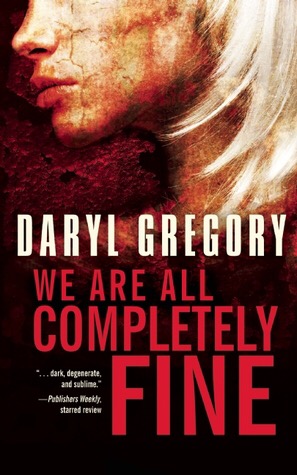
Review: We Are All Completely Fine

  
Review for “We Are All Completely Fine” by Daryl Gregory (2014)

Rating: 2 out of 5 stars

Every now and then I need a good horror story. I just want to pick up a book and be whisked away to a dark place that no one likes to talk about. I don’t care if the horror is supernatural or a reality-based psychological freak out. I just, well…every so often, like to be scared. And who doesn’t? 

This book somewhat delivers on this. I want to give this a higher rating but I can’t. The idea of this book is a great one: a therapy support for survivors of traumatic events. No one really talks about the people who survive trauma, just the event itself or the inner workings of people who are guilty of doing it. I also like that Daryl Gregory manages to discuss each character’s horrific experience without depressing us too much. 

The execution of this, however, is not so great. The point of view of each of the therapy group members shifted entirely too much, almost to where I couldn’t tell from one section to the next which person was talking. One moment it’s Jan, the group director, the next was Harrison, a group member, so on and so forth. I didn’t get the ending either. Way too abrupt and convoluted. Certain questions are never answered, too many plot strings left dangling. But maybe it’s just me.

I understand that this is a novella, but I think this topic would have fit better into a novel format. I still feel like it’s unfinished, like Mr. Gregory only gave us half of a cup when the glass should have been full. You never really get to know the characters, because it’s time to move on to another perspective, another time, another place. It’s quick read for people who enjoy horror books, or people who have survived horrific events.

Now Accepting Review Requests!

So I’ve decided to complicate my life here and start taking review requests. If you’re truly interested I’d encourage you to email first to discuss what your book is about, what stage of the publishing process it is in, and what kind of review you are looking for. When I read I take detailed notes and I usually begin writing the review right after I read it. I have no patience for underdeveloped characters and plot holes. Often times I find that when people give me something to critique they will claim that they want an “honest” opinion, but when detailed, constructive criticism is given, they don’t want it. Or the opposite scenario: they’ll listen to what you have to say and later on give you a published copy with the same questionable content still in there, flashing like a neon sign. Almost as if you wasted your time to begin with critiquing it in the first place. Personally I welcome all criticism if I ask for it; I would much rather a reviewer tell me what was wrong with my book before it went to print then have people post ridiculous things on Amazon.com about it, you know?

The details of my review policy are on the appropriate page.

Review: The Bees

 
Review for “The Bees” by Laline Paull (2014)

Rating: 4 out of 5 stars

 Accept. Obey. Serve. 

Only the Queen May Breed.

These are the mottoes of the hive in Laline Paul’s “The Bees,” a world in which Flora 717, a sanitation worker and the lowest class in the hierarchy of her hive, is required to follow wholeheartedly or she faces certain death. As we witness Flora’s birth in the first few pages, we immediately know that she is special, different from the hundreds of other low level bees in her hive. Flora discovers early on that she can speak, that she produces Flow (an important nourishing substance to feed larvae) and that she possesses another exceptional secret ability that sets her apart from all of her sisters (all the bees in a hive are female). Throughout the book Flora overcomes great challenges (rain, foraging, wasps, crows) to conceal her gift from the those that threaten her existence. 

All in all, I liked this book. And I don’t even like bees. I found myself awestruck by the many things I learned about these fascinating creatures, as I never knew bees’ lives were so complex. This novel was a drastic departure from what I normally read, because I typically don’t go for stories that feature animal characters. Paull’s writing, however, worked beautifully here. Bees became less scary and “human” for me. I felt genuine happiness when Flora and her kin survived to fight another day, and (dare I say it) sadness when one of the little buggers around her died. By the end of this book I remember thinking: Wow, I am officially a bee sympathizer now… 

Comparisons to “The Handmaid’s Tale” will be inevitable here. Whether the author intended to or not, you will find all of the earmarks of a dystopian fiction novel here. The constant repetition of the “accept, obey, serve” motto is at the center of the Hive Mind. There’s thought reading, social control, as well as questions and considerations surrounding reproductive freedom to ponder. All in all, this is a thoroughly enjoyable read that I highly recommend.

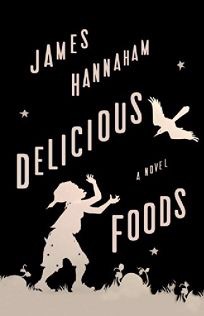
Review: Delicious Foods


Review for “Delicious Foods” by James Hannaham (2015)

Rating: 5 of 5 stars

[*deep breath*]

After I finished this book I lay awake staring at the ceiling for 30 minutes, thinking: if this book doesn’t win an award this year I don’t know what the hell people think good literature is.

I wasn’t sure what to expect with this book. I knew its main theme was the devastating effects of crack cocaine, but had no idea of what kind of ride this book would take me on. The first chapter completely jars you out of any sense of comfort with its brutality; the rest is deep, slow burn of emotion. This was not a quick read for me. It took a while to get used to the narration of “Scotty,” (a.k.a crack cocaine) but once I did I found myself reading and re-reading those chapters, just to experience the rhythm and hip-ness of the language once more, and to laugh (inappropriately, of course) at its narrative inclusion in this book. I kept waiting for Scotty’s narration to wane or sound ridiculous, but it never did. At times I had to pause and ask myself if it was really crack “talking” and not just another person in the book. Yes, it was THAT good.

I have to admit that the emotion of this book was, at times, too much for me to handle. Young Eddie is eleven years old when he discovers his mother is missing and begins to search, quite literally, through the depths of Hell to find her. My son is also eleven years old, and so many times in the book I found myself so overwhelmed with the image of my own child roaming the streets at night in my absence that I had to metaphorically take a deep breath and gather my bearings before I could continue. My feelings for Darlene and the choices she made throughout the novel alternated between full on rage and absolute pity, I was brought to tears too many times to count here. 

This book will break your heart. Very few books have the power to do this to me, I pride myself on having a heart and a stomach for just about anything. There wasn’t a single character that wasn’t real or a single word that’s wasted here. So well written, emotionally gripping. I loved every minute of this book. Highly recommended.

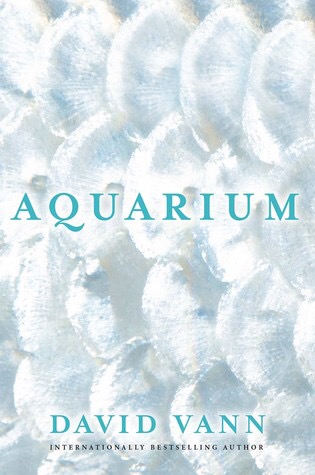
Review: Aquarium

Review for “Aquarium” by David Vann

Rating: 3.5 out of 5 stars

This book hits you like a punch to the gut. The words are beautiful, but man, when I finished, my head hurt.

I’m going to try to do this review without giving away TOO much of the book, so pardon me…

Caitlin is a twelve year old Seattle girl living with her single mother, a dockworker. Her mother can’t afford child care, so Caitlin spends each afternoon after school at the local aquarium. She meets an old man there and they become friends, bonding over their love of fish. It is later revealed that Caitlin and the old man share a connection that opens a deep wound in Caitlin’s mother’s psyche. She finds herself living in fear of her mother’s rage, as well as losing everything she loves in the process.

I will say this as well: a large part of this book was extremely disturbing to read. Caitlin is emotionally and physically battered in a way that, after pages upon of descriptions of this, I just wanted to scream “STOP! PLEASE! NO MORE!” I understood her mother’s rage, but felt it was a bit over the top, so much so that any connection of sympathy toward her mother at the end was impossible. Perhaps this was exactly the point though, how easy it is for one to take their cruelty out on another, especially upon those who are far more vulnerable.

I imagine this isn’t the book for everyone. While I enjoyed the color pictures and the descriptions of fish (I’m an aquarium keeper too) I don’t think I would want to read another page of this had it been any longer than it was.

Review: An Untamed State


Review for “An Untamed State” by Roxane Gay

Rating: 4 out of 5 stars

This book really touched me. After finishing it I lay awake for several hours, just thinking about the raw reality of it over and over.. Very few books have the power to do that to me, and Roxane Gay is a sensational writer that captures your emotions with her first novel.

It goes without mentioning that this was not an easy read. It’s one of those books that you read for a while, take a breather, and, if you can stomach it, you dive in and take another plunge. I read this book in about four sittings, partly to get the suspense over with and partly to just end it–the terror, the waiting, the feeling like you are stuck in a cage and can’t breathe. You are fully there with Mirielle as she is kidnapped by armed men in on a visit to her native Port-au-Prince and held captive for thirteen days. What takes place over those thirteen days are some of the most terrifying experiences I’ve ever read. Mirielle is beaten, raped repeatedly, and tortured by her kidnappers after her wealthy father refuses to pay her ransom in some of the most cruelest ways imaginable. The disturbing content of this book could have easily allowed the author to venture down the “torture porn” route–lots of unnecessary, graphic details of violence, rape, and/or abuse that does nothing to develop character but only serves to shock an audience–but thankfully, Ms. Gay doesn’t go there. She does describe what happens to Mirielle in vivid detail at first but after that, manages to hint at specific incidents. I want to thank her for this, because without some kind of restraint on the part of the author I don’t think I would have been able to finish this book. 

Interspersed throughout Mirielle’s harrowing ordeal are flashbacks of Mirielle’s life with her family, her husband, and her career. At times the flashbacks were a wee bit long and unfocused, but, all in all, completely necessary for the story. Mirielle is a complex character, and the second half of the book deals with her life after the kidnapping. The writing here is a lot sharper, which I liked. Mirielle’s struggle to regain some semblance of normalcy is realistic and honest, and Gay doesn’t flinch from the jagged terrain of her recovery. Eventually one person is able to reach Mirielle, and it’s not who you expect. All in all, it added a very nice twist.

Roxane Gay dedicates his novel “to all women” and this dedication is fittingly appropriate, as this book lays bare the plight of women and their struggles. Not a pretty read, but a necessary one. Loved this!

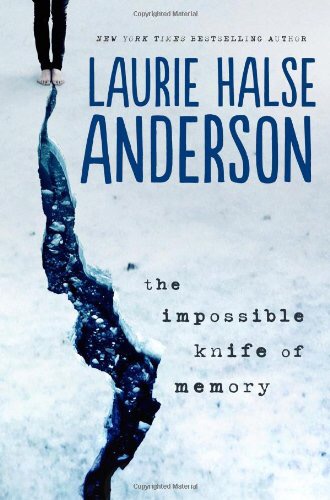
Review: The Impossible Knife of Memory


Review for “The Impossible Knife of Memory” by Laurie Halse Anderson

Rating: 2 out of 5 stars

Not a terrible book, but a book that felt very wrong to me, especially as the spouse of a PTSD sufferer. 

My husband is a combat veteran. He served in the Air Force for almost 20 years, and in that time he served 4 tours overseas, including one in Kuwait (Desert Storm) and one in Iraq. I know about the nightmares, the alcohol, the depression, the silences, etc. I don’t have a problem with the author’s choice to talk about PTSD in a young adult novel, but the way she presents the narrative–through the eyes of an annoying and overly angry 17 year old girl–was completely disappointing. 

The characterization of the main character, Hayley, is at the heart of everything that’s wrong with this book. She is cold, close-minded, and judgmental of nearly EVERYBODY she comes into contact with. She hates everything and everyone–teachers, people in authority, girls, boys, kids at school she perceives to be better off than she is, school, life, her dad, her dad’s girlfriend. In her opinion, people are either “freaks” or “zombies” and there is no in between. I understand that Hayley has been through a lot with her dad and has a shitty attitude for that reason, but she was so over-the-top angry about everything and everyone that she was completely unrelatable and hard to sympathize with. She did have one female friend, Gracie, but throughout the book I wondered how they became or even how they stayed friends, given how hateful she was. Which brings me to another issue I had with this book…Hayley’s boyfriend Finn. I just didn’t get him at all. They have a very awkward romance and throughout the entire story she never really stops being bitchy towards him. He begs her to write for the school paper (which never materializes), follows her, won’t take no for an answer until he eventually just…stays. There’s no rhyme or reason to their relationship, or any discernible reason why he’s so intent on being with her. Although their courtship is somewhat cute, it just didn’t seem realistic to me.

Another underlying current I didn’t like was the fact that Hayley spends a large portion of the novel hating her dad’s girlfriend Trish for a reason that’s never fully explained or elaborated on. While it is revealed that she was a drunk who walked out on Hayley and her dad while he was overseas, the same flashbacks reveal her father to be an abusive, alcoholic shithead who put up his fair share of crap in the relationship too. So what if she left? I wanted to scream at this girl. She had every right to leave. At least she got rid of her drinking problem and thought enough about you to come back and try to make things right. No bueno though…it just comes off as yet more woman-hate spewed by a completely inept and poorly crafted character. 

This book was nearly 400 pages but should have been 200. Needless drama and angry brooding about a subject that got way too sanitized in the process. I loved Laurie Halse Anderson’s ‘Speak’, but this didn’t come close.

Review: Mira Corpora

IMG_0153

Review for “Mira Corpora” by Jeff Jackson
Rating: None

I won’t rate this book because ten minutes after I have finished reading it I am still not exactly sure of what I’ve read. Perhaps knowing what I read is not the author’s point, or maybe the big question mark I have here is exactly THE point, because it kept me intrigued long enough to sit through 186 pages, only to sit in a stunned silence when it was over, staring at the cover like WTF?

Eventually I will probably have read this again to gather up the (rather large) pieces I missed, but I can say that this is a very very unusual novel with a style that seems more like a Harmony Korine film than a book. There are weird people, weirder places (the main character spends a LOT of time in the woods), and the major scenes from the characters’ life is broken up into sections with quotes. There are also a lot of times in the book where I could not differentiate between the character’s dreams and his reality, they blended so perfectly that the whole story had an almost ethereal kinda quality to it. Very cool.

I would read this book if you are interested something different, far outside of the mainstream confines of the NY Times bestseller.