Review: Livia Lone

29942174

Review for “Livia Lone” by Barry Eisler (to be published on 24 Oct 2016)

Rating: 4 out of 5 stars

I’m not sure what drew me to this book on NetGalley. Perhaps it was the dragon with the lady’s picture superimposed on the cover, or the description of a bad ass woman character that held some kind of promise. As soon as I got a hold of this book, I couldn’t let it go.

Livia Lone is not a woman I’d want to meet in a dark alley. Beneath an attractive exterior, she’s a Seattle PD sex crimes investigator, a jiu jitsu expert, and a motorcycle enthusiast. She’s also a killer, hunting down rapists at night to extract a form of justice that was denied to her as a child. In flashbacks, we learn she was once known as Labee, a girl from a remote hill country in Thailand. After her and her younger sister were sold by their parents to human traffickers, they endure a horrific ordeal in a shipping container and wind up in America, where Labee is separated from her sister and adopted by a local businessman. Her nightmare doesn’t end in America, however, as the events that take place shape her life over the next several years in a dramatic way.

I loved reading about Livia. She’s reminiscent of Lizbeth Salander, an outcast riding on her motorcycle. As she searches for her sister outside of her job and kicks ass in the process, I couldn’t help but to root for her. It’s a disturbing read, and the author’s thorough research into the topic of sex abuse and human trafficking really shows. Even though there were a lot of graphic scenes, I still found the story compelling enough to continue without skipping any parts. I would be excited to continue to read about Livia Lone, as I hope this is the beginning of another series character.

[Note: Thanks to NetGalley and the publisher, Thomas & Mercer, for a free digital copy of this book in exchange for an honest review.]
Review: 13 Ways of Looking at a Fat Girl

25716567

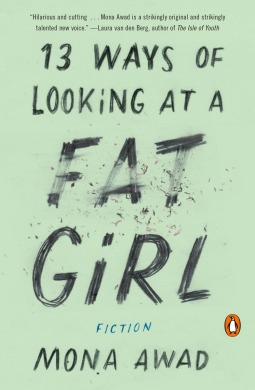
Review for “13 Ways of Looking at a Fat Girl” by Mona Awad (2016)

Rating: 4 out of 5 stars

This book had been on my radar for a while but was never available at the library. When I finally spotted this on the “New Reads” shelf a couple of weeks ago, I jumped at the chance to finally read it.

This novel is composed of interconnected short stories about Lizzie, an insecure young woman whom we follow from her teen years all the way to adulthood. Her life is marred by struggles with dieting, weight gain, weight loss, and body image. What is fascinating about this book is that the title is appropriately fitting, each of the 13 stories has a different perspective, or way of ‘looking’ at the main character: some by Lizzie herself, one by a boyfriend, yet another by her husband.

Mona Awad gives Lizzie one of the most honest voices that I’ve heard in a while. She never holds back and her thoughts were refreshingly honest while making me laugh out loud at the same time. I don’t think you have to be a woman, or even struggling with weight to take something away from this book. I felt her pain, particularly when it came to her need for acceptance from the world around her. There are no happy endings or ‘good’ characters, just real people on paper. I loved this.

This book isn’t perfect though. The first half documents Lizzie’s struggle with her weight, which was much more insightfully written than the second half, which focuses on Lizzie’s life after she loses weight. It’s still good stuff, but momentum is lost and second half doesn’t quite have the depth or the magic of the first. Do still read this, however. It’s powerful, engaging writing, and Mona Awad is a writer to watch!

Review: The Way I Used to Be

23546634

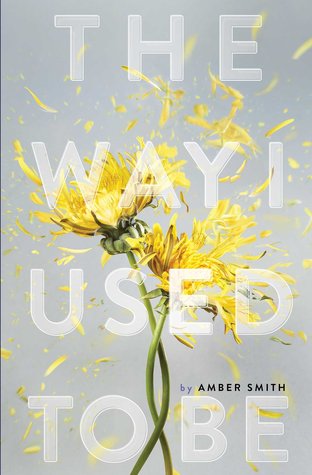
Review for “The Way I Used to Be” by Amber Smith (2016)

Rating: 3 out of 5 stars

As you’ve probably already heard, this is a book about the aftermath of a rape/sexual assault. It joins the plethora of other recent YA books I’ve read over the past few years about this very same subject: Laurie Halse Anderson’s “Speak,” Louise O’Neill’s “Asking for It,” and “Exit, Pursued by a Bear” by E.K. Johnston. Each book takes the female victim’s perspective in a different direction, with very different results and conclusions.

It took me almost 2 months to read this book. This is partly due to my horrible case of reading ADD (I’m always book-switching) and partly because this was absolutely exhausting to read. When the book opens, we meet Eden, a likable 14-year-old girl who is viciously raped by a friend of her older brother. She tells no one of the incident. We follow her over the next four years of high school as she tries to make sense of her assault by becoming more and more rebellious–sleeping around, drinking, using drugs, fighting with her parents. While these things should have kept me interested and on the edge of my seat, they didn’t. Instead of wanting to reach out to hug her, I wanted to grab her and shake her.

Any therapist will tell you that there’s a range of victim responses to the trauma of rape and sexual assault. Some may become withdrawn (Melinda from Laurie Halse Anderson’s “Speak” stops talking), while others ‘act out’ with rebellious, angry behavior, as with the character of this book. Knowing this, however, doesn’t make reading about it any easier. I tried to suspend my judgements of Eden for this reason but each time I went to open it, it was more sex, more drugs, more drinking, more yelling at her parents about what glasses she wants to wear. Watching her downward spiral was truly frustrating, mind-numbing, and exhausting.

There is some hint of a healing process in the story, but it’s a very brief sliver at the end. I wish there had been more of this.

This is a great debut. It’s worth reading, but there’s no way I’d ever re-read this.

Review: The Heavenly Table

27245902

Review for “The Heavenly Table” by Donald Ray Pollock (2016)

Rating: 3 out of 5 stars

At this point in my reading life, I’ll read anything that Donald Ray Pollock writes. The tone of his writing is darkly refreshing, and his characters are always fascinatingly dysfunctional with just the right amount of humor so that you don’t take them too seriously. He’s a master of transgressive fiction, with the power to create people that manage to draw you in and repulse you at the same time.

“The Heavenly Table” is also one such novel. It is set in 1917, and features a farmer named Pearl and his three sons–Cane, Cob, and Chimney. Very early in the novel (and this is not a spoiler), Pearl dies and his three sons decide to strike out on their own dangerous path across the countryside. Meanwhile, the Fiddler family begins their own search for their wayward son, Eddie, who has run away from home. Both sets of characters eventually meet in a way that’s somewhat predictable, with dozens of other characters introduced in between. Typical of Pollock’s style, there are a plethora of other stories explored here: a homicidal barkeeper, a pimp who runs his business out of a barn, a Black male drifter by the name of Sugar, a outhouse inspector, a nefarious Army lieutenant, and so on.

As much as I wanted to like this, this book is not as good as his first novel, The Devil All the Time, and definitely not as good as his collection of short stories, Knockemstiff. For me, there are far too many characters that the plot became way too scattered and was worn so thin by the middle of the book that I found myself skimming pages until the end. Not the way I like to read, so this was a 3 for me. If you’re new to Donald Ray Pollock’s writing I would start with his other books first, they’re way more entertaining.

Review: The Devil All the Time

10108463

Review for “The Devil All the Time” by Donald Ray Pollock (2011)

Rating: 4.5 out of 5 stars

Even though this is only my second time reading Donald Ray Pollock, he’s quickly becoming one of my favorite writers. He continues to create such interesting casts of characters, and this one’s is no exception. This book is very much in the same vein as his first volume of short stories, Knockemstiff–poor, rural people in desperate situations. This book’s got a little bit of everything: a man who sacrifices animals and other roadkill to rid his wife of cancer, along with his morally conflicted son, who’s willing to sacrifice everything for a sense of peace. There’s a spider-eating preacher and his guitar-playing sidekick who are convinced they can raise people from the dead, and a murderous husband and wife duo that pick up male hitchhikers, torture and photograph them, and kill them.

The beginning of this novel starts off strong, but I had to admit that by the middle of the book I was a little hesitant to continue because wasn’t sure where this book was going. The characters don’t appear connected, other than their desolate settings. I am glad I was patient, because everything came together so spectacularly by the end that I couldn’t believe I was looking at the last page. The way the plot twists and tangles together is reminiscent of Cormac McCarthy’s No Country for Old Men, with characters on separate paths who manage to meet together dynamically by the book’s end.

I’m anxious to read more of Donald Ray Pollock’s writing. Four and a half stars, no complaints at all.

Review: Another Brooklyn

27213163

Review for “Another Brooklyn” by Jacqueline Woodson (2016)

Rating: 5 out of 5 stars

This is not just a novel. It’s poetry, it’s memory. It’s a testament to Black girlhood.

With events written in non-linear, prose style, Another Brooklyn is the story of August, a young academic who travels to her Brooklyn home to attend her father’s funeral. She runs into an old friend on a train and from there, you are transported back to specific memories of August’s childhood in the 1970’s. Brooklyn, we learn, was a place where she found the friendship of three other Black girls, each from a different home situation. There are memories of growing up without a mother, of DJ parties, of first love, and so many other things that to describe them all is to give this book away and not let you experience this great novel for yourself. My only complaint was that this book was not long enough. It’s a short (less than 200 pages), but I could have read Woodson’s gorgeous prose for another 200 pages, that’s how great this book is.

Another Brooklyn deserves all of the Top Ten lists and press it’s getting. A must read!

Review: How to Set a Fire and Why

25430304

Review for “How to Set a Fire and Why” by Jesse Ball (2016)

Rating: 4 out of 5 stars

Hey. It’s been a while. The fall semester has started. I’ve been reading, but for those who follow this site, I only give you my best reviews. That means if I read a book and can’t find anything to say about it or write a decent review, you’ll see nothing here.

Anywho, I think I’ve broken my dry spell with this one. This is such a nice, dark little read. I was definitely impressed.

Immediately the first thing you note about this book is that teenager Lucia Stanton has been dealt a really shitty hand in life. Her father is dead, the only memento she has of him is his Zippo lighter, which she clutches onto for dear life. Her mother is in a mental hospital with an unspecified mental illness in which she doesn’t recognize her own daughter. When the story opens, she has been expelled from her current high school for stabbing a boy with a pencil. The bright spot of this book is the relationship Lucia has with her aunt, with whom she finds acceptance, and together they squat in a tiny garage with one bed. Her aunt finds her another high school where she falls into favor with a group of kids who set fires for anarchist purposes.

The brilliance of this book is in the characterization of Lucia. She is a bundle of contradictions. She is cynical, whip smart, angry, and completely authentic. I normally don’t go for quirky, “philosophical” teen narrators (I’m probably one of the few people in the world that doesn’t find anything special about Holden Caulfield) but I LOVED Lucia’s voice. She rewrites her club’s arsonist manifesto, she plans big fires–and all of it makes perfect sense because her aunt is a proud anarchist, as was her mother. Hell-raising is one of the few things in which Lucia has as a family legacy. Lucia is self destructive, yet her unapologetic brand of self-destructiveness never grated on me or made me want to put the book down.

I feel like I can’t write enough to do this book justice. It’s engaging and smart. It’s written for adults, but I can definitely see its appeal as a YA novel.

Review: The Story of a Brief Marriage

28220955

Review for “The Story of a Brief Marriage” by Anuk Arudpragasam (to be published on 6 September 2016)

Rating: 4 out of 5 stars

Set over a 24 hour period in a refugee camp during the Sri Lankan Civil War, “The Story of a Brief Marriage” focuses on Dinesh, a young man who has lost most of his family in the ensuing conflict. He volunteers his time in a makeshift hospital, tending to people’s injuries and sleeping in the surrounding jungle at night to avoid the all-too familiar shelling attacks that occur each day. Very early in the novel he is approached by the father of a young woman who offers his daughter in marriage to Dinesh to ensure her safety. Dinesh accepts, and together they manage to find a sense of intimacy despite the surrounding violence.

There’s very little dialogue in this book. It’s mostly descriptions, and the writing here is exquisite in its detail of the most mundane of activities: bathing, taking a shit, cutting hair, trimming one’s nails. It’s also fairly unrelenting in its descriptions of bleakness: people being blown to bits by shrapnel, losing limbs, etc.

Despite the horrors of this book I was oddly drawn into it for the same reason. Not because the subject matter was pleasant, and certainly not because I was waiting to find out how it would end (the title already tells us that). I was drawn into this book because it’s a very human story that deserved telling, two people forming a marital bond in the face of hell on earth is ultimately a celebration of the human spirit.

[Note: Thanks to Net Galley and Flatiron Books for a free digital copy of this book in exchange for an honest review.]

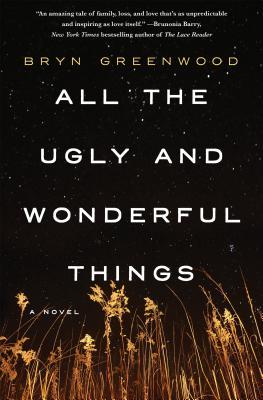
Review: All the Ugly and Wonderful Things

26114135

Review for “All the Ugly and Wonderful Things” by Bryn Greenwood (2016)

Rating: 2 out of 5 stars

I can’t get behind this book. Sorry.

It starts off somewhat promising: a young girl named Wavy and her little brother growing up in an abusive household with their shitty, meth-addicted parents who casually neglect them in search of their next fix. Wavy bounces between several family members and foster homes until she meets Kellen, a tattooed biker with a shady past who works in her father’s “business,” cooking and manufacturing methamphetamine. Kellen begins to look out and care for Wavy and her brother, and they eventually form a relationship.

This book spans about 15 years in Wavy’s life. There are a lot of different perspectives from those directly and indirectly involved with the main characters (teachers, relatives, etc) and a lot of variation between first and third person narratives–some I liked, others not so much. The writing was ok, but it lacked conciseness, making it feel it was way longer than its 353 pages. There was a quite a bit of drag in this novel for that reason, so I started skimming after the halfway point. Bleh.

Lemme also say this for those who don’t know: this is a love story. A love story that happens to take place between a little girl and, in this case, a grown man. They ‘fall in love’ when Wavy is about 8, and Kellen is in his 20’s. There are cringe-worthy sexual scenes that do take place when Wavy is a kid, and for that reason I should state that this is probably not a book for everyone. Ultimately, it’s not the book for me either. I won’t psychoanalyze the author’s reason for writing this, but I just felt the relationship dynamic was too weird for me to even begin to appreciate.

[Note: This book was provided to me by NetGalley and the publisher as a free digital copy in exchange for an honest review.]