Review: Stay With Me

32969150
Review for "Stay with Me" by Ayobami Adebayo (2017)

Rating: 4 out of 5 stars

Yejide and Akin, a married Nigerian couple, are two college sweethearts desperate to have a child. After years of trying to conceive and undergoing dozens of traditional remedies for their infertility, cultural expectations and familial pressure eventually lead Akin to take on a second wife. It doesn’t go well, and what follows is a severe, tragic desperation that takes hold of both characters. The majority of this novel is the sheer length to which Akin and Yejide go through to fulfill their desires.

I really can’t tell you any more than a basic summary here because this book’s got more twists and turns than an episode of the Jerry Springer Show. For me, the astounding number of unexpected events is one of its greatest weaknesses–there were just too many secrets, too many curve balls. I would even go so far as to say that the number of ‘reveals’ here had the opposite effect of moving the novel forward and watered down some of the major themes that the author was obviously trying to convey (political instability, class divisions in modern African society, etc). Also, I did not like the ending, after all that I’d read it just seemed a little too convenient for plot’s sake, a little too deus ex machina-ish to me.

Still, I won’t go lower than 4 stars here. Despite some of the flaws, this book is still intensely readable. I can also say that I learned a lot about Nigerian culture (food, songs, stories, cultural beliefs) in the process, without feeling like I was reading a textbook. Adebayo is definitely an author to watch.
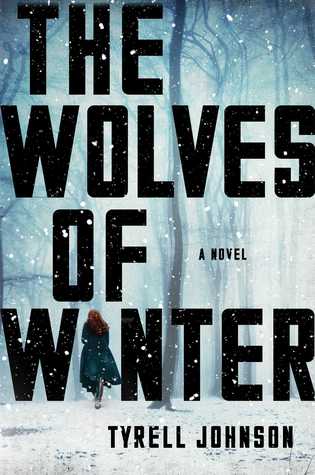
Review: The Wolves of Winter

32920273

Review for "The Wolves of Winter" by Tyrell Johnson (2018)

Rating: 3 out of 5 stars

“The Wolves of Winter” is a post-apocalyptic tale that takes place in a not-so-distant future in which most of the world has been ravaged by nuclear war. Shortly after, a deadly flu virus breaks out that kills the rest of the remaining population. Lynn, 12 years old at the time, escapes with her mother, father, and older brother to the Yukon wilderness for safety, where the flu is of a weaker strain. She eventually loses her father to the disease and takes up with her remaining family, living a mostly peaceful existence for several years until a mysterious stranger, Jax, wanders into their homestead. Jax brings a dangerous, government sponsored agency on his heels called Immunity which seek to capture him at all costs. Lynn is enthralled with Jax, who she comes to trust in discovering her personal connection to the flu epidemic.

I liked this book alright. I’d call it a PG-13 version of Cormac McCarthy’s “The Road” minus the cannibalism and much of the gore. Even though Lynn is in her early twenties, this book had a YA-ish kind of feel to it. I’m not sure if the author intended it that way, though the character of Lynn sure seems like she was originally intended for a YA novel. For one, Lynn falls girlishly hard for Jax despite their almost non-existent chemistry (cue pop music and the hallway locker scene). Second, she requires rescuing–a lot. Whether it’s in a snow storm or a tent encampment or in a fight with baddies, Lynn is constantly being dragged to safety by someone. It’s annoying.

The other characters are rather bland as well. The Immunity agents never rise above stock villainy, complete with descriptions of their wolf-like sneers and general menace. I also had trouble keeping up with the good-guy male characters because they’re so much alike you don’t remember who is who after awhile. And then there’s the dialogue, which at times, just seemed kind of clumsy. The action takes forever to get going, but once it did, this book was surprisingly readable.

Not bad for a debut. I’d definitely give this book a chance, particularly if you like sci-fi inspired, dystopian reads as much as I do.

[Note: A free digital advance copy of this book was provided to me by the publisher, Scribner, and NetGalley in exchange for an honest review.]

Review: I Am Not Your Perfect Mexican Daughter

29010395
Review for "I Am Not Your Perfect Mexican Daughter" by Erika L. Sanchez (2017)

Rating: 2 out of 5 stars
Before I begin, lemme say that I hope that everyone is having a wonderful winter holiday, whether it’s Christmas, Hanukkah, Kwanzaa, or just a few days of physical rest from work.
Now, onto my review. Kinda spoiler-y, so beware…

Julia is a Mexican American teenager living in inner-city Chicago. In the first 25 pages we learn that her life really sucks: her older, “perfect” sister Olga has just been run over by a bus, her dad stays drunk and emotionally unavailable, and her overly domineering mother projects all of the expectations that she had for her older daughter onto Julia. As a result, Julia stays depressed and angry, transferring her rage back onto her family and the people around her.

While it’s an understandable anger that this character has, man…I’ve never read a YA book with a character this unbelievably gross. Julia is truly a monster that is equal parts cruel and arrogant, with a haughty demeanor to match. I can understand sarcasm, dark humor, or even a whip-smart kinda protagonist, but this character is just a plain jerk. All throughout the novel she internally mocks and belittles the people around her, even her own sister in her casket. When she speaks she is not nice either, cursing at folks, whining, and talking down to people unless it involves something she enjoys. It seems that the author wants us to empathize with Julia’s plight, but this was not possible for me. There was really nothing redeeming about her character here at all. Nothing.

There are plot problems too. Very early on in the novel Julia discovers a possible secret that her deceased sister kept from everyone, but then this story line is abruptly dropped. It’s picked up again and we learn a little more about it, but then it’s dropped again, picked up a little later on, then dropped again. This goes on for 250 pages or so. By the time the “secret” is revealed, it’s not really a secret anymore and you already know what happens, nor do you care. Also a problem was the multitude of issues in this book being juggled around in a maddening circle–abortion, teen sex, rape, mental illness, suicide, class issues, racism, being an undocumented immigrant, LGBTQ issues–with such minimal focus devoted to each that you’d rather the author had just chosen two or three issues and written accordingly. For this reason ending seemed terribly rushed to me.

Lastly, at about 60% in, there is a romance in this novel. Julia meets a wealthy young white man in a book store and within 10 pages, they’re kissing. In another 15 pages, they’re meeting up over at his place and having sex. The too-instant nature of their supposed attraction makes no sense to me, given just how plain evil Julia is toward everyone else in the book. I realize it’s YA and romance is practically a requirement in this genre, but I dunno…I just didn’t like it.

While I didn’t like this book, I do recommend you read it. It appears to be quite popular on Goodreads and with online reviewers, so everyone’s bound to have an opinion on it some way or another. My advice to the author: not terrible for a first time writer, but if you’re going to go the unlikable main character route, there has to be something else, that oompf factor to compel the reader to want to like reading forward. This wasn’t it.

Review: Peach

34957071

Review for "Peach" by Emma Glass (to be published on 23 January 2018)

Rating: 3 out of 5 stars

Thick stick sticky sticking wet ragged wool winding round the wounds, stitching the sliced skin together as I walk, scraping my mittened hand against the wool.

“Peach” is a very short, very violent, and very dark little book. It’s more novella than a novel at less than 150 pages, with a highly artistic, experimental writing style. Some sentences are short, while other sentences run on and on. Some character’s names aren’t capitalized. There’s no punctuation when anyone speaks. And when there’s emphasis (for instance, a character is shouting or thinking aloud), the author uses sTiCkY cApS (uhhh, yeah). Eimear McBride’s “A Girl is a Half-Formed Thing” quickly comes to mind in comparison (the style of which I didn’t care for either) but this book sounded interesting enough to try, so I did.

The beginning of this book is a very visceral one–you’re immediately thrust into the aftermath of a young girl’s brutal sexual assault. Shocked and horrified, Peach manages to compose herself enough to walk home and clean herself up. Her parents, way too occupied with one another and a new baby, do not seem to notice at all that she has come home bloody and bruised. The imagery in this section is physically painful and absolutely heartbreaking.

In response, Peach chooses to keep her ordeal a secret. She attempts to retain a sense of normalcy by going to school and finding comfort in her boyfriend, Green. It’s all too much, though. Her attacker begins to stalk her and the memories and smells of that night become deeply unsettling for Peach, who begins to have violent fantasies.

At about 60% in, the narration became so muddled (stream of consciousness, other goobledegook) that I honestly can’t tell you what happened. The writing style of this book was so confusing that I couldn’t tell between Peach’s thoughts and reality or what was even really happening in the story. And the end (or, let’s say, what I interpreted as the events that occurred at end) was just plain weird. Ewww.

I’m going to give this book 3 stars. In the end, the writing style just wasn’t my cup of tea. I’d recommend this to readers who aren’t afraid of experimental writing, artistic slants, surrealist material.

[A free digital copy of this book was provided to me by the publisher, Bloomsbury USA, and NetGalley in exchange for an honest review.]

Review: Ultraluminous

33916025

Review for “Ultraluminous” by Katherine Faw (to be published on 5 December 2017)

Rating: 4 out of 5 stars

I like Katherine Faw. I also liked this book.

No one in this short novel has a real name, including the narrator. Everyone she meets assumes she is Russian, so there are a series of Russian-influenced pseudonyms here (Katya, Karina, Katinka) that substitute for her identity. The narrator works as a prostitute, specializing in high end clients and girlfriend-experience type encounters. On constant rotation are her experiences with such clients such as “the junk bond guy,” “the calf’s brain guy,” “the art guy,” and “the guy who buys me things.” There is also “the ex-Army Ranger,” a man that she never charges, and “the Sheik,” a man she worked for in Dubai.

Not only does the narrator not tell you her name, she never reveals her thoughts either. We only witness her actions, a bizarre series of ‘patterns’ that the narrator adheres to like clockwork. In addition to her clients, she loves trips to Duane Reade for sushi, getting waxed, snorting heroin, trips to Duane Reade for sushi, getting waxed, snorting heroin…and so on. The sex and drug encounters are blunt and matter of fact, she simply moves from one event to the next. The silence between the printed words makes this story interestingly ambiguous until it comes into clear focus at the end.

Four stars. Read if only if you’re looking for an adventure or an experimental type story.

[A free, digital copy of this book was provided by NetGalley and the publisher, MCD, in exchange for an honest review.]

Review: The End We Start From

33858905
Review for "The End We Start From" by Megan Hunter (2017)

Rating: 3 out of 5 stars

Hmm…

I’ve had a few hours to digest this one and honestly I’m not quite sure what to tell you about it. At 160 pages, “The End We Start From” is a very short, almost novella-like dystopian novel told in quiet, sparse paragraphs.

In the beginning (or is it the end?) of this very short novel, an unnamed young mother’s water breaks and she gives birth to a son, Z. The water levels around London are rising and Britain is mostly under water. The narrator and her husband, R, move from their home to stay with his parents in the mountains until food becomes scarce there and then they move again, this time to a makeshift camp with other disaster refugees. Baby Z grows, and the narrator’s husband R eventually leaves the family at the camp to investigate other living prospects. During their separation, the narrator continues to observe life around her, make friends, and bond with her baby, Z.

I think I like the concept of this book more than its actual execution. There’s a lot of interesting things juxtaposed here that I could go on and on about: birth, death, the deterioration of civilized society, the creation of new life. There’s also references to the book of Genesis all throughout which fit quite nicely with those ideas. I just don’t care too much for the writing style, it was too sparse for me. The sense of detachment here was also a problem; the constant use of characters’ initials instead of their names made it hard to remember who was who and vexed me to no end. Too much was left unsaid, I wanted more.

Despite my misgivings, I’m not sorry I read this book. There’s a very unique narration style here that definitely bears notice and may tickle the fancy of others. 3 stars for me, but I invite others to make their own judgment call.

[A free digital copy of this book was provided by NetGalley and Grove Atlantic in exchange for an honest review.]

Review: She Rides Shotgun

23361199

Review for "She Rides Shotgun" by Jordan Harper (2017)

Rating: 4 out of 5 stars

I was about ready to give up on Jordan Harper after I read and loathed his short story collection, “Love and Other Wounds.” Glad I didn’t.

Anyway, “She Rides Shotgun” is a dark story about a father who has just got out of a California prison and run afoul of a vicious prison gang, leading to a ‘green light’ being placed on him, his daughter Polly, and his daughter’s mother. Unable to protect Polly’s mother, he takes his daughter on the run. Fighting for their lives and keeping away from the eyes of the law, eventually his daughter becomes involved in his criminal schemes. I won’t give away the book, but needless to say, I found myself cheering for these two (somehow) until the end. The writing is sparse but beautiful and manages to keep you interested.

Four stars, decent debut novel.

Review: There’s Someone Inside Your House

15797848

Review for "There's Someone Inside Your House" by Stephanie Perkins (2017)

Rating: 2 out of 5 stars

Whew Lawd this was bad

First off, I love YA thriller/horror. If you spent your high school days reading R.L. Stine and Christopher Pike, then you know what I’m talking about. So when this book came out, I was on it faster than a speeding ticket.

This is my first Stephanie Perkins novel. From my understanding she mostly writes YA romance and this was her first foray into horror. After reading this drivel, it’s my determination that she should probably stick to writing romance.

The run-down: Makani Young, the main character, is sent to live with her grandmother in a small Nebraska town following her parents’ divorce and after a mysterious incident in her Hawaii hometown that’s not revealed until the end of the novel. She has eyes for Ollie, a pink-haired emo kid, and after they meet they make like rabbits for most of the book. While Makani and Ollie are exploring each other’s anatomies, meanwhile, there’s a psycho running around killing members of their high school student body for reasons unknown.

So where do I begin? For the whole “Who will be next?” hook, this book had only about 5 deaths and still turned out to be 99.9% romance. The book pivots between Makani and Ollie’s relationship and the killer’s next victim, which we follow in a brief chapter as it happens. We’re never told why the killer is picking people off, and his identity is fully revealed at about 60% into the book. What happens after this? Nothing. For me, it’s was a hazy blur of wtf moments and skipped pages.

And Makani and Ollie…what a mess. For a romance writer, the author manages to make their relationship strictly about lust and nothing else. Despite all the physical fun these two are having, it’s mindlessly boring. Even an old pervert like me started flipping pages after awhile. On to the next slashing please…

I was expecting more blood and gore here. Two stars.

Review: The Weight of This World

30763901

Review for "The Weight of This World" by David Joy (2017)

Rating: 3.5 out of 5 stars

This is my second David Joy read, the first having been “Where All Light Tends to Go.” I read that one, gave it 3 stars. This one is slightly better, though not by much.

This book literally begins with a bang–with shocking act of violence committed by young Aiden McCall’s father upon his mother. Without parents, he is sent to a group home that he quickly runs away from. Aiden finds a friend in Thad Broom, a brooding, often violent boy with his own problems. The two boys grow up in the same home together, though Thad eventually leaves to join the Army and fight in Afghanistan. Thad returns from combat injured and hopeless, a shell of a man. Aiden, without his friend for six years, doesn’t fare much better: he’s unemployed, bitter, and a part-time drunk. He hopes to escape from their miserable lives and move away, but Thad will not hear of it. In the meantime both Thad and Aiden do drugs (mostly methamphetamine) to get through their days.

In the middle of the drama is April, Thad’s mother. She lives with secrets of her own, and also wants to move on and, in her words, “get off the mountain.” She is swept into the subsequent drama when Aiden and Thad’s drug dealer accidentally kills himself and leaves all three with a large stash of drugs and cash. What follows after this point in the book is a really dark and violent cycle of revenge, suffering, and just plain bad decision-making.

None of the characters in this book are likable, but I think in the end their likability is completely irrelevant to the reason why I gave this book three and a half stars. I can see that the author is perhaps meditating on the power of fate over free will, though as a reader after a while I was just plain tired of the characters and their ensuing Stupidity Olympics. You realize that these people don’t want to better themselves and they simply want to be miserable, end of story. I tried to feel some kind of empathy (nope!) for their choices, maybe even some kind of compassion for these characters but there’s none (absolutely none!) to be found. Three-quarters into this, I just got tired of reading and plodded my way to the end. Needless to say, I was glad when it was over.

Despite my rating, I would recommend this book. Though the violence is not for the faint of heart, but the author’s writing is not that bad and this novel does, in many ways, still manage to hold your attention.

Review: Life as We Knew It (Last Survivors, #1)

213753
Review for "Life as We Knew It" by Susan Beth Pfeffer (2006)

Rating: 1 out of 5 stars
Dumbest. Apocalypse. Ever.

I’m not a one star kinda gal unless I hated the book. Needless to say, I really really really hated this book.

First off, I love dystopian lit. This one rang a bell because it’s two of my favorite things: dystopian and YA. So I read it. And man, that’s where the problems began.

NOTE: Spoilers abound & I don’t care…

Part of the thrill of reading dystopian fiction is reveling in the fact that it COULD happen–you just never know where or when. Another part of the game is that the scenario presented has to be scientifically sound, even on a basic level. Not so with this book, because there ain’t no way in hell any of this shit in this book could actually happen. In this one, the moon is knocked off course by an asteroid (which, strangely, no one sees coming), which brings it closer to Earth. The tides fall out of whack, bringing massive tsunamis that kill most of the population in low lying and coastal areas.

Then there’s mosquitoes (huh? why?) that threaten the population with malaria, massive earthquakes around the world, and finally Yellowstone volcanoes, seemingly triggered by the gravitational chaos. There’s a little bit of ash, it’s dark early, and it’s cold out. Umm…excuse me…WHAT? A massive eruption in Yellowstone would spell death by burning ash and darkness for much of America within WEEKS. Not just a slight temperature change like it’s an early winter. And it certainly would not involve characters strolling around in their Pennsylvania hometown, going to the library and ice skating like there’s nothing going on.

And oh…the characters. Miranda is a 16-year-old high schooler whose diary makes up this book. She whines about not seeing her friends and being unable to eat as many chocolate chip cookies as she wants while the end of the world is going on. Her mother rails against the government and her daughter seeing boys. Somewhere in the middle of all the earthquakes and the electricity going out, the family still manages to send her little brother to baseball camp. Another one of Miranda’s friends is a religious psycho-nut who doesn’t want to eat because God will take care of her. As a matter of fact, nearly everyone in this book who holds Christian beliefs is portrayed as a delusional weirdo. Not that I care about the author’s personal beliefs about organized religion, but all the proselytizing didn’t help the narrative. At all.

There’s other improbable scenarios. There are no police, yet Miranda takes it on herself to wander around her hometown alone, going swimming and ice skating, seemingly unbothered. When the power comes on intermittently, the internet (somehow) works also. Services such as the post office and the library are still open, yet we’re told there is no gas. A deadly flu epidemic kills most of the people in the town and several members of Miranda’s family fall ill, but miraculously Miranda never falls sick and no one dies. When the family runs out of food at the end, Miranda spends her last bit of energy going to city hall and learning about all of the food shortages and crop failures out in the world–and then receives a bag of food that city hall has been giving out every Monday. How is this possible? If there is a shortage of crops, where does this food come from in a land of no gas?? The final abasement here is when the power comes on at the end of the book–despite the fact that we’re told most of the country is either dead and/or lying under ash. 

And the story just plain sucks. Page after page in the middle of the book is nothingness, just play by play details of the family’s life in their sunroom, having conversations about food and books and what not. Yawn.

Apparently there are three other books in this series, however, I won’t be reading them. I don’t recommend this, I’d stay far away from this book.