Review: Things We Lost in the Fire

30375706
Review for "Things We Lost in the Fire" by Mariana Enriquez (2017)
Rating: 4 out of 5 stars

It took me a month to get through this book, which is not fitting for a collection of stories that’s less than 250 pages long. The reason for my slower-than-average read time is because “Things We Lost in the Fire” is a very, very dark collection of tales, all set in modern day Argentina. I read my NetGalley copy at first, but the mood was so unsettling that I moved to an audiobook format to finish it. Even with the audiobook, I had to prep myself (i.e., be in a kind of ‘blank’ mental state) to continue it.

Typical of Latin American fiction, there’s elements of magical realism, the supernatural, and surreality in these stories, but that doesn’t counter the macabre subject matter here. In this collection, there are ghosts, hauntings, extreme violence, torture, rape, and girls who set themselves on fire. The central characters are mostly young people and most, if not all, of the stories carry a hint of uncertainty about whether the events the characters experienced really happened or not. In “The Dirty Kid,” a young woman is obsessed with a homeless boy who may or may not have been the victim of a Satanic ritual killing. “The Intoxicated Years” is about a group of teenage girls who spend their time taking psychadelic drugs. “Adela’s House” focuses on a girl who goes into a haunted house and is never seen again. In “The Neighbor’s Courtyard,” a former social worker is convinced that a neighbor has chained up a young boy in his backyard, who eventually eats the main character’s cat. And the title story, “Things We Lost in the Fire” is about a woman who self-immolates before an audience.

For me, this is material that I could not just read. I had to experience it, surround myself in it, and ultimately, suffer through it. Suffering, however, is not always a bad thing, because it is through this collection of stories you realize how much Argentina’s bloody political dictatorship past left its mark on people’s lives. If you’re down explore this, I wholeheartedly recommend this book to you. I give this four stars because the writing is quite good with no flaws to be found.

[Note: A free digital copy of this book was provided to me by the publisher, Hogarth Press, as well as NetGalley in exchange for an honest review.]

Review: Inside Madeleine

17568818
Review for "Inside Madeleine" by Paula Bomer (2014)
Rating: 5 out of 5 stars

Oh snap…five stars.

I did the audiobook for this and for the first time since I’ve started consuming books this way, I found myself listening intently to every. single. word. that was read: staying in my driveway with the AC running, leaving my headphones on longer in the evenings, you get the idea. This collection of stories is highly engaging, smutty, and just plain grotesque. And I loved it.

Each story deals with female characters and the complicated relationship they have with their bodies and the people around them. All of the characters are young, all of them desperate, and all (if I’m not mistaken) are from South Bend, Indiana. “Eye Socket Girls” is about an anorexic girl’s stint in a hospital, “Down the Alley,” is the tale of a teenage girl’s self-discovery and rebellion, and the novella-length title story, “Inside Madeleine,” is a tour de force about the complex relationship between a teenage girl and her body.

I loved the way that these stories seemingly hide…well, nothing. None of these characters are particularly likeable, but they weren’t supposed to be. Even the sex scenes were raunchy and vulgar, but they clearly weren’t meant to titillate the audience. All of the characters in each story came across as relatable and achingly real and I had no choice but to feel them.

Did I tell you I loved this book?

Must read.

Review: Mexico

30120297
Review for "Mexico" by Josh Barkan (2017)
Rating: 1 out of 5 stars

Josh Barkan’s “Mexico” is a collection of short stories from people (mostly Americans) of all walks of life living and working around modern-day Mexico City. Running throughout these selections is the theme of violence, mostly from drug dealers, gangs, cartels, and other figures involved in the narcotics trade. In “The Kidnapping,” an American becomes a victim of a violent abduction by a cartel. “The Chef and El Chapo” is about a chef who is forced to cook for the infamous criminal, and “The Sharpshooter” is about a U.S. government agent on a secret mission sent to kill, well, you guessed it…a narco criminal.

Needless to say, I didn’t like this book. In today’s political climate just the mention of the word Mexico is used to connote all things wrong with immigration, the War on Drugs, the American economy, and life in general. Do we Yankees really need more scary stories about what a crime-laden, drug filled place Mexico is? I went into this volume of stories knowing that the majority of it would be about violence, but after reading it my opinion is the same. There’s nothing new here, just a lot of non-emotional storytelling about the dregs of society and the people caught in its grip. It’s yet another narrow, limited view of a multi-faceted country with beautiful and hardworking people, the majority of which are NOT a part of the narco trade.

And there was something else that bothered me…Josh Barkan is a white, Ivy League educated world traveler. The back flap tells us he lives in Mexico City, yet I’m not impressed with this fact. Although the book is titled Mexico, it’s main characters are white people in Mexico, who speak from a self-imposed position of privileged authority. The Mexicans in this volume are mere props, one-dimensional characters from which white folks learn their life lessons about the evils of world. It’s a colonialist’s wet dream, and I hated it.

Do yourself a favor and don’t read this.

Review: Difficult Women

30644520
Review for "Difficult Women" by Roxane Gay (2017)

Rating: 3 out of 5 stars

Lemme say this first: I love Roxane Gay. She’s a fearless writer, and has a great sense of humor on social media. I liked her collection of essays, Bad Feminist, and her novel, An Untamed State, was nothing short of sensational. When I got approved to read her latest book of short stories through NetGalley, I was absolutely thrilled.

Needless to say, this collection of stories is ummm…well, less than thrilling.

This book is hard to quantify. There are a lot of stories here (twenty-one, to be exact) and they range in length from a couple of pages to over twenty. Some of the stories use fantasy and elements of magical realism, others skip all of that and are very much rooted in reality. There are a lot of recurring themes in this book, many of which were highly disturbing to read about. For one, there is a lot of occurrences of rape in this book. A lot. Physical abuse and masochism are also prominent–scenes of not just women being arbitrarily beaten by the men in their lives, but women characters who actually want to be beaten, raped, abused, punished. It’s bizarre. And it’s in story after story here. After a while it just gets exhausting, but perhaps that was the whole point. I didn’t like it.

More prominent themes: the relationship between twins (male and female), siblings, desolate surroundings, interracial relationships, loss. There’s also a lot of sex. I repeat, a lot of sex. Just about every story has some pretty graphic sex content. Not that I care, but damn, Roxane, I didn’t think you rolled like that…lol.

I won’t go through all of the stories here but I will say that “I Will Follow You,” “Difficult Women,” and “Strange Gods” were probably my top three faves. Overall, this is three stars for me because I just found the themes and the characters far too bleak for me to connect with it. I didn’t care so much for the content as I would like to hear the conversation that will probably come up in circles who read this book. Either way, I’ll continue to read Ms. Roxane Gay, she’s definitely a talent to be reckoned with.

[Note: A free digital copy of this book was provided to me by the publisher, Grove Atlantic, and NetGalley in exchange for an honest review.]

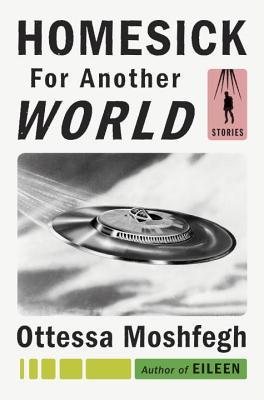
Review: Homesick for Another World

30079724
Review for "Homesick for Another World" by Ottessa Moshfegh (to be published on 17 January 2017)
Rating: 4 out of 5 stars

Ottessa Moshfegh is a writer after my own heart. This is not science fiction (although the cover is deceiving) or a happy volume of stories. Each tale here has a dark, flawed, transgressive quality to it. Her characters are all grossly unlikeable, yet they stick you like Gorilla Glue long after you’ve finished reading them. I loved her novel Eileen, and honestly I really just love Moshfegh so much period that whatever she’s got I know I’m probably going to like it. There are about a dozen stories in Homesick, some of which have already appeared in other fiction journals over the years, but it’s cool because they’re worth a second look. In “A Dark and Winding Road” a man gets more than he bargained for on a trip to a mountain cabin. In “Bettering Myself” a thirty-something teacher finds that the key to her own happiness really isn’t a key at all. In “Slumming” a woman finds solace in dysfunctional behavior and drug addiction. All of the characters here are mired in riddles and self-delusion, and I won’t give away the rest of the stories here but please take my word when I tell you that the prose here is definitely top-notch. I’ll continue to read whatever this woman writes.

[Note: A free digital copy of this book was provided by the publisher, Penguin Press, and NetGalley in exchange for an honest review.]
Review: American Housewife

25489013

Review for “American Housewife” by Helen Ellis (2016)

Rating: 2 out of 5 stars

After several months of waiting for this to be available at the library, I finally got a copy of this book. I’m thankful for this, because this book is so god-awfully bad I’d never consider owning it.

There are 12 stories in this collection, all of them centered around a Southern Stepford wife theme (i.e., party hosting, bra fittings, pageants). Sometimes it was successful here, but most of the time it wasn’t. The only story that was somewhat entertaining was “The Wainscoting War,” a humorous exchange between two women told through emails. “The Fitter,” a story about a legendary bra fitter’s wife was ok, but didn’t leave much of an impression on me, and “Dumpster Diving with Stars,” a selection about an irreverent reality tv show, was bland and ridiculously long for no reason. Several of the stories address the reader directly, like a how-to manual on a variety of subjects and customs, but after what I just described above, I honestly didn’t care. Zzzz.

I couldn’t wait for these stories to be over, which says a lot about a book that’s only 185 pages long. I understand that the author is satirizing a well-worn stereotype of Old South gentility, but it’s way overdone and the women in these stories are far too cliched to ever be taken seriously.

I imagine that people will either love or hate this book, appreciate the punchline that comes with it or roll their eyes in complete scorn. You can probably guess what my response to this book was. It simply was not my cup of tea. At all.

Review: Love and Other Wounds

23462659

Review for “Love and Other Wounds” by Jordan Harper (2015)

Rating: 1 out of 5 stars

This is a book that tries to swagger but isn’t as ‘hard’ as it thinks it is. Crime noir that’s very much in the same vein as Frank Bill’s “Crimes in Southern Indiana” (which I actually liked), but set in different locales and much much worse.

What this is: a collection of short stories with bad ass characters doing the same bad ass things with the same bad ass prose we’ve already read elsewhere. There’s redneck prison yard gangsters, men who breed dogs to die in fighting pits, criminals, hit men, meth addicts, etc, etc…by the third story I was bored out of my mind. It’s not so much the violent content that bothers me as much as the fact that there’s nothing new in this book, just the same old thin, worn out characters and plots in each selection, along with gratuitous amounts of blood and gore. This book is also littered with the n-word, as if it were a Quentin Tarantino movie, without any kind of context whatsoever and I hated every moment of it.

Lemme repeat: I actually like crime noir. I am not indicting stories about low-lives and their misdeeds, because they can be transformative. But this is not good crime noir. Harper goes beyond this label and calls his writing ‘thug lit,’ and while it may be the thing for some, I couldn’t stand this. At all.

Review: The Wilds

20763852

Review for “The Wilds” by Julia Elliott (2014)

Rating: 4 out of 5 stars

“The Wilds” is a unique short story collection with stories that range from sci-fi, dystopian, horror, and a couple of other genres that don’t really get talked about much because not enough people write about it yet. Elliott’s writing brims with creativity, her bravery in choosing these subjects to write about earns her four stars. It takes raw imagination to even conceive of stories like this. There is the strong presence of the Southern gothic in this collection, but it’s nothing like this. After finishing this book I can truthfully say that I’ve never read anything even close to the subject matter found in this book.

There are eleven stories in this collection–each of them set in plain, everyday environments–but Elliott twists and turns this into a weird, alien world. In “Feral” a pack of wild dogs ravage the planet and children and scientists become fascinated by their wild, savage behavior. In “Rapture,” a girl at a sleepover learns the truth about the world from her friend’s unconventional, fundamentalist grandmother. In “The Wilds,” a young girl falls in love with a boy who wears a wolf mask. And, in “Regeneration at Mukti,” an island retreat becomes a place where people are infected with festering diseases so that their skin can scab over and fall off. Elliott also gives most of these stories an open ending, inviting the reader to come to their own conclusion about the events she presents.

Why I didn’t like this: each of these stories seethes with a kind of ugliness and revulsion for the human body. There were quite a few gross-you-out passages, as well as a underlying theme of what I can only describe as sexual lust–that, at times, made me really uncomfortable. A lot of these stories, as interesting as they were, were just…I dunno, simply not my cup of tea. Ultimately I stayed committed to the reading because it intrigued me, but I would not want to repeat it again. The four star rating I’m giving here, however, is for the excellent writing that prompts the ‘ick’ reaction in the first place.

There is definitely something here, and I am eager to read a full book by this author. The cover is sheer beauty and enticed me to open this book. What will Julia Elliott come up with next? We will see.

Review: Daydreams of Angels

23848004

Review for “Daydreams of Angels” by Heather O’Neill (2015)

Rating: 2 out of 5 stars

So I love Heather O’Neill. If you haven’t read her novel ‘Lullabies for Little Criminals’ then you are sorely depriving yourself of great literature. She has another novel out which I have not yet read (will do this) but this book was available at the library first, so I dove right in.

‘Daydreams of Angels’ describes itself as ‘twisted fairy stories’ and that description is very accurate. There are stories about floating babies, talking bears, gypsies, and cloned Russian dancers. Most of them are flights of fancy (as I said earlier, there is a talking bear) but some feature real people and events. This book as a whole, however, was lackluster. Some of the stories I liked immensely: ‘Holy Dove Parade’ is about a girl member of bizarre cult who commits a crime, ‘Where Babies Come From’ is a weird grandmother’s version of natural events, ‘The Gospel According to Mary M.’ is modern story of Jesus’s life in middle school. Most of the stories though I didn’t really like and I struggled through, like ‘The Story of Little O,’ which I’m still not sure what it was about. Out of all 21 stories here I only liked about 5, the rest didn’t make much of an impression on me. The voice was too monotone, the plots too similar. All in all: meh.

I DO recommend reading Heather O’Neill, but don’t start here. Try reading “Lullabies for Little Criminals” and you’ll thank me for this later.

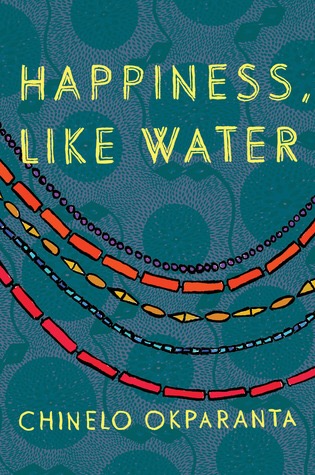
Review: Happiness, Like Water

Merry, Merry Christmas ya’ll!!!

I love Christmas Break, as I get to do nothing but read (and write about what I read) for three straight weeks.

  
Review for “Happiness, Like Water” by Chinelo Okparanta (2013)

Rating: 4 out of 5 stars

Man, this woman can write…

As much as I love short stories, short story collections are always hit or miss. You may find one or a few good stories amongst the pack, or several decent offerings. Very rarely are ALL of the stories in a collection each a strong, workable a piece of art. This book of stories is one of the few exceptions.

“Happiness, Like Water” has 10 short stories, mostly featuring Nigerian woman who are dealing with contemporary issues such as unhealthy relationships, homosexuality, societal pressures, and what it means to be modern African woman in Africa, or, in some cases, America. Each of these stories are unapologetically feminist, with each character in each story making some kind of choice for her own future and taking her own destiny into her hands. In some cases, the choice has disastrous consequences, but in others, the characters find some kind of lasting peace.

The powerful story “Runs Girl” was my favorite in this collection, which tells the story of a young woman’s choice to dabble in prostitution to find the money to cure her mother’s illness. “Wahala!” is the tale of a woman who visits a traditional healer to cure her infertility and is forced to endure painful sexual encounters with her husband in order to have a child to conform to society’s expectations. “Fairness” is about one girl’s quest to be beautiful through the use of a skin bleaching technique that has dangerous consequences. “Story! Story!” is a suspenseful tale of a young woman’s obsession, with a shocking conclusion.

Several of these stories seemed to be companion pieces, ‘twins,’ if you will–two halves of the same event. In “America,” a young teacher tries to get a visa to join her lover in the U.S. In “Grace,” the focus is a romance between an older, divorced African American professor and a young Nigerian woman who is expected to be married. “Shelter” is the story of a young immigrant mother and daughter’s quest to leave an abusive marriage, and “Tumours and Butterflies” picks up that same story 20 years later, with a daughter’s choice to abandon her familial obligations in the face of her father’s cruelty and her mother’s complicity with their abusive past. 

The weakest story here was the only with a male protagonist. As far as characters go, there is not much variety. There is a lot of sameness that gets somewhat repetitive–nearly all except the one mentioned above was about young women, usually serving in the education profession as a teacher. 

Overall, this is a strong collection. It is hard to believe that this is Okparanta’s first book, as she is definitely an author to watch. Her writing is good and descriptions of events are solid. She does have a full length novel that came out several months ago that I will read, and I’m excited to find yet another talented contemporary Nigerian writer (Chimamanda Ngozi Adichie, A. Igoni Barrett, Sefi Atta are others) that people NEED to be reading right now.