Review: The Perfume Burned His Eyes

36436651

Review for "The Perfume Burned His Eyes" by Michael Imperioli (2018)

Rating: 3 out of 5 stars

Ok, ok…I admit I read this book because Michael Imperioli’s name was on it. I’m a big fan of HBO’s “The Sopranos” and couldn’t resist.

This book, however, was just ok for me. It’s about a 16-year-old named Matthew who moves from Queens to Manhattan with his mother to start a new life after his grandfather dies and leaves them with a large sum of money. Matthew is very insecure and hopes that maybe the move will bring him confidence, which, after getting a delivery job at a local deli, happens. Not long after he begins working, Matthew meets Lou Reed. Yes, THAT Lou Reed (musician, rock god). Reed plays quirky neighbor and the two form a very unusual bond. Matthew begins to come out of his shell a bit. At the same time, Matthew becomes enchanted by a mysterious girl at school named Veronica. I never got a sense of what the exact nature of their relationship was, but Matthew learns a lot about the world from her as well.

All in all, an ok book. It’s clear that the point here is a youth’s coming of age, but honestly, that’s about it. Some parts go on longer than normal and other parts had way too much dialogue, but it’s a fast paced story and one that I guess I’ll recommend, depending on your personal tastes.

Meanwhile, I’m going to declare a personal moratorium on reading books by celebrities. I don’t know why I expect literary greatness, as if they aren’t cut from the same cloth as the rest of us who may (occasionally) produce ho-hum material.

*sigh*

Review: Katerina

38511216
Review for "Katerina" by James Frey (2018)
Rating: 1 out of 5 stars

NO NO NO NO NO NO….*slams book on the table with each successive NO*

This book’s terrible. It reads like a bad Tumblr poetry, awful teen fan fiction. Choppy lines, run on sentences, and magnetic poetry kit lines masquerading as style. “Katerina” is the story of Jay, a whiny brat of a dude who goes to live in Paris in the 90’s. All he does in the City of Lights is eat bread, get drunk, vomit, snort coke, sleep, have sex, and share his opinions on the superiority of French culture and art, which I really don’t care about. Somewhere in the middle of all this he tries to establish himself as a writer, though I don’t care about this either. He falls in love with a Norwegian model named Katerina, who is equally as shallow and as horny as Jay is. We suffer through dozens of their awkwardly written sex scenes (trust me, they’re not titillating at all) until they finally have enough of each other and break up. Jay returns to America shortly thereafter and starts smoking crack.

Fast forward to present day and Jay is a nouveau-riche writer and still a douchebag. He is married and making tons of money writing, though he hates himself for doing so. He’s contacted by Katerina and they begin chatting online. The present-day scenes are interpersed throughout the text with ones from the past, and are eerily reminiscent of his James Frey’s current life, including his “Million Little Pieces” controversy. For the third time, I don’t care about this. I’ve never read his first book and never will. I do care about how bad this book is though. Ugh.

Every now and then the book manages to say something interesting, but most of it is so ridiculously shallow and self-indulgent it’s not impossible to wonder how it managed to get published, though the author’s notoriety is probably a good reason. Anyway, skip this. Please.

Review: Brother

36672820
Review of "Brother" by David Chariandy (2018)

Rating: 5 out of 5 stars

A short, well written novel that behaves like a much longer book. Believable characters, relatable plot.

“Brother” is the tale of Michael, a young man living with his elderly mother in the public housing sector of Scarborough, a working class borough of Toronto, Ontario. At the beginning of the story, we learn that Michael has lost his older brother Francis in an act of violence 10 years before, though we’re not told much more than that. The story follows Michael as he opens his home to Aisha, a young neighborhood woman from his past, to the drudgery of his dead end job at a grocery store, to the agony of keeping track of his mother so she won’t wander off in the streets (no doubt, the beginning of a probable case of dementia).

This book also wanders through the past. We witness Michael’s perspective of him and his brother’s upbringing as first-generation immigrants from Trinidad. We also watch the rejection of their father and their acclimation to life in Scarborough’s streets, hanging with friends listening to hip hop and their run-ins with local cops. The cause of Francis’ death is revealed in the end, but it wasn’t a buzz kill to the book. It’s a natural progression of events, the missing piece that finally puts the story together. I won’t tell you to avoid spoiling it, but it all gives the book a sense of purpose.

Even though the novel’s setting is Canada, I never got the sense that it absolutely needed to take place there. This story could have been in the U.S., in Britain, in Europe, in South Africa–anywhere where there’s a system of stratification in which social inequalities still exist. The backstreets and the ghettos of this book are anywhere and everywhere.

The writing here is quite beautiful. Even though it’s less than 200 pages, it took me a while to read it because I wanted to really read and savor it.

Five stars, my friends.

Review: How Are You Going to Save Yourself

37486538

Review for "How Are You Going to Save Yourself" by JM Holmes (2018)

Rating: none (DNF)

Hey babes! I’m back! I know ya’ll missed me…*plants kiss on your forehead*

Anywho, lemme get to the book. ‘Issa’ NO for me. I tried, but I couldn’t finish it. I’m not going to rate this. I DNF’d this about 60% through.

This is a coming of age story about four men of color (Dub, Gio, Rolls, and Rye) growing up in Pawtucket, Rhode Island. The book is told through short stories mostly narrated by Gio, though you occasionally hear from the other three main characters. Gio, the son of a White mother and a Black father, struggles with racial identity as he goes back and forth between living with his father in Washington state and his mother in Rhode Island. The other main characters grapple with identity as well, mostly through the power that society affords them by way of their masculinity. The masculinity here is toxic and disturbing, with detailed accounts of female sexual conquests, violence, and drug use, mostly marijuana.

I couldn’t get with this, though. While I can understand wanting to explore toxic masculinity, the misogyny in this book was too gratuitous for my taste. The author writes about his male characters engaging in sexist behavior with laser precision, yet the female perspectives remain largely unexplored. Case in point, the story “Be Good to Me,” in which a late adolescent Rolls seduces a high school sophomore named Tayla. He coerces her into having sex with him and eventually, he and two other main characters gang rape the young woman in a dark basement. The rape is presented rather matter-of-factly, with a kind of “boys will be boys” nonchalance. I longed for some hint of Tayla’s voice, but it didn’t really exist. Other female characters were mostly hollow and one-dimensional–the long suffering, ride or die girlfriend, ghetto stepmothers.

Also, the narration was confusing. We know the main characters’ names, but each of their voices sounded pretty much the same with very little that distinguished one from another. As I moved from chapter to chapter, I kept having to mentally go back to place the character with their back story from another part of the book. Essentially, I kept forgetting who was who from one story to the next. Forgetting a character shouldn’t happen in good fiction.

I hate giving this a bad review, but I just didn’t like this at all. I feel really bad because I actually won a pristine copy of this book in a Goodreads giveaway and I will probably never open it again. Maybe I’ll donate it to the library or do a giveaway here. Either way, I wouldn’t read this.

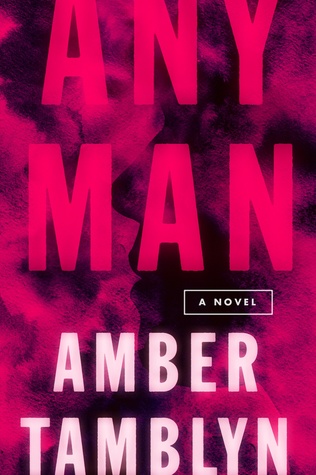
Review: Any Man

35068781

Review for "Any Man" by Amber Tamblyn (2018)

Rating: 5 out of 5 stars

That’s it. I’m just going to give this five stars.

I’m not really even a fan of Amber Tamblyn’s movies. I just liked her book that much.

This is a very brutal book. It weaves together letters, tv and radio interviews, and Twitter posts to showcase the crimes of a violent female serial rapist named Maude, who cris-crosses several states to prey upon male victims. As she claims victim after victim, all of the usual suspects in this kind of crime get involved: the media frenzy, the court of public opinion which blame the victims, the cops who can’t seem to catch the perpetrator, and the families, which suffer as well. Maude never gives a clear reason for her crimes, but as you continue to read you begin to realize that whatever her motives are, they don’t really matter. It’s the voice of the victims that are front and center here.

As I said before, this is a violent story. I imagine that the author had to make it that way to get the full scope of its point across. What is the emotional and physical aftermath of a sexual assault? There is an incredible amount of insight here into that question, and the result is a tremendous sense of empathy for every single person, female and male, that has ever been violated.

This book hits you hard and fast. I recommend reading it in as few sittings as possible and letting it wash over you all at once

Review: What Girls Are Made Of

29401474

Review for "What Girls Are Made Of" by Elana K. Arnold (2017)

Rating: 5 out of 5 stars

Oooooh…this book is messed up. I don’t mean ‘messed up’ in a bad way–I mean messed up as a frightfully good term that will hopefully compel you to read this.

The book begins when the main character, Nina, is fourteen and her mother tells her that she “could stop loving her at any time” and that there is no such thing as unconditional love. This revelation puzzles Nina and becomes the theme for the rest of the book, as she tries to make sense of what love is and the role it plays in her life. The novel examines three of Nina’s love relationships in particular: her mother, whom she takes a trip to Rome with and they sort-of bond over imagery of women saints and torture, Seth, a boy who Nina becomes completely enmeshed with who clearly does not love her, and her community service assignment at a high kill animal shelter. As a result of a terrible act that ended things for good between her and Seth, Nina must do community service at the shelter, where she witnesses dogs that are injured, abandoned, and put to death.

Interspersed throughout the text are very dark, Margaret Atwood-like stories that Nina writes as assignments for her literature class. These vignettes are very interesting and feature tales of virginal sacrifices, women martyrs, the roles of women in society, and the like.

As I said before, this book is messed up. It is YA, but it’s Grown-Ass Woman YA. There’s all kinds of graphic details about sex, medically-induced abortion (very detailed), gynecological pelvic exams, birth control, orgasms (also very detailed), and masturbation. I loved this book because it goes to the edge and hides nothing. It is a messy book about a messy time in a girl’s life–and it’s not afraid to be confused, terrified, and completely broken. It is also a complete departure from what has now become a YA lit cliche; the gutsy, whip smart, kick-ass-and-take-names kinda girl. The main character presented here, Nina, is not strong and does not kick ass. And for once, I think that’s totally alright. I gave this book five stars because I really really dug that.

I loved this book. Definitely read if you’re into darker, more realistic YA books that hit on real issues.

Review: Waste

26113830

Review for "Waste" by Andrew F. Sullivan (2016)

Rating: 3 out of 5 stars

Larkhill, Ontario, 1989. Late at night two teenage friends, Jamie and Moses, hit a lion while driving down a darkened back country road. They throw the carcass in a ditch and make a promise to tell no one about the incident. Moses goes back to the no-tell hotel where he lives with his eccentric mother and discovers she is missing and begins to look for her. Meanwhile at his job in a butcher shop, Jamie discovers a decomposing body in a can of bone waste. All the while this is going on, there’s a pair of sadistic, bearded ZZ Top looking brothers who love to kill people with power tools, searching for the person who killed their pet lion, Falcor.

Don’t start thinking there’s a light at the end of this bleak-ass tunnel.  (p. 2)

The very first page tells you to not expect anything good out of this book, so I didn’t. Overall, this book is a very dark tale about the goings-on in a small Canadian town.  From the first to the last page it never lets up in its bleakness–nasty hotels, people with dirty jobs, violence with impunity, shuttered factories. Everyone in this book is some version of a loser, stumbling through their wasted lives as addicts, dealers, wannabe skinheads, or just assholes in general. There’s a healthy dose of black humor that breaks the emptiness every now and then, but the bleakness drags this book on much longer than it should. The first quarter moves moderately fast, but the middle was a snooze fest. I considered DNF’ing but wanted to get to the end, which was pretty decent. For a book that’s so keen on violence, the only acceptable end is a violent one. “Waste” certainly delivers that.

Three out of five stars. Read if you’re into Donald Ray Pollock, Chuck Palahniuk, or Irvine Welsh-type stuff.

Review: I Am Still Alive

36849537

Review for "I Am Still Alive" by Kate Alice Marshall (2018)

Review: 4 out of 5 stars

This was between three and four stars for me. Gary Paulsen’s “Hatchet” meets The Revenant. It’s a compelling read, but not quite what I expected.

When the story begins, Jess, a 16 year old girl, has been sent to the Canadian wilderness to live with her father whom she barely knows. She has recently lost her mother in an automobile accident, the same which has left her without the full use of her legs. She struggles to adjust to life in the remote wilderness where one must live off of the land and only way in and out is via plane. She learns a bit about hunting and fishing through her father and begins to build somewhat of a bond with him until he is killed by two mysterious visitors to their cabin. The men burn the cabin down, not realizing that Jess and her dad’s dog, Bo, are in the woods hiding. For several months, Jess is left on her own, finding food and shelter and surviving in the wilderness. Eventually she discovers the reason behind her father’s death and plots out a plan for revenge.

Essentially, this is a survival story. There is the revenge element, but that plot is not in play until late in the novel. For the first 2/3rds of the book, we are reading about Jess being cold, wet, in pain, and just hating her life in general. While I’m not gonna call her a whiner (hell, I’d be whining too!), I will say that not much happens early on in this book beyond descriptions of her misery. It’s cool–just not quite what I expected. I did keep reading though. Not for the survival stuff, but for the kick-ass revenge part.

I’m not in a rush to recommend this, unless you like survival stories.

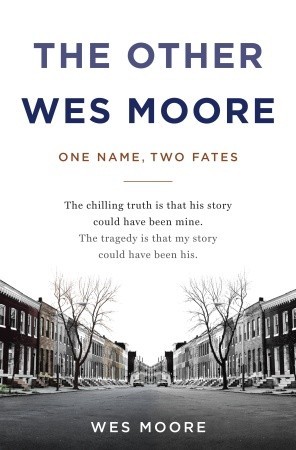
Review: The Other Wes Moore

7099273

Review for "The Other Wes Moore: One Name, Two Fates" by Wes Moore (2010)

Rating: 2 out of 5 stars

Ack…I DNF’d this one.

The idea behind this book is indeed noteworthy, as we’ve all wondered at some time or another about the life of another individual who, by some stroke of fate, happens to have the same name as we do. In this book, the author does just that as he discovers another man with his same name and similar age, also raised in the city of Baltimore. He begins a prison correspondence with the “other” Wes Moore and sets out to explore where their paths in life diverged. The author is a former White House Fellow, a writer, and an Army veteran. The “other” Wes Moore is serving time in prison, has fathered several children, is a convicted drug felon, and had an attempted murder conviction all before the age of 18.

The premise of this book is flawed, however. Moore points to the commonality of absentee fathers and poverty between the two of them, but this is simply not true. While both Moores grew up fatherless, the author’s father died, he was not abandoned. Secondly, Moore’s mother, even though a widow, had a strong support system. The author half-heartedly acknowledges this, as well as his privilege of attending a private school during his formative years to steer him away from bad behavior and negative influences. Also, while the negative behavior that author Wes Moore speaks of (tagging buildings with graffiti, etc) is akin to a middle class teenager’s ideas of rebellion, the “other” Wes Moore’s descent into drug dealing and criminal behavior is not rebelliousness but a necessity, a way of gaining power in a single parent household as the ‘man of the house.’ Even though the “other” Wes Moore’s choice to delve into criminality was his own doing, the lack of a support system and the presence of poverty in his life cannot be understated.

I stopped reading this book about 2/3 of the way through, once the faulty premise became apparent. Perhaps I’ll pick this up in the future, but for right now, I’m good.

Review: Girl Trouble

30167758

Review for "Girl Trouble: An Illustrated Memoir" by Kerry Cohen (2016)

Rating: 2 out of 5 stars

I read Kerry Cohen’s memoir “Loose Girl” a few years ago, so I decided to see what this book was about. This is a memoir that chronicles the author’s very complex relationships with women, beginning with her older sister and continuing throughout her childhood to the present day. Each relationship is presented vignette-style, with illustrations of several of the characters included within. Some of the relationships Cohen discusses are friendships, others describe a contentious situation (i.e., the author being bullied by another girl), some girls are passing acquaintances.

I certainly understand Cohen’s reason for writing this book. It seems that she wanted to not just talk about girl relationships but to examine the many, many ways in which women can be cruel to one another. There are problems with this, however. One of the main ones here I noticed was that the author seems quick to discuss the many times in which she has been victimized by girls and women, yet minimizes her own actions in some situations in which she was equally cruel. Case in point: a period during the author’s college years in which she admits that she slept with a friend’s boyfriend. She tells us that the boyfriend was not really her friend’s boyfriend, just some guy she was seeing at the time. Either way, when the cheating was discovered, her friend stopped speaking to her. The author meets up with the friend years later after she writes about it in “Loose Girl” and tries to explain herself, yet her tone is not one of contrition (after all, she did go and write a book about it) but one of slight indignation, as if the friend just should have ‘gotten over it’ already. 

There’s other layers here of meaning I could talk about here, but it’s repetitive. After a while each “friend” and each “boy” all sounded the same and reading this became tiresome. And the illustrations, while good, didn’t really add anything to the book. Picture here, more words. Picture there, more words. Blah.

Even though I get the point, I can’t help but to feel that this is essentially the same book as “Loose Girl,” only with a slightly different focus. Many of the same incidents from that book are retold here.

No mas. Two stars.