Review: Sick: A Memoir

33026961

Review for "Sick: A Memoir" by Porochista Khakpour (2018)

Rating: 3 out of 5 stars

I have mixed feelings about this book.

Porochista Khakpour gives us a very brave and honest memoir about her struggles with late-stage Lyme disease. The CDC estimates that 30,000 cases of Lyme disease occur every year, though the actual number is probably much higher. It is caused by bacteria spread through tick bites, and getting a diagnosis can a nightmare due to the generality of its symptoms (fever, rash, headache, shortness of breath). People who have been infected with Lyme disease can also be asymptomatic as well. Tests to determine infection can be very expensive (usually not covered under insurance) and are not definitive. If the disease is diagnosed early enough, antibiotics are given to kill the bacteria. For people in late-stage Lyme disease, however, there is no cure and antibiotics are not an option. They suffer the same painful symptoms over and over again, living their lives so as not to cause a recurrence.

Khakpour does not know when she was infected with Lyme disease and she speculates on this throughout the memoir. She recalls many times in her life when she has been in pain–emotional, physical, mental. She details interactions with doctors, who dismiss her symptoms and call it depression, a mental problem. She also talks a lot about bad boyfriends and unsupportive family members, both of which exacerbate her health issues.

At times the writing was beautiful, but at other times it felt rather guarded and elusive. Throughout the reading of this book I never felt as if the author was telling us everything, choosing instead to pick and choose what to write about. This sense was reflected in the timeline, which is presented not so much chronologically but as locations where she’s lived, with chapters are entitled “New York,” “Pennsylvania,” and so on. Unusual, but ok.

Which brings me to another point. Maybe I came into this one a bit biased. I’ve read other memoirs about people with illnesses and I’ve found them to be kind of off-putting as well. When you’re writing about being sick I’ve seen a tendency to come off as way too clinical (one that comes to mind is Susannah Calahan’s Brain on Fire) and on the other hand I’ve seen a tendency for the writer to talk about everything other than the illness. This book is more of the latter.

Three stars. Definitely recommend it though.

Review: Stamped from the Beginning

25898216
Review for "Stamped from the Beginning: The Definitive History of Racist Ideas in America" by Ibram X. Kendi (2016)

Rating: 4 out of 5 stars

This book is all about racism, specifically, how racist ideas about people of African descent led to the institution of slavery and became a unique history, woven into the fabric of American life.

This book is nearly 600 pages. I listened to it on audio. Unless you have time to really go through it and make notes and annotations, I recommend that you keep this on audio. I will probably go back through and read this when I have more time, just because of how excessively detailed the information is. That’s a good thing, though.

Anyway, Dr. Kendi makes his argument fairly plain–that racism is more than simple “ignorance.” If racism were as simple as people behaving “ignorantly,” Kendi asserts, it would not have persisted for thousands of years, nor would it be the institutional scourge that continues today. Racism is actually a very complex system of ideas, drawn from a number of highly complex sources. Kendi uses five guides into his argument who we’ve all probably heard about in our American history classes in school–Puritan minister Cotton Mather, founding father Thomas Jefferson, abolitionist William Lloyd Garrison, author W.E.B. Dubois, and the Black feminist radical, Angela Davis. He separates these figures into three camps to trace the development of anti-Black, racist ideas: segregationists, people who believe that Black people are to blame for their own inferiority, assimilationists, people who believe that both Blacks and racial discrimination have equal part in beliefs surrounding Black inferiority, and anti-racists, people who reject both of these ideas. Kendi spends a great deal of time with each one of these arguments, and all five of these historical figures who play some part in either building or dismantling racist ideology.

All in all, I found Stamped from the Beginning to be a very complex and nuanced book. It’s also exhaustively researched. Even though I knew that Cotton Mather and Thomas Jefferson were not all that my high school history teacher were telling me they were, this book breaks down their racist ideas in a way that I’ve never quite seen before. This is a book that begs to be read by all people, especially in today’s times. I will definitely also say that I have learned much from this book, I highly recommend it.

Review: In a Day’s Work

36921281
Review for "In a Day's Work: The Fight to End Sexual Violence Against America's Most Vulnerable Workers" by Bernice Yeung (2018)
Rating: 4 out of 5 stars

This is a very timely, informative read about sexual harassment and assault in the workplace among those whose jobs we rarely see–night office building custodians, farm workers, domestic workers. Many of these workers are female, and many of them are undocumented. They are often afraid to pursue legal action against the men who violate them due to their undocumented status, fear of losing their jobs, or because they simply do not think that they will be believed. In addition to the threat of rape from male bosses at work, these workers are also taken advantage of in other ways, like being forced to work for no pay, working in dangerous conditions, unpaid overtime, not allowed to take breaks, etc.

It is obvious that the Ms. Yeung has been working on this topic for a long time, and her knowledge of this topic shows brilliantly in her writing. There was a documentary that came on PBS’s “Frontline” about 2 years ago which reported on the plight of female farmworkers, another that came on about a year ago that reported on the sexual harassment of female custodians. I watched both of these programs. Much of the reporting on both of those stories (both excellent) were completed by this author as well. I also liked how the author gives solutions on how this problem is being tackled by new legislation and oversight committees that are currently in place, attempting to protect and make a difference in the lives of female workers.

An impactful, well-researched book. Highly recommend!

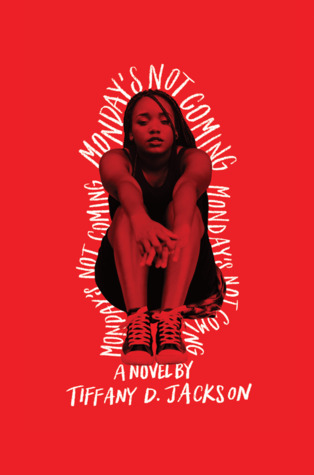
Review: Monday’s Not Coming

35068534
Review for "Monday's Not Coming" by Tiffany D. Jackson (2018)

Rating: 4 out of 5 stars

I’ll admit it: Monday’s Not Coming has been one of my most anticipated reads this year. I read this in a few days and I’m definitely giving this a solid 4 stars.

The story begins when Claudia, the main character, returns from a summer vacation to discover that her best friend Monday Charles has not show up for their first day of eighth grade. No one seems concerned. Claudia’s parents caution her not to worry, but she knows better. After several weeks pass, Claudia begins to ask around about her friend. The school says she hasn’t registered. Monday’s mom says that she’s with her father, Monday’s sister says she’s with an aunt. The police also dismiss her concerns, labeling Monday as a probable runaway. Despite the setbacks, Claudia is more and more determined to find her best friend as the novel progresses.

I loved the setting of this book, as well as Claudia’s character. Claudia resides in Washington, D.C., a city with predominantly Black residents. There are thoughtful explorations here of gentrification, the educational system, the child welfare system, as well as class tensions in Black communities. Go go music, the National Mall, and the Anacostia neighborhood are all very prominent “characters” here as well. I loved it all. Also memorable is Claudia herself, a very complex character. Monday is her only friend, but she represents way more than just a friend–she’s Claudia’s other half. Once Monday’s disappearance takes hold, Claudia’s dyslexia becomes more visible to those around her. She is compelled to take remedial tutoring, which she hates. Claudia also enjoys dance, but lacks the confidence to stand out.

The execution of this novel has some problems, though. This is definitely one of those “down the rabbit hole” kinda books, where nothing’s a given and you’re gonna go through some hoops before you get to the Big Reveal at the end. The hoops here are four timelines that run parallel throughout the book, labeled “Before” (events before Monday’s disappearance), “After” (events after we discover what happens to Monday), “Before the Before,” and “2 Years Before the Before.” It’s confusing. I understand Jackson’s use of ambiguity here, but all of the various timelines and events made this a muddled mess. There is a twist at the end, but by this time I was so lost in the mire of the timeline that I have to admit that the only reason I didn’t skip pages was because I genuinely wanted to find out what happened to Monday.

To tell you more about this book takes it dangerously into spoiler territory. It definitely shines for its fearlessness. It is one of the first YA books that I’ve read in which Black girl friendships are problematized and presented with the realness that they deserve. It is also one of the first YA books that speaks directly to the phenomenon of “Missing White Woman Syndrome,” the term first used by PBS News anchor Gwen Ifill to describe society’s tendency to treat the disappearances of young, affluent White women as media events with constant, around the clock national coverage, despite the fact that men, along with women and children of color, comprise the majority of missing persons cases. For Monday’s disappearance, no one joins a search party. Her picture is not in the newspaper. She’s not even on the nightly news.

4 stars. If you read nothing else in 2018, please read this. You don’t want to miss it.

Review: Heather, The Totality

34397044
Review for "Heather, the Totality" by Matthew Weiner (2017)

Rating: 4 out of 5 stars
From what I’ve glanced through on Goodreads, this is a book that people either completely loved or absolutely hated. I’m in the first camp, I think this book is fantastic. And no, it’s not because the author was one of the writers on two of my favorite shows, Mad Men and The Sopranos (though being a fangirl sho’ does help). I liked this book because it’s a pretty decent work of fiction.

This is a short book (less than 150 pages), more novella-like than a novel. There is very little dialogue, the story is told through third person narration of one of four characters. I can see where this annoys people because it reads more like a storyboard summary than a fully fleshed out, traditional novel. Either way, the quirks in the style didn’t bother me. I really dug this story.

Mark Breakstone lives the life that people dream about. He works in finance and lives in Manhattan in a spacious, expensive apartment. He marries Karen, a pretty social climber who shares his dreams of the good life. Shortly after their marriage, Karen becomes pregnant and gives birth to Heather, their beautiful and gifted daughter. So beautiful is Heather that both of her parents become obsessed with her, seeking to one-up one other in competition for her affection.

Meanwhile, the reader is introduced to Bobby Klasky. He is not beautiful or gifted or wealthy. He grows up in New Jersey, the son of a heroin addicted mother. He drops out of school and dabbles in petty crimes until he eventually goes to prison for assaulting a woman in his neighborhood. All the while we get a window into Bobby’s thoughts, which become more and more disturbing and violent as the narrative progresses.

It becomes evident early on that the paths of Bobby and the Breakstone family will eventually meet, and that the result will be a violent one. There is a sense of dread that starts in the first quarter of the book that’s played up skillfully until these four characters collide at the end. It’s good that this is a short novel so you don’t have to wait that long to find out.

My only complaint about this book is that the ending was a little too clean and convenient for my tastes. As I said before, there is a tension that’s played up, only to get to the end and it’s like: hmmm, ok. That was easy. None of the scenarios that I envisioned while reading this came even remotely close to what actually happened. A minor complaint. But still, ugh.

Four stars. Read this in one sitting, like you’re supposed to.

Review: Another Day in the Death of America

29502379
Review for "Another Day in the Death of America: A Chronicle of Ten Short Lives" by Gary Younge (2016)
Rating: 4 out of 5 stars

“Another Day in the Death of America” is a look at the effects of gun violence on children in the United States. Younge, a British reporter, picks a random day (November 23, 2013), and identifies 10 children who died of gunshot wounds around the country within that 24 hour period. He follows up with their families and acquaintances, interviewing them and seeking insight into the victim’s short lives.

All of Younge’s subjects are male. The youngest victim was 9 years old, the oldest, 18. They hailed from large cities and small towns, inner cities and suburbs. Seven of the victims were Black, one was White, and two were Hispanic. Some of their deaths were accidental and some were intentional. In at least four of the cases, the killer (or killers) is still unknown. What matters the most, however, is that all of them were loved by their family, the majority of which agreed to be interviewed for this book.

The author puts a very human face on the tragedy of gun violence. He also probes, quite extensively and justifiably, issues of race and social class, which play a part in the prevalence of violence in some communities more than others. While he says that this book is not a plea for gun control, I’m not sure how this book can be read by anyone as anything but. It is clear that the point the author is making is that Americans are not inherently more violent than the citizens of any other country, yet the availability of guns make deaths more likely and more prevalent.

This book was written in 2016, and yet, two years later, it is still a timely one. The author admits that he began the research and writing on this book shortly after the Sandy Hook shooting. I read this in 2018, and we’re only several months removed from yet another school shooting, this time in Parkland, Florida. The questions raised in this book two years ago are the same questions we face today over gun control, and we’ve done absolutely nothing since.

I try to refrain from getting overtly political on my site, because, well, it’s all about the books, right? However, I realize more and more that the books I choose are political, and that every time I post my thoughts about them it is clear where I stand on certain issues. I’m OK with that. I am not a Democrat or a Republican, but I am a mother who sends my 14-year-old son off to school every morning with a hug and a kiss, just like everyone else.

I pray every single day that he comes home without a bullet in his body.

Review: Barracoon

2590136

Review for "Barracoon: The Story of the Last "Black Cargo" by Zora Neale Hurston (2018)

Rating: 4 out of 5 stars

Barracoon is the field work of legendary writer and anthropologist Zora Neale Hurston. It is the story of the last known survivor of the African slave trade, Cudjo Lewis, in his very own words. In 1927, Hurston traveled to visit Cudjo to his home in Alabama, and over several weeks interviewed him directly, transcribing his account of how he was taken captive at the age of 19 in an area now known as the country of Benin and transported illegally to America in 1860. She completed a book containing Cudjo’s story in 1931. However, her book never found a publisher and remained locked away in her archives at Howard University for over 80 years.

The reasons why Barracoon was never published are quite obvious. For one, Hurston insisted that Cudjo’s voice be heard and he be allowed to speak in his own dialect. Second, it implicates Africans as profiteers within the nexus of the slave trade, a fact that many historians have long denied. Originally named Oluale Kossola, Cudjo was captured by a rival tribe and was sold into slavery, a common practice on the continent for hundreds of years. He spent three weeks in a stockade (called a barracoon) and was subsequently shipped to America on a ship named Clotilda. Once in America, Kossola is renamed Cudjo and lives as a slave for five years until he is freed by Union soldiers in 1865. He eventually marries and has six children, all of whom die before his own death in 1935.

If you are unfamiliar with rural Black Southern dialect, you will have a helluva time with this book. Hurston was right to insist on not changing Cudjo’s words, and as you read this book you will understand why. I am fairly familiar with the cadence and the speech patterns of Black dialect, yet I still found it helpful throughout this book to read Cudjo’s words aloud, his speech ‘as is’ is critical to the understanding of his story, along with Hurston’s prose. Also telling were the many times in the book where Cudjo refused to speak, preferring instead to sit on his porch and eat a peach or share a watermelon with Hurston in silence instead of talk about the horrific experiences he’d gone through.

I loved this book. I feel it is definitely a story that demands to be told, especially when there’s an open bigot in the White House and one ignorant public figure in particular who is dumb enough to actually open his mouth to suggest that “slavery was a choice.” This book seems timely and well-intentioned, in the climate of so much rhetoric that seeks to undermine the horrors of slavery and its present-day implications.

Highly recommended–don’t miss this one.

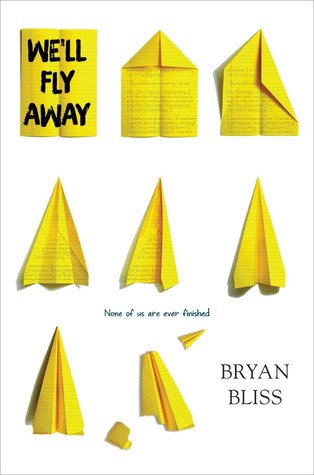
Review: We’ll Fly Away

35959354
Review for "We'll Fly Away" by Bryan Bliss (2018)
Rating: 4 out of 5 stars

A very well written, hard hitting YA book.

“We’ll Fly Away” is the story of two boys, Luke and Toby, who have been friends for most of their lives. Luke, the stronger of the two, is an athlete who dreams of college success through wrestling, while Toby, aimless and a victim of his father’s physical abuse, relies on Luke to protect him. Both boys long to escape their rural North Carolina town (ironically, the setting of which is only about an hour away from me) and bond over a broken down airplane they discover in the woods as kids. Interestingly, the theme of flight is all throughout this book, even though it is apparent early on that neither of these boys are going anywhere. Escape, it seems, is only possible through death and/or violence.

When the story opens, we discover that Luke is in prison, writing letters of apology to his friend Toby. We are not told why he is on death row, but it is obvious that he is there for a horrible crime. In his letters, Luke struggles with his morality, getting along with inmates, and other adjustments to prison life. The story switches between his letters to a third person narrative of the events leading up to Luke’s imprisonment. In the third person flashbacks, we learn that Luke’s life isn’t free of dysfunction either. When he isn’t wrestling, Luke is taking on way more responsibility than he should, watching over his younger twin brothers while his mother takes up with different men. Toby’s father, a local criminal, physically and emotionally abuses him, leaving him with a lack of social skills that lead him into conflicts at school. Luke, ever Toby’s rescuer, comes to his defense time and time again.

I won’t go into too many of the details of this story to avoid spoiling it. I will say, however, that this is a fairly solid book that examines male friendship, difficult choices, and the criminal justice system in a very meaningful way. Even though there was a bit of a lull in the middle of this, the ending was shocking enough to make up for everything it lacked in between.

Definitely recommended.

Review: Calling My Name

34541786

Review for "Calling My Name" by Liara Tamani (2017)

Rating: 5 out of 5 stars

I loved this YA book. The cover’s cute and the writing is quite gorgeous.

“Calling My Name” is the beautiful story of a young Black girl named Taja, growing up in a middle class, Southern Baptist family in Texas. The story begins with Taja as a young girl and follows her through her senior year of high school through a world of ‘firsts’–social awkwardness, wearing a bra, friendship drama, sibling and family relationships, her first kiss, losing her virginity. Each chapter is named and presented vignette style, with quotes from various Black women authors (Toni Morrison, Zadie Smith, Zora Neale Hurston) interpolated throughout the text as themes for what follows. I also loved the lovely ambiguities here: we’re never told explicitly how old Taja is, though the passage of time as the novel progresses is evident. Also nebulous is the exact time frame in which Taja’s childhood takes place, surrounding references to pop culture and relics such as acid-wash jeans allude to the late 80’s through the mid-90’s. I loved, however, that time really didn’t seem to matter here: Taja’s life could be today, 20 years ago, or even as far back as 40 years ago. I’ve always maintained that the best books do not have to explicitly state everything they’re made of, and this book knows that and much, much more.

Religion, specifically the Black Southern Baptist tradition, plays a prominent role in this book. Taja’s parents are ultra conservative and tightly control her behavior, not wanting her to fall into “sin” or become “used goods” before marriage. Taja’s identity as a Christian influences much of her thoughts and actions, leading to several conflicts as a teenager until she eventually finds her own voice as an individual, shortly before leaving for college.

Reading this book was emotional for me. It is the first book that so closely mirrored my own experiences as a Black girl in the 80’s and 90’s, growing up in very much the same middle class, conservative Southern Baptist family dynamic. The stereotypical ‘problems’ that we typically associate with the narratives of people of color (you know, incidents of racism, poverty, substance abuse, economic struggle) were largely absent here, which I have to admit that I appreciated for a change. This is not a story about any of those kinds of traumas–it’s a story about soul-searching, Black girl style. Throughout the reading of this book I wanted so much to simply applaud because finally, someone got it RIGHT.

It goes without saying that I completely and totally recommend that you read this book.

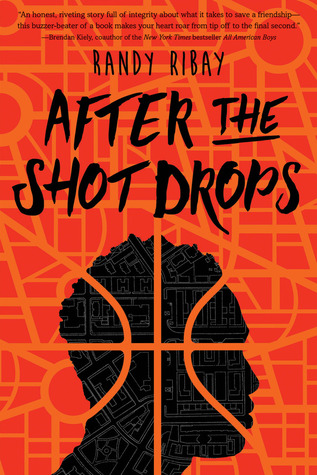
Review: After the Shot Drops

31179039
Review for "After the Shot Drops" by Randy Ribay (2018)
Rating: 3.5 out of 5 stars

“After the Shot Drops” is the story of two friends, Bunny (affectionately named so because he’s got ‘hops’) and Nasir. When the novel begins, Nasir and Bunny are not on speaking terms, mostly because Bunny has recently transferred to an upper crust private school to play basketball without talking to him about it first. While Bunny realizes he’s out of place among his wealthy, mostly White peers, Nasir remains at his inner-city school and finds kinship with his cousin, Wallace, a troubled young man facing eviction. To earn quick cash, Wallace bets against Bunny in a final championship game–leading to very serious, life-altering consequences for all three young men.

I gave this three and a half stars because there are some issues here. For one, the pacing was entirely too slow. It took me nearly a month to finish this book, and that was because it failed to really maintain my interest for more than 50 pages at a time. We don’t find out until nearly page 150 that Wallace is up to something sinister that will ultimately change the rest of the book. Second, this book is written in dual narration, switching back and forth between Bunny and Nasir. While I’m not criticizing this method of storytelling, I was a little weary of the characterization here. The voices of Bunny and Nasir seemed indistinguishable, I couldn’t tell one from another. If the author hadn’t labeled who was speaking before each chapter, I wouldn’t have known who was saying what.

Third, during certain scenes of this book, there’s a lot of very technical, play-by-play basketball talk. While personally I like bball, there may be other readers that get kinda lost here. While I don’t think you have to love basketball to read this, liking it sure does help you get through those pages.

Overall, I think this is a fairly decent book. I love how it focuses on Black male friendship, a subject that I don’t think gets a lot of play in YA literature. As a matter of fact, I can’t think of a book that I’ve read in the past 5 years where a friendship between two young Black men was front and center, to the exclusion of other subjects. There are short, quick chapters here too, which tends to engage those students who are reluctant to read.

Definitely recommend this book!