Review: When They Call You a Terrorist

34964998
Review for "When They Call You a Terrorist: a Black Lives Matter Memoir" by Patrisse Khan-Cullors (2018)
Review: 4 out of 5 stars

Ahhh, this is a good book. Even though it is about the life of one of the founders of the Black Lives Matter movement, Patrisse Khan-Cullors, there is sooooo much more than just BLM rhetoric here. It begins with Cullors’ childhood in Los Angeles, growing up poor and constantly harassed by law enforcement. Her single mother works multiple jobs and never quite gets by, and without much adult supervision, both of her brothers eventually end up in the prison system. One of her brothers, whom she spends multiple chapters describing the plight of, was severely mentally ill and systematically abused by the prison system. It is tragic and harrowing, anyone who reads this book will come away with a detailed understanding of Cullors’ rage at law enforcement, the justice system, corrections, and pretty much every institutional system in America.

The author herself is bisexual (she describes herself as queer). She spends a lot of time discussing the fact that Black Lives Matter was founded by three queer women and is a mostly women and LGBTQ-headed movement–though the way it is conveyed in the press, you would not know this. There is also a discussion of the full agenda of the movement, which encompasses far more than just an end to police violence against people of color. In addition to the rights of Black citizens, Black Lives Matter stands for economic justice, health insurance, prison reform, educational reform, ending domestic violence, an end to the abuse of immigrants and unfair deportation, and so on.

Regrettably, much of what Cullors and the Black Lives Matter movement has worked for in the last few years has been undone in the past few months by the current president and his administration. This is lamented in the last part of the book. It’s not an ending, however, but a call to action, hope for the future.

Once again, this is a timely read and great book.

[A digital copy of this book was provided to me by the publisher, St. Martin’s Press, and NetGalley, in exchange for an honest review.]
Review: Stay With Me

32969150
Review for "Stay with Me" by Ayobami Adebayo (2017)

Rating: 4 out of 5 stars

Yejide and Akin, a married Nigerian couple, are two college sweethearts desperate to have a child. After years of trying to conceive and undergoing dozens of traditional remedies for their infertility, cultural expectations and familial pressure eventually lead Akin to take on a second wife. It doesn’t go well, and what follows is a severe, tragic desperation that takes hold of both characters. The majority of this novel is the sheer length to which Akin and Yejide go through to fulfill their desires.

I really can’t tell you any more than a basic summary here because this book’s got more twists and turns than an episode of the Jerry Springer Show. For me, the astounding number of unexpected events is one of its greatest weaknesses–there were just too many secrets, too many curve balls. I would even go so far as to say that the number of ‘reveals’ here had the opposite effect of moving the novel forward and watered down some of the major themes that the author was obviously trying to convey (political instability, class divisions in modern African society, etc). Also, I did not like the ending, after all that I’d read it just seemed a little too convenient for plot’s sake, a little too deus ex machina-ish to me.

Still, I won’t go lower than 4 stars here. Despite some of the flaws, this book is still intensely readable. I can also say that I learned a lot about Nigerian culture (food, songs, stories, cultural beliefs) in the process, without feeling like I was reading a textbook. Adebayo is definitely an author to watch.

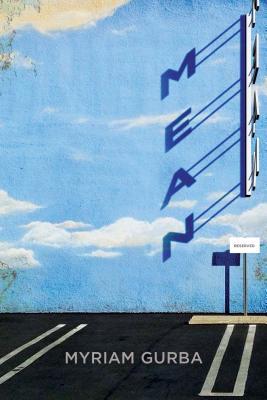
Review: Mean

34381333
Review for "Mean" by Myriam Gurba (2017)
Rating: 3.5 out of 5 stars

This is a doozy of a book. It’s a non-linear narrative, opening with a violent account of a woman being raped and murdered in a park. Gurba then switches to a host of different topics that are seemingly unrelated to the first but yet still interesting: growing up as a mixed race Chicana, having a family member with mental illness, discovering her identity as a lesbian. Later in the book we discover that the attacker referenced in the first part is the same that would go on to sexually assault Gurba as a college student.

There’s a lot of wordplay in this book, particularly around the occurrence of rape. I don’t like it.

God is like rape. Rape is everywhere too. Rape is in the air. Rape is in the sky… p.98

Gurba writes about ‘meanness’ as a kind of armor worn by women of color out of necessity. She isn’t trying to censor herself or make the reader comfortable with her descriptions and I get it, I really do. But it’s still unsettling nonetheless.

The writing’s decent here. Three and a half stars.

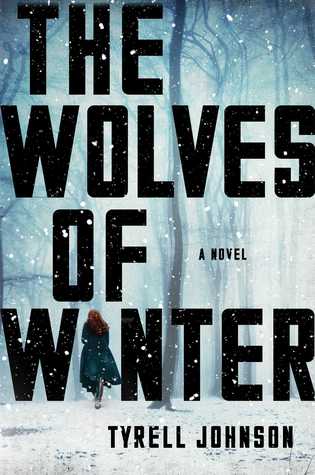
Review: The Wolves of Winter

32920273

Review for "The Wolves of Winter" by Tyrell Johnson (2018)

Rating: 3 out of 5 stars

“The Wolves of Winter” is a post-apocalyptic tale that takes place in a not-so-distant future in which most of the world has been ravaged by nuclear war. Shortly after, a deadly flu virus breaks out that kills the rest of the remaining population. Lynn, 12 years old at the time, escapes with her mother, father, and older brother to the Yukon wilderness for safety, where the flu is of a weaker strain. She eventually loses her father to the disease and takes up with her remaining family, living a mostly peaceful existence for several years until a mysterious stranger, Jax, wanders into their homestead. Jax brings a dangerous, government sponsored agency on his heels called Immunity which seek to capture him at all costs. Lynn is enthralled with Jax, who she comes to trust in discovering her personal connection to the flu epidemic.

I liked this book alright. I’d call it a PG-13 version of Cormac McCarthy’s “The Road” minus the cannibalism and much of the gore. Even though Lynn is in her early twenties, this book had a YA-ish kind of feel to it. I’m not sure if the author intended it that way, though the character of Lynn sure seems like she was originally intended for a YA novel. For one, Lynn falls girlishly hard for Jax despite their almost non-existent chemistry (cue pop music and the hallway locker scene). Second, she requires rescuing–a lot. Whether it’s in a snow storm or a tent encampment or in a fight with baddies, Lynn is constantly being dragged to safety by someone. It’s annoying.

The other characters are rather bland as well. The Immunity agents never rise above stock villainy, complete with descriptions of their wolf-like sneers and general menace. I also had trouble keeping up with the good-guy male characters because they’re so much alike you don’t remember who is who after awhile. And then there’s the dialogue, which at times, just seemed kind of clumsy. The action takes forever to get going, but once it did, this book was surprisingly readable.

Not bad for a debut. I’d definitely give this book a chance, particularly if you like sci-fi inspired, dystopian reads as much as I do.

[Note: A free digital advance copy of this book was provided to me by the publisher, Scribner, and NetGalley in exchange for an honest review.]

Review: The Rules Do Not Apply: A Memoir

32572166
Review for "The Rules Do Not Apply: A Memoir" by Ariel Levy (2017)

Rating: 3 out of 5 stars

Much-hyped memoir of Ariel Levy, a NYC-based nonfiction writer who, like most of us gals, has been inundated with the feminist mantra that she can have it all–a happy marriage, a career, a family, success. By her late thirties she’s married and accomplished most of what she wants career-wise, but remains childless. Then surprisingly, she finds herself pregnant at 38. However, on a trip to Mongolia in her second trimester, she loses her baby in a devastating miscarriage. Later on when she returns home, she loses her marriage as well.

The writing here is good but I admit that my review is tainted because I didn’t care too much for Ms. Levy. For the insightful feminist that she claims to be, she came off as superficial and just plain selfish in the last half of the book. She readily admits that she cheated during her marriage, yet she’s awfully cold and unforgiving toward her wife, who she discovers was lying to conceal her alcoholism. She also writes with disdain toward people with money, but reminds us several times that her ‘baby daddy’ (her words, btw) is a wealthy man who takes care of her. And Levy’s final meditation behind the whole “you can have it all” premise of the book? We don’t always get what we want, and we’re all going to die someday.

*slaps forehead*

Isn’t this something you learn as a child?

Levy is damn near 40 years old when she finally figures out that the Universe is no respecter of persons and she cannot die with all the toys that she wants. I am certainly sorry for the loss of her baby, but her sense of entitlement to a illusory world of privilege is one that I simply could not relate to.

I had not heard of the author before this book. Honestly, I don’t think I would be upset if I did not hear from her again after this. The story was all over the place and as I said before, the writing was good but there are better memoirs out there. Read at your own risk.

Review: Eat the Apple

34921575
Review for "Eat the Apple" by Matt Young (to be published on 27 February 2018)
Rating: 3.5 out of 5 stars

“It’s important to understand bullets don’t stop just because they hit something.”

Matt Young enlists in the Marines in the early 00’s and eventually lives through three deployments to Iraq. It’s a very dark war story with all of the typical ‘no atheists in foxholes’ kind of nihilism, but this is definitely not your typical memoir. There are medical diagnosis charts, screenplay scripts, second person narration, drawings, letters, and other formats that made this book darkly funny, and at times, extremely serious.

I don’t know, though. Even though I liked this memoir, the variety of formats presented weren’t enough to keep me from skimming through multiple sections that held little interest to me. Perhaps because I am not well-schooled in the ways of combat, deployment, the Marines, or any branch of the Armed Services, for that matter.

I give this book 3.5 stars for originality.

[Note: A free digital copy of this book was provided to me by the publisher and NetGalley in exchange for an honest review.]

Review: I Am Not Your Perfect Mexican Daughter

29010395
Review for "I Am Not Your Perfect Mexican Daughter" by Erika L. Sanchez (2017)

Rating: 2 out of 5 stars
Before I begin, lemme say that I hope that everyone is having a wonderful winter holiday, whether it’s Christmas, Hanukkah, Kwanzaa, or just a few days of physical rest from work.
Now, onto my review. Kinda spoiler-y, so beware…

Julia is a Mexican American teenager living in inner-city Chicago. In the first 25 pages we learn that her life really sucks: her older, “perfect” sister Olga has just been run over by a bus, her dad stays drunk and emotionally unavailable, and her overly domineering mother projects all of the expectations that she had for her older daughter onto Julia. As a result, Julia stays depressed and angry, transferring her rage back onto her family and the people around her.

While it’s an understandable anger that this character has, man…I’ve never read a YA book with a character this unbelievably gross. Julia is truly a monster that is equal parts cruel and arrogant, with a haughty demeanor to match. I can understand sarcasm, dark humor, or even a whip-smart kinda protagonist, but this character is just a plain jerk. All throughout the novel she internally mocks and belittles the people around her, even her own sister in her casket. When she speaks she is not nice either, cursing at folks, whining, and talking down to people unless it involves something she enjoys. It seems that the author wants us to empathize with Julia’s plight, but this was not possible for me. There was really nothing redeeming about her character here at all. Nothing.

There are plot problems too. Very early on in the novel Julia discovers a possible secret that her deceased sister kept from everyone, but then this story line is abruptly dropped. It’s picked up again and we learn a little more about it, but then it’s dropped again, picked up a little later on, then dropped again. This goes on for 250 pages or so. By the time the “secret” is revealed, it’s not really a secret anymore and you already know what happens, nor do you care. Also a problem was the multitude of issues in this book being juggled around in a maddening circle–abortion, teen sex, rape, mental illness, suicide, class issues, racism, being an undocumented immigrant, LGBTQ issues–with such minimal focus devoted to each that you’d rather the author had just chosen two or three issues and written accordingly. For this reason ending seemed terribly rushed to me.

Lastly, at about 60% in, there is a romance in this novel. Julia meets a wealthy young white man in a book store and within 10 pages, they’re kissing. In another 15 pages, they’re meeting up over at his place and having sex. The too-instant nature of their supposed attraction makes no sense to me, given just how plain evil Julia is toward everyone else in the book. I realize it’s YA and romance is practically a requirement in this genre, but I dunno…I just didn’t like it.

While I didn’t like this book, I do recommend you read it. It appears to be quite popular on Goodreads and with online reviewers, so everyone’s bound to have an opinion on it some way or another. My advice to the author: not terrible for a first time writer, but if you’re going to go the unlikable main character route, there has to be something else, that oompf factor to compel the reader to want to like reading forward. This wasn’t it.

Review: Theft By Finding: Diaries 1977-2002

32498038

Review for "Theft by Finding: Diaries, 1977-2002" by David Sedaris (2017)

Rating: none

DNF around page 200 or so, hence no rating.

I like David Sedaris. I’ve read numerous books he’s written over the years (When You Are Engulfed in Flames, Me Talk Pretty One Day, Naked) but this one I just didn’t care for. Perhaps I am just the wrong audience for the kind of minutiae that makes up his journals. I simply don’t find details about insects from 1982 or diatribes on an unpaid phone bill the least bit entertaining. I’ll still read Sedaris, but I realize now that I’m one of the rare people on this earth who is not at all interested in how his mind works.

Review: Hacks: The Inside Story of the Break-ins and Breakdowns That Put Donald Trump in the White House

35658134

Review for "Hacks: The Inside Story of the Break-ins and Breakdowns That Put Donald Trump in the White House" by Donna Brazile (2017)

Rating: 3.5 out of 5 stars

On the surface, this is an interesting book, particularly if you’re into ‘inside’ information on the recent political campaign that sent everyone into a tailspin. Donna Brazile, a DC insider with years of political campaign experience, tells the story of everything that went wrong with the Democratic National Convention’s (DNC) game plan, from Russian hackers to not getting any funding and inept leadership.

While I like Donna Brazile, I think she overplays her significance to this story. For one, she knew what she was up for as the interim chair of the DNC, especially after the mess the last chairperson left it in. Also, while it’s obvious that she likes to makes a big thing of her political achievements, the truth is that she hasn’t won much. She was manager of Al Gore’s campaign back in 2000, which was also a raging hot dumpster fire. She also conveniently dodges giving a real answer on whether or not she gave Hillary debate questions ahead of time, among other things.

Other than that, this book is mostly Brazile releasing a lot of angst. Maybe she talked to a therapist and they told her to write this book. She talks for pages and pages about being snubbed by “Brooklyn” (Hillary’s people), about how she was denied money that could have led to victories in certain states, how much money the DNC leadership wasted on trivial matters (personal assistants, etc), and how she had to tell certain people multiple times to fuck off. All seriousness aside, it’s a endearing story, and Brazile’s accounts of drinking liquor, gardening, and praying with holy water are certainly not to be missed.

Three and a half stars.

Review: Ghettoside: A True Story of Murder in America

13153693

Review for "Ghettoside: A True Story of Murder in America" by Jill Leovy (2015)

Rating: 3.5 out of 5 stars

Before I begin this review I have to commend the author, because there really is no easy way to write about the subject of Black on Black crime. How do you talk about the very real issue of Black homicide rates without pathologizing an entire race? At the same time, one has to recognize that Black homicide is indeed a problem and even though poverty, racism, and decades of neglect by law enforcement play a consistent role in its existence, you can’t “excuse” it either. Even though crime rates have dropped in recent years, the murder rates among Black men remain relatively high. Violent homicide still remains the number 1 cause of death among Black males ages 15-34 in America.

Jill Leovy starts off great in this book. For her setting, she chooses inner city Los Angeles, a city long plagued by Black homicides. She describes a crippling bureaucracy, as well as homicide detectives struggling for resources–lack of computers and cars, even buying their own “murder books” (binders in which to keep case files). They didn’t even get tape recorders, many detectives had to buy their own. Leovy argues that the LAPD and the entire criminal justice system has not placed a high priority on solving Black murders. This has created a lack of trust in the police among Black citizens, tendencies toward vigilante-style justice, witnesses afraid to talk, and a “no-snitching” culture that makes closing murder cases notoriously difficult. Names go in files to be forgotten, detectives get bogged down with even more cases.

“Ghettoside” is a broad narrative, though it focuses on the specific case of an LAPD homicide detective’s son who was gunned down in 2007 while walking down the street. A long chapter is dedicated to describing his family life and how much of a “good” boy he was (not a gangster, followed rules, etc). You almost have to wonder if the author is following the same kind of rationale that many people feel toward murder victims: an unspoken sentiment that a person’s morally questionable behavior in some way should “justify” what happened to them. Another problem is the large amount of biographical information on not just one but several LA detectives and their careers, which, honestly, I just didn’t care about. It was hard to remember who was who and after several chapters of this I started skipping pages.

Another problem with this book is that, through the case of the detective’s son, Leovy seems to make an argument that if all cases were solved by dedicated detectives like the one who solved this one, there wouldn’t be any unsolved Black homicides. Well, not really. For one, the circumstances of every case is different and second, you have to revisit the idea that (perhaps) one of the main reasons why this particular case continued to stay visible was because of who the victim’s father was. You can’t take socioeconomic status, which governs so much of our lives, out of the death equation here.

Overall, a clunky but ok book for me. 3.5 stars.