Review: An American Marriage

33590210
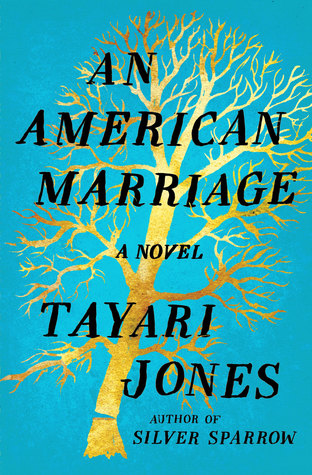
Review for "An American Marriage" by Tayari Jones (2018)
Rating: 4 out of 5 stars

Because there’s such a long waiting list to check out this book at my city’s library, I ended up getting a hold of the audiobook version of this through Hoopla. Ultimately I’m glad I did that, because I thoroughly enjoyed the audio version. The two actors reading the story breathe a kind of life into it that I don’t think I would have experienced had I chosen to read it.

“An American Marriage” is the story of Celestial and Roy, a newly married couple residing in Atlanta. For all intents and purposes, they are a mismatch: Celestial is well-grounded and from an urban upper class family; while Roy has a roaming eye for trouble and is from a rural working class upbringing. Despite their differences, they are happy. The couple is only a year and a half into their marriage when Roy is falsely arrested for rape and sentenced to 12 years in prison. From here the novel goes into epistolary form, with the separated couple writing letters back and forth to one other. Roy finds himself adjusting to prison life, while Celestial makes the most of her loneliness and despair in Roy’s absence by creating dolls with her husband’s likeness. She also finds success as an entrepreneur, traveling the country and selling her dolls.

Eventually, Roy is released from prison after 5 and a half years due to a technicality with his trial. He returns home, but both Celestial and Roy find that the terrain of their marriage, as well as who they are as people, have vastly changed. I won’t give away the rest of the story, but I will say that Roy’s release from prison happens early on, at about 35% into the book. There is literally an entire story line after this event that gets very messy for both Celestial and Roy, and not in a good way.

This novel is not a quick read. It’s a slow burn of emotion, with a marriage disintegrating at the center. Both the motives and lives of Roy and Celestial are explored in detail, both characters take turns being both right and wrong.

This book is a solid 4 stars. I can definitely understand why it’s getting the press it’s getting, because it’s definitely well deserved. This one’s a triumph, definitely read it!

Review: Gun Love

35758074
Review for "Gun Love" by Jennifer Clement (2018)
Rating: 2 out of 5 stars

Meh, didn’t really like this book.

“Gun Love” is the story of Pearl France, a 14-year-old girl living with her mother in a parked car in a derelict Florida trailer park. Intriguing characters abound in and about the Indian Waters Trailer Park: Pearl’s best friend April May and her parents, Rose and Sergeant Bob, the clergyman of gun buy-backs, Pastor Rex, and Corazon, a Selena-loving, gun toting Mexican woman.

Pearl and her mother share a special bond until she forms a relationship with a mysterious man who hangs around the trailer park named Eli. I won’t tell you what happens specifically with this character for the purposes of this review, but I will say that after he comes into the novel (about 30% of the way in) the narrative begins to fall apart completely. Characters come and go after this point, and none of them are fleshed out enough to move the story along. I also skimmed the last 10% of this book, the events of which seemed totally pointless.

Overall, I liked the writing here but I think the plot could have been handled better.

[Note: I received a free digital copy of this book from the publisher, Hogarth Press, and NetGalley in exchange for an honest review.]

Top Ten Tuesday: Favorite Book Quotes

Alas, another Tuesday. Here’s some of my favorite book quotes:

  1. “If I have to fight, it will be just as good a day to die as any other.” – Paulo Coelho, The Alchemist
  2. “What is it to worship an image? It is to pray for a gift you will never receive.” – David Mura, A Male Grief: Notes on Pornography and Addiction
  3. “Shelter, if it’s warm and safe, may keep a family from dying. Only a home allows a family to flourish and breathe.” – Jonathan Kozol, Rachel and Her Children
  4. “Where there is power, there is resistance.” – Michel Foucault, The History of Sexuality, volume 1
  5. “We know through painful experience that freedom is never voluntarily given by the oppressor; it must be demanded by the oppressed.” – Martin Luther King, Letter from a Birmingham Jail
  6. “Love catches fire, it trespasses, it breaks, we break, it comes back to life…we come back to life. Love may not be eternal, but it can make us eternal.” – Julie Maroh, Blue is the Warmest Color
  7. “It’s the myth of the American Dream that with initiative and industriousness, an individual can always escape impoverished circumstances. But what data shows is that you have these multiple assaults on life chances that make transcending those circumstances difficult, and at times, nearly impossible.” – Ta’Nehisi Coates, We Were Eight Years in Power
  8. “I love America more than any other country in this world, and, exactly for this reason, I insist on the right to criticize her perpetually.” – James Baldwin, Notes of a Native Son
  9. “Ignoring men–whether romantically or rhetorically–is existential violence to them.” – Jessica Valenti, Sex Object: A Memoir
  10. “I am deliberate and afraid of nothing.” – Audre Lorde, From a Land Where Other People Live

Review: A Land of Permanent Goodbyes

35082445
Review for "A Land of Permanent Goodbyes" by Atia Abawi (2018)

Rating: 3 out of 5 stars

This is a heartbreaking, modern day story about a young man named Tareq from Syria who loses his mother, several of his siblings, and his grandmother in the tragic bombing of his home during the Syrian war. He flees with his father and sister to his uncle’s home in Raqqa, though he soon discovers that it is not safe in this location either. Tareq eventually leaves Raqqa with his cousin and escapes to Turkey. However, due to the large amount of Syrian refugees like himself, there are few job opportunities available. Deciding to continue his journey into Europe to gain asylum, Tareq travels to Greece, hoping to gain some kind of sense of normalcy.

I liked the premise of this book but its execution was a firm ‘no’ for me. Though the story itself is extremely compelling, the author’s choice to go with an omniscient narrator, “Destiny,” was a strange one. “Destiny” interrupts the story often, giving us its thoughts on war, the human condition, people’s sufferings, insights on various unconnected character’s lives, etc. I didn’t like this. As a matter of fact, every single time “Destiny” began to narrate I found myself skimming pages and disengaging from the story. I feel there was no need for this kind of storytelling, Tareq’s story was certainly strong enough to maintain its own narration.

Also included in this story is a young Greek woman’s account of her interactions with Syrian refugees. Although she is connected to the events of the novel, the author’s choice to include her narration (in addition to “Destiny”) was odd as well. Other than a shallow representation, her account of the events were pointless and really seemed to serve no purpose other than to propagate a kind of ‘kind White savior’ trope.

When I got to the end of this, I noticed this was a YA book. This book is pretty graphic in its descriptions of war–there are descriptions of beheadings, executions, and other pretty harsh realities that a child is in for should they decide to read this. But as an educator, I don’t believe in censorship, so this is a very eye-opening and timely book.

Review: Where the Dead Sit Talking

35663633

Review for “Where the Dead Sit Talking” by Brandon Hobson (2018)

Rating: 4 out of 5 stars

Set in late 1980’s rural Oklahoma, “Where the Dead Sit Talking” is the sad, dark tale of a 15-year-old Native American teenager named Sequoyah, sent to live with a foster family after his mother’s imprisonment. From the outset of the novel, it is evident that Sequoyah carries many emotional scars, having dealt with his mother’s alcoholism and abuse in previous detention settings.

Harold and Agnes Troutt are also the foster parents of two other children: George, a younger, also emotionally damaged boy (his behavior strongly suggests that he’s possibly on the autism spectrum), and Rosemary, an older Native American girl with whom Sequoyah becomes obsessed. They bond over their shared heritage (he is Cherokee, she is Kiowa), smoking cigarettes in her bedroom at night and sharing their deepest secrets with each other. Their relationship is equal parts platonic and disturbing, with Sequoyah’s violent fantasies and obsessive thoughts of Rosemary taking up much of the novel.

This book has a very dark, brooding tone all throughout. There is no happy ending or ‘triumph’ by the main character. What is here is an unsettling silence at the heart of the story that betrays the notion that even though everything seems ok on the surface, it’s apparent that it isn’t. Despite the Troutts kindness and “good” intentions, they are powerless to stop the human catastrophe that simmers beneath the surface of their home. I think the author does a great job of depicting how even the most well-intentioned acts of goodness can be misdirected and to the complete detriment of the individual.

I highly recommend this book.

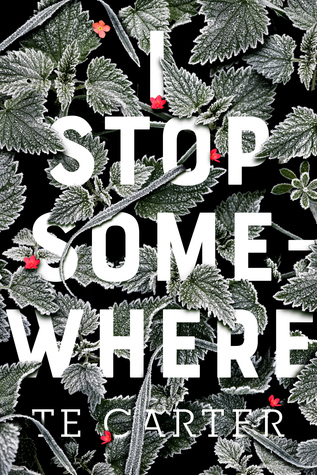
Review: I Stop Somewhere

29751533

Review for "I Stop Somewhere" by T.E. Carter (to be published on 28 February 2018)
Rating: 2 out of 5 stars

I didn’t like this book. It’s kind of a mashup between “The Lovely Bones” and “13 Reasons Why,” neither of which I liked either. I read this fairly quickly, not because I was engaged with it, but out of desperation to get it over and done with.

Ellie is a quiet, shy teenage girl in a small New York town being raised by a single father. She comes from a working class background and quickly becomes enamored with a wealthy local businessman’s son, Caleb. From frequent flashbacks, we know that Caleb is not what he seems. He is cruel and sadistic, as well as the main perpetrator in a string of brutal assaults and rapes of local girls, one of which ends Ellie’s life.

The first 100 pages of this book are unbearable. Ellie is a spirit, trapped in the location of the last moments of her life, watching from the afterlife as girl after girl is taken to the same abandoned house and brutally assaulted and raped. She drifts back and forth between each act of violence she witnesses to narrate events in her former life, which quite frankly, doesn’t have much plot depth or character development.

Let’s pause and talk about this for a moment. This is one of my greatest pet peeves in fiction–authors who overemphasize rape and acts of violence through excessive narrative detail, with very little to no character development (the film equivalent to this is known as “torture porn”). It’s gratuitous, it’s voyeuristic, and worse, it does absolutely nothing to challenge the rape or the rapist, nor does it shift power in favor of the victim. You cannot conquer rape culture or violence through “torture porn”- style writing. It only serves its own end, which is to capitulate on the sexist notion that to keep people interested, women must die or be somewhere in the act of dying. It’s wrong.

Thankfully, the tone of the book does shift in the second part, which turns to the voices of the victims. There is a kind of reckoning in the end that’s somewhat hopeful, along with a thoughtful commentary on victim-blaming and why Ellie’s disappearance was ignored for so long (i.e., she’s from a lower social class and not from the “better” side of the tracks). I still don’t like this book though. Even though the sun does comes out in the end, there was too much bleakness, too much of a lingering dark cloud here. If I hadn’t have read the first part I think I would have felt better about it, or maybe even given this a higher rating.

This book is categorized as YA, btw. If I was troubled greatly by reading this, I cannot imagine what it does to the psyche of a younger person, who may or may not possess the insights to deal with this level of realism. Proceed with caution.

[Note: I received an advance digital copy of this book from the publisher and NetGalley, in exchange for an honest review.]

Top Ten Tuesday: Books I Could Re-Read Forever

Ahh…another Top Ten Tuesday. I’ve been away for a few weeks because the topics presented didn’t really appeal to me. But hey–what’s past is past, right?

  1. The Bluest Eye, Toni Morrison. I read this book on my own when I was in high school, and I must admit that it was one of the first books by a Black woman author I’d ever read. Later on I would realize that this was completely unusual, being that I had been through 11 years of education in school and none of my teachers had ever bothered to teach a book written by a Black woman. I was completely enthralled with this novel. I still am. This book is one of the reasons why I am who I am, a Black woman educator who is earning a Ph.D. in literacy education, to make sure that ALL students have access to books that are culturally relevant to them.
  2. Manuscript Found in Accra, Paulo Coelho. In this book, a philosopher answers questions from people on life and the connections we make to other humans and just existing in general. It’s a very simple format, but the knowledge it imparts is essential reading. When I first read this I was going through a hard time in my life and found this book illuminating. I’ve read it twice since.
  3. I’m Thinking of Ending Things, Iain Reid. I’ve reviewed this here before and could read and review it again a few more times, just to give it the justice it deserves. Normally I don’t care for books that are too grainy, too ambiguous in their execution but this one is one of the few that actually succeeds in that task. There’s even a website where people can type around and talk about what they think this book means. It’s not the what or the how, but the interpretation of both that’s interesting here.
  4. The Color Purple, Alice Walker. This is the book I read after The Bluest Eye that continued to open up the world of Black women’s perspectives and ultimately my own. Even though I love the movie, the book is much better.
  5. The House on Mango Street, Sandra Cisneros. Every now and then I read this book to marvel at its beautiful complexities and remind myself that I’ll never be as good of a writer as Sandra Cisneros.
  6. Teaching My Mother How to Give Birth, Warsan Shire. If you watched Beyonce’s “Lemonade” visual album, then you’ve already heard this woman’s words. Most of the spoken word on that album was written by Shire and published in her first volume of poems back in 2011. I copped this book back in 2013 after reading Warsan’s poems on Tumblr and kept it in my backpack for the next 3 years, I needed it that much. I read this book often, as a matter of fact, I’ve bought this book for other people several times as gifts.
  7. A Monster Calls, Patrick Ness. I’ve reviewed this here before and still don’t think I’ll edit it to say anything more than what I have. It’s just something about this book sticks to your bones and won’t let you forget it. It’s truly extraordinary.
  8. Charlotte’s Web, E.B. White. I read this book so much as a kid that I remember I broke the spine. My mom bought me another one, and the pages became so dog-eared it was barely readable. Needless to say, I truly loved this book growing up. Still do.
  9. Wonder, R. J. Palacio. I remember reading the last pages of this book in a Panera restaurant and crying so hard that one of the employees approached me and asked if I was alright. I pointed to the book and told her, “you gotta read this.”
  10. Fly Away Home, Eve Bunting. The first couple words of this picture book completely grab you and shake your soul: “My dad and I live in an airport. That’s because we don’t have a home and the airport is better than the streets.” It’s a book about a young child named Andrew who lives with his dad in the terminal of a busy airport in an unnamed city. The ending brings no resolution but a hint of hope. Needless to say, its definitely a book worth buying.


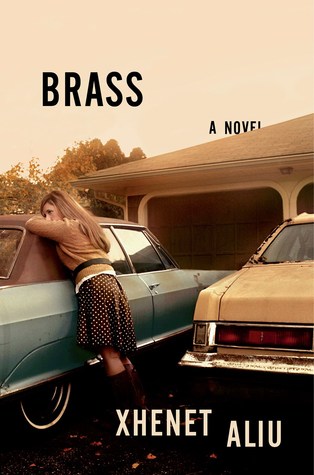
Review: Brass

34837009
Review for "Brass" by Xhenet Aliu (2018)

Rating: none (DNF)

DNF. Got to about the 35% mark before deciding not to continue.

In the 90’s, Elsie is a working class teenage waitress who falls for a married Albanian cook at the diner where she works. In the present day, her daughter, Luljeta, gets an rejection letter from NYU. The novel is told in the dual perspectives of both mother and daughter, living and loving in the their working class Connecticut town.

It’s not the writing here–it’s actually quite gorgeous. It’s just the story itself that I didn’t find very compelling. I kept putting the book down after several pages or so and coming back to it, not quite remembering what had happened before. It then occurred to me that perhaps this story is less about the plot and more of a character study–which is fine, but I think that sometimes that approach has its drawbacks, the down side being that I couldn’t seem to get into the characters either. The 2nd person perspective of the daughter also threw me for a loop. Instead of drawing me in, it completely distanced me from her story.

I may try this book again at a later time. For right now, though, I’m going to have to pass on this one.

Review: My Name is Venus Black

35340556

Review for "My Name is Venus Black" by Heather Lloyd (to be published on 27 February 2018)

Rating: 2 out of 5 stars

Meh, I didn’t care for this book.

“My Name is Venus Black” opens with 13-year-old Venus locked up for a crime that she refuses to elaborate on. For the sake of not spoiling the novel I won’t tell you what the crime is either, other than to say that she spends a little over five years in a juvenile facility for it. During Venus’ incarceration, her younger brother Leo, who is developmentally disabled, is kidnapped by a family member (this is not a spoiler–part of the novel is told from his perspective). Her mother Inez, with whom Venus has a contentious relationship, blames her for Leo’s disappearance and the police do not succeed in locating him. Eventually, Venus emerges as an adult from juvenile prison. She proceeds to get a fake name, a job, rents a room in a boarding house, and tries to acquire some sense of normalcy. She does not get past her longing to find her brother, which grows as the story goes on.

This is a novel about moving on from the past and finding forgiveness. There are problems here though, and none of them have anything to do with the plot. First, this book has an identity problem. The publisher is clearly marketing it as literary/general fiction, but the tone, characterization, the language (and yes, the plot) very much read like a YA novel. Not that I have a problem with YA–I love YA–but this book does not seem as if it were written for adults. As a matter of fact, I could put this book and pretty much any YA novel out right now side by side and find about 10 points of similarity to rest my case on. The categorization of this book seems like an glaring error, like maybe it was originally intended as YA and someone stuck it in the general lit category at the last minute.

There’s also strange shifts in points of view here. Venus’ POV is always first person, but everyone else’s thoughts are presented in a third person omniscient voice, which changes often–sometimes in the same chapter. And oddly enough, at least 3 of the perspectives told consistently here are of adults. Which brings me back to the genre problem I was just talking about. Could it be that some editor made a suggestion and stuck this in the general lit category just because of the inclusion of adult perspectives? If so, that was an ill-advised decision.

And oh yeah, the ending. The details of Venus’ crime aren’t revealed until the last few pages of the book. By then, with all the hints dropped, I pretty much already knew what had happened anyway. This delay seemed unnecessary, like bad suspense. The end was also kinda Lifetime movie-ish. You know, like when you’ve watched the drama go down and then all the so-angry-at-each-other characters end up sitting around drinking lemonade together while the credits roll? Zzzz.

Overall, it’s not a bad book, but there were too many issues here to give it more than 2 stars.

This book has a pretty cover. I like stars.

[Note: An advance electronic copy of this book was provided to me by the publisher, Dial Press, as well as NetGalley in exchange for an honest review.]

Review: Annihilation

17934530

Review for “Annihilation” by Jeff VanderMeer (2014)

Rating: None (DNF)

I DNF’d this at about 50% percent.

I have to admit that this novel did spark my curiosity at first. The setting has a definite creep factor and it fits squarely in the sci-fi genre, two things that I like. As far as the story itself, “Annihilation” is about four women explorers–a biologist, a psychologist, a surveyor, and an anthropologist–commissioned by a presumed government agency known as the “Southern Reach.” The team is the 12th expedition to the area, all other efforts to explore the region have failed and ended in the deaths of the explorers. The names for the women are never given, they are only there to work together, explore Area X, and report back to the agency with their findings. The story, however, is told by the biologist, who writes her findings in a journal.

Immediately upon entering Area X you know that things are not what they appear to be. The land is uninhabited, though there is evidence that humans lived there. Upon entering, the team discovers a tower (or is it a tunnel?) that is not on the map, with strange plant-like spores and cryptic writing inside. The mystery of the tower (tunnel?) is obviously the crux of the book (there are pages and pages of descriptions about it, veering dangerously into Big Dumb Object territory) but it all got so boring that it just wasn’t enough to sustain my interest in continuing.

For the first 10%, I was willing to suspend my disbelief long enough to give this a chance but by the middle, it no longer seemed worth it. The characters have no real personality and are so frustratingly neutral that I was disengaged from about the 10% mark onward. For my time invested, I felt like all of the weirdness went nowhere. Hence, I stopped reading.

I probably will see the movie for this one, which is due in theaters in a few days. Though I am in the the “I Didn’t Get It” crowd, I’m still, in some ways, curious about the Area X mystery. I probably won’t read the rest of this series though to find out. I do want to know what it is, I’m not that damn curious. Not by a long-shot.