Review: The Man They Wanted Me to Be

41148857. sy475

Review for "The Man They Wanted Me to Be: Toxic Masculinity and Forging Another Way for Men" by Jared Yates Sexton (2019)

Rating: 4.5 out of 5 stars

This book should be essential reading for all men, especially in today’s times.

In “The Man They Wanted Me to Be,” Jared Yates Sexton writes about his and his family’s experiences throughout a lifetime legacy of toxic masculinity. Much of the first section focuses on the personal experience of the author and the negative consequences of sexism and violence, which he witnessed through his abusive father. Jared, a sensitive child raised by a single mother in rural Indiana, eventually develops a tough emotional shell and becomes suicidal after years of abuse and bad role models due to his mother’s choices of men. He discusses the way in which the ‘ideal’ masculinity is essentially unattainable and not a real way of living but a lie. He also discusses the socialization of boys–the way in which parents and society train boys not to cry, to repress emotion, to hate all things ‘feminine’ and to express themselves through physicality and violence. The second section is about Jared’s relationship with his father and how they eventually reconcile after years of estrangement.

The third and the last section concerns itself with the ways in which toxic masculinity has given rise of the alt-right and the election of the current president. It is focused squarely on White men, who, let’s face it, need to do better. He discusses the toxic culture in this group that wraps itself in privilege and white supremacist ideas, in addition to sexist, homophobic, and xenophobic views against ‘them’ (namely minorities, women, LGBTQ individuals, and immigrants).

The only thing I wished this book would have touched on more is how sexism traps men of color as well as queer men. However, I realize that that discussion is a completely different animal. Although we’re still talking about bad masculinity, we know that there’s history, race, class, and other socioeconomic factors that change the flavor of the topic. I would like to read Sexton’s opinions on other aspects of this conversation, however.

Definitely do pick up this book. While I would not describe anything in here as particularly new or shocking, it is necessary reading to begin to undo much of the damage due to toxic masculinity.

Review: The Affairs of the Falcons

Pardon my absence, I’ve been ill for a few weeks. Part of this is neglecting my diet and habits toward self care, the other part of that is a genetic component to my life that I need to be more cognizant of. If you’ve never had large kidney stones I hope that you never get them (or have to have surgery to remove them), and that you take loving care of your kidneys and your health in general.

The good news? I did a lot of reading while I was at home recovering.

Ok. On to my review…

41479536. sy475

Review for "The Affairs of the Falcons" by Melissa Rivero (2019)

Rating: 3 out of 5 stars

This book was so-so. I liked the premise of it, the execution, however, not so much.

“The Affairs of the Falcons” is the story of Anita Falcon, an undocumented immigrant from Peru. She lives with her husband’s cousin’s family in Queens in a cramped apartment. Anita is married to Lucho, has two young children, and works as a seamstress in a factory. Her husband drives a cab, but when the story begins, we learn that he has lost this job due to his undocumented status.

As you can imagine, money is very tight in this family. Most of this book revolves around the subject of money–getting it, losing it, and borrowing it from others to pay back the loan sharks who smuggled the family into America. Due to her status as undocumented there is no access to banks, and Falcons are always limited in terms of what kinds of jobs they can get. Housing is also an issue, internal conflicts in the home push the Falcons’ welcome with Lucho’s family to the limit. Also depicted here are the ways in which class and race play into the lives of a Latinx family (Anita is rural and indigenous, Lucho is lighter skinned, well educated, and from Lima). Lucho’s family remind Anita often of her despised, lower status among them.

Despite the external pressures, Anita is not a weak character, though she does makes questionable choices throughout the book. I don’t necessarily have a problem with this, my reason for the 3 stars is because I found the book to be less than compelling. There are tons of books out there on the immigrant experience, and I don’t really feel this book will stand out much within that group. There is not much that happens here that we haven’t read before, especially if you are familiar with this sub-genre of books.

I definitely recommend reading this book though. I’d also be open to reading more from this author in the future.

Review: Ghost Wall

Ahhh, I know it’s been a while. Forgive me for my lack of updates. It is almost the end of the spring semester, so my dissertation and scheduled presentations have been taking up most of my reading time. Updates may be a bit slow until mid-May.

Anywho, I do have a quick book review for you guys. Sorry it’s not a good one, but you know me. 🙂

40968507

Review for "Ghost Wall" by Sarah Moss (2019)

Rating: 2.5 out of 5 stars

Nah, I didn’t really like this. Thank God it was short.

Teenage Silvie and her Mom and Dad are a part of an experimental anthropology course that involves spending several weeks in the forests of a remote part of north England, living as if they were people during the Iron Age. They make tools, forage for food, wear antiquated clothing, and sleep in huts, just as if they were people from that ancient time period. With an abusive father and a mother that acquiesces to his will, Silvie is more of a hanger-on to this bizarre anthropological experiment.

During their time in the forest, Silvie meets a young woman named Molly, student in the class. She challenges Silvie to question her life, including why they are participating in the experiment. As the story moves forward, it is quite clear that there’s some very sinister, weird shit going in Silvie’s dad’s ‘lil Iron Age LARP adventure…

What bothered me the most about this book is that even though the plot sounded good on paper, the writing and the characters really weren’t all that engaging. You know from the first 3 pages that there is something ominous that is going to happen to these role-players, you’re just not sure what. The suspense is drawn out through most of the book (thankfully it’s short) but by the time the end arrives it’s nothing that you haven’t predicted already. The style was also an issue–with no punctuation and few line breaks, much of the novel runs together in huge paragraphs, a slog to read.

Somebody out there will appreciate this–it just wasn’t me.

Review: The Cost of Living

16449086

Review for "The Cost of Living" by Rob Roberge (2013)

Rating: 4.5 out of 5 stars

(Still on my ‘older’ book kick. Bear with me.)

Bud Barrett is an aging ex-rockstar who’s spent most of his life being a junkie. Most of his life he’s either been high, doing schemes to get high, calculating how long it will take to get to the next high, or coming back from a high. His life has been no cakewalk: his mother committed suicide when he was a young child and his relationship with his father has been nonexistent ever since he witnessed him kill someone for reasons he doesn’t understand. These two traumatic events lead Bud into a life of drugs and drinking, and finally, some kind of reckoning with the past.

I love the non-linear style in which this book is presented. Each chapter is essentially its own story, presented at various periods of Bud’s life. In some accounts Bud is quite the addict, in others he’s clean, and in some he deals with the toll of his addiction on his relationships with friends, family, and his estranged wife. It’s a hell of read, I enjoyed every page of it.

4.5 stars.

Review: Anatomy of a Girl Gang

18246699
Review for "Anatomy of a Girl Gang" by Ashley Little (2013)
Rating: 4 stars out of 5

“Bad bitches don’t die.” p. 108

LOL, I crack myself up sometimes. I also cracked myself up with this book. Anywho, I definitely liked this one.

Stuck in the streets of a gritty neighborhood in Vancouver and fed up with the sexist actions of their all-boy gang, girl gangsters Mac and Mercy decide to start their own crew, which they call The Black Roses. Mac sets strict rules at the outset: there will never be more than 5 girl members, they will never use the drugs that they sell, and they will be their city’s worst nightmare.

Together, Mac and Mercy recruit 3 more girls. Each member is distinct in their personality and serves their own purpose within the gang. Mac is the leader, mastermind, and the O.G. of the gang (that’s ‘original gangster’ for you squares). Mercy, a “Punjabi princess,” is Mac’s right hand with a special aptitude for theft (cars, store merchandise, you name it). Kayos is from a rich family and has a special flair for violence. Sly Girl, who comes from a hard life on a reservation, is a master of the ups and downs of buying, selling, (and later using) drugs. The final recruit, Z, is a young Chinese graffiti artist whose job it is to market The Black Roses’ message of mayhem by tagging their name on street signs and bridges all across the city.

At first, the Black Roses are wildly successful. Although they run into some problems with other gangs, they quickly solve them with violence. They begin to save their money and dream of leaving the streets. There’s even time for a romance to develop between two of the members. All continues to go well until a devastating blow leaves them without hope or the money they’ve saved to plan an escape. Desperate, the girls come up with an ill-advised plan which sets into motion a chain of events that eventually destroys them all.

This book is told in alternating narratives of all five of the characters. Interspersed throughout the story is the voice of Vancouver, an eye in the sky that “sees” all. Honestly, the writing of this book is not all that excellent but the story managed to be quietly devastating enough to keep me turning the pages. The mid-90’s hip hop language, explained to the less-than-wary with the aid of a glossary in the back, is also funny too with definitions for words like “slinging,” “burners,” and “gat.”

This is YA, but I’d recommend for adults too.

Four stars, yo…

Review: Bang

34956556

Review for "Bang" by Daniel Pena (2018)

Rating: 4 out of 5 stars

A dark story, indeed…

“Bang” is the story of a Mexican-American family with ties on both sides of the border. Araceli, the matriarch, lives with her two sons near a fruit grove in Harlingen, Texas. She sits and waits daily for her husband, who’s long since been deported back to Mexico. She lives with sorrow in her husband’s absence, as well as frequent nosebleeds and blackouts from the constant exposure to pesticides. Cuauhtemoc, the more troublesome elder son, flies crop duster planes for the fruit farm while her younger son, Uli, struggles to complete high school.

After a late night flight with Uli, Cuauhtemoc crashes one of the farm’s planes onto the Mexican side of the border. Both brothers are injured but manage to survive, and eventually become separated and trapped in Mexico. A new chain of disastrous events are then set into motion when Araceli, who hears of the crash, crosses the border to look for her sons. Cuauhtemoc is forced to fly drug deliveries for a violent local cartel, while Uli searches for his father but ends up getting caught up in a local dogfighting ring and boosting copper for cash.

This novel is presented in alternating narratives among the main three characters. This slows down the pace considerably, so there is an extraordinary focus on the human suffering taking place on both sides of the border, as well as the violent drug war taking place there. It’s an uncomfortable story, but one that definitely needs to be told.

Four stars.

Review: Waste

26113830

Review for "Waste" by Andrew F. Sullivan (2016)

Rating: 3 out of 5 stars

Larkhill, Ontario, 1989. Late at night two teenage friends, Jamie and Moses, hit a lion while driving down a darkened back country road. They throw the carcass in a ditch and make a promise to tell no one about the incident. Moses goes back to the no-tell hotel where he lives with his eccentric mother and discovers she is missing and begins to look for her. Meanwhile at his job in a butcher shop, Jamie discovers a decomposing body in a can of bone waste. All the while this is going on, there’s a pair of sadistic, bearded ZZ Top looking brothers who love to kill people with power tools, searching for the person who killed their pet lion, Falcor.

Don’t start thinking there’s a light at the end of this bleak-ass tunnel.  (p. 2)

The very first page tells you to not expect anything good out of this book, so I didn’t. Overall, this book is a very dark tale about the goings-on in a small Canadian town.  From the first to the last page it never lets up in its bleakness–nasty hotels, people with dirty jobs, violence with impunity, shuttered factories. Everyone in this book is some version of a loser, stumbling through their wasted lives as addicts, dealers, wannabe skinheads, or just assholes in general. There’s a healthy dose of black humor that breaks the emptiness every now and then, but the bleakness drags this book on much longer than it should. The first quarter moves moderately fast, but the middle was a snooze fest. I considered DNF’ing but wanted to get to the end, which was pretty decent. For a book that’s so keen on violence, the only acceptable end is a violent one. “Waste” certainly delivers that.

Three out of five stars. Read if you’re into Donald Ray Pollock, Chuck Palahniuk, or Irvine Welsh-type stuff.

Review: How to Love a Jamaican

35395301
Review for "How to Love a Jamaican" by Alexia Arthurs (2018)
Rating: 4.5 out of 5 stars

“How to Love a Jamaican” is an engaging collection of eleven short stories from debut author Alexia Arthurs. These are not your “typical” immigrant stories, however. Arthurs is not afraid to delve deeply into the lives of her characters and discuss complex issues of sex, class, and race both in Jamaica and within the lives of Jamaicans living in America.

All of these stories are about Jamaicans and cover a wide variety of their lives–male and female, straight and gay, old, young, and middle aged, on the island and in America. The characters are not linked, but this is definitely a cohesive collection of stories. In “Mash Up Love,” a set of identical male twins vie for the attention of their mother and loved ones. “The Ghost of Jia Yi” is about a young college student’s adjustment to America and her realization that she is an outsider. “Light Skinned Girls and Some Kelly Rowlands” is about the class conflicts within a friendship between two college girls, one Jamaican born, the other U.S. born with Jamaican born parents. “Bad Behavior” is about a free-spirited teenage girl sent to the island for disobeying her parents, with the hope that her stern Jamaican grandmother will ‘straighten’ out her wayward behavior. I also liked “Shirley from a Small Place,” about a Jamaican American pop star who finds international success and deals with the pitfalls of fame.

It’s hard to choose a favorite story here, I really liked every single selection. Even though the stories share similar themes, there were no repeats and not a single word was wasted.

4.5 stars. I will definitely read the next thing that Alexia Arthurs writes.

[NOTE: An electronic copy of this book was provided by the publisher and NetGalley in exchange for an honest review.]

Review: Hell is a Very Small Place

25159286

Review for "Hell is a Very Small Place: Voices from Solitary Confinement" by Jean Casella, James Ridgeway, & Sarah Shourd (2016)

Rating: 4 out of 5 stars

As an educator I’ve always been interested in the criminal justice system–how so many people get caught up it, how they survive there, and of course, how they can stay out. This book is a collection of essays about the subject of solitary confinement, otherwise known as administrative segregation (ad segs), special housing units (SHUs), and various other names depending on the state and institution responsible for their use. Regardless it’s all the same–23 or 24 hours a day in a small cell alone, often with no books, tv or radios, communication with outside people, papers to write with, or any form of stimulation other than the concrete walls. It is such a mind numbing and soul crushing experience that the UN has declared it torture and countless doctors and mental health experts have denounced its use. Yet, it continues on an unprecedented level in our nation’s jails and prisons.

There’s a really good historical perspective on solitary confinement in the U.S. in the beginning of the book. Solitary confinement was used widely in the 1800’s and then abandoned due to its terrifying psychological effects. In the 1970’s, the practice was picked up again, mostly due to prison overcrowding, lack of educational and training programs, higher levels of violence, etc. The essays in this volume are particularly powerful, all of them either from people currently in solitary who have been there for long periods of time (20 years or more) or from people who are now free individuals, living with the psychological effects of this practice. The last section is a series of articles by experts, all of which condemn the practice and offer solutions.

It is easy to dismiss this book and the issues it brings up with the Trump-era view that criminals are terrible people who belong in prison. It’s even easier to say that these terrible people deserve punishment on top of the punishment they’ve already received for not following the rules. This is simply not true. Many of the people who are sent to solitary are sent there for non-violent offenses, sometimes for something as simple as “possessing too many postage stamps,” “associating with known gang members” (California), or in New York state, for “wearing shower shoes outside of the shower” or “using profanity.” Time in the SHU is usually given by prison officials and the prisoner often has no right to a defense. And the punishments can be as long as the officials deem necessary–weeks, months, even years. Or, in some cases, life.

I definitely recommend this book. Despite what we think of the people in the correctional system, the fact remains that many of these “terrible” people will get out–someday. They will live next to us and share our social spaces. The question becomes one of whether we would prefer someone who’s been rehabilitated with kindness or someone who’s been locked in a cage like an animal. I personally prefer the former.

This is a great book. Read it!

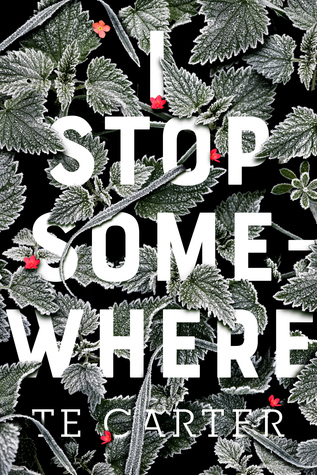
Review: I Stop Somewhere

29751533

Review for "I Stop Somewhere" by T.E. Carter (to be published on 28 February 2018)
Rating: 2 out of 5 stars

I didn’t like this book. It’s kind of a mashup between “The Lovely Bones” and “13 Reasons Why,” neither of which I liked either. I read this fairly quickly, not because I was engaged with it, but out of desperation to get it over and done with.

Ellie is a quiet, shy teenage girl in a small New York town being raised by a single father. She comes from a working class background and quickly becomes enamored with a wealthy local businessman’s son, Caleb. From frequent flashbacks, we know that Caleb is not what he seems. He is cruel and sadistic, as well as the main perpetrator in a string of brutal assaults and rapes of local girls, one of which ends Ellie’s life.

The first 100 pages of this book are unbearable. Ellie is a spirit, trapped in the location of the last moments of her life, watching from the afterlife as girl after girl is taken to the same abandoned house and brutally assaulted and raped. She drifts back and forth between each act of violence she witnesses to narrate events in her former life, which quite frankly, doesn’t have much plot depth or character development.

Let’s pause and talk about this for a moment. This is one of my greatest pet peeves in fiction–authors who overemphasize rape and acts of violence through excessive narrative detail, with very little to no character development (the film equivalent to this is known as “torture porn”). It’s gratuitous, it’s voyeuristic, and worse, it does absolutely nothing to challenge the rape or the rapist, nor does it shift power in favor of the victim. You cannot conquer rape culture or violence through “torture porn”- style writing. It only serves its own end, which is to capitulate on the sexist notion that to keep people interested, women must die or be somewhere in the act of dying. It’s wrong.

Thankfully, the tone of the book does shift in the second part, which turns to the voices of the victims. There is a kind of reckoning in the end that’s somewhat hopeful, along with a thoughtful commentary on victim-blaming and why Ellie’s disappearance was ignored for so long (i.e., she’s from a lower social class and not from the “better” side of the tracks). I still don’t like this book though. Even though the sun does comes out in the end, there was too much bleakness, too much of a lingering dark cloud here. If I hadn’t have read the first part I think I would have felt better about it, or maybe even given this a higher rating.

This book is categorized as YA, btw. If I was troubled greatly by reading this, I cannot imagine what it does to the psyche of a younger person, who may or may not possess the insights to deal with this level of realism. Proceed with caution.

[Note: I received an advance digital copy of this book from the publisher and NetGalley, in exchange for an honest review.]