Review: Sing, Unburied, Sing

32920226
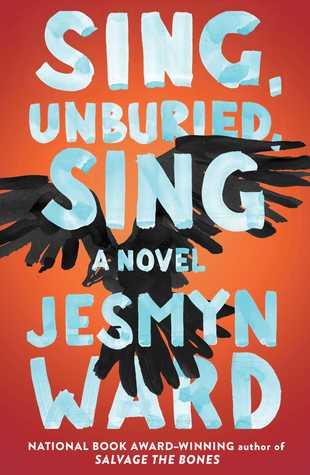
Review for "Sing, Unburied, Sing" by Jesmyn Ward (2017)

Rating: none

DNF, right around 54%.

I simply couldn’t get into this book. Not that it wasn’t good, or that Jesmyn Ward isn’t a sensational writer (she is), but I just don’t think that this book is quite for me at this time. I go through phases with my reading, sometimes I can endure what I’m not into and sometimes I find it so unbearable I can’t finish. This one of those times.

Despite what the reviews say, I found this to be a very depressing novel from the outset. Preteen Jojo and his sister are from an impoverished family near the Mississippi border, living with (and pardon my French) the most fucked-up parents imaginable. Michael, his father, is a former convict, and Leonie, his mother, is a drug addict who gets high on the regular and talks to her dead brother. Despite his parents’ waywardness, Jojo is a good kid who manages to take on a parental role to his sister Kayla. He is wise beyond his years in a way that a child should not have to be, which made my anger toward his parents all the more apparent. Pop, Jojo’s grandfather, is also a kind man, who seemed to add a bit of tenderness to the story.

There is a lot of magical realism in this novel (ghosts that are very much real, etc.) and even though I’ve read plenty of stories with it, I found this element to be kind of confusing. As the story went on, I felt farther and farther away from it, which is pretty much why I stopped reading it.

I see myself coming back to this book, probably in the near future. For now though, I won’t rate it, other than to say that it wasn’t quite for me.

[Thanks to NetGalley and Scribner for a free digital copy of this book.]

Review: Black Mad Wheel

31752345
Review for "Black Mad Wheel" by Josh Malerman (2017)
Rating: 2 out of 5 stars

Oooh, no. Just…no. HELL NO.

Maybe my hopes were a little too high for this one, especially after the success of Josh Malerman’s first novel, Bird Box. My reaction to this one was: WTF? And not in a good way, either.

The U.S military hires a rock band of former WWII soldiers for a top secret mission in the Namibian desert, to search for the source of a mysterious sound that incapacitates people who hear it and makes their weapons useless. The band hesitates, but finally accepts the offer to go to the desert in search of the sound after the promise of a large salary.

There are a few moments early on that manage to pull you in and give you just enough hope that this book would be creepy, much like Bird Box. But this one just ended up being weird, boring, and just plain silly. Plus, I just didn’t get it. We also see the Big Bad Guy, which is a psychological thriller no-no.

Skip this one.

Review: All the Dirty Parts

33590627
Review for "All the Dirty Parts" by Daniel Handler (2017)

Rating: 2 out of 5 stars

Well, this is umm, interesting…

Daniel Handler’s (aka Lemony Snicket) latest novel is a look inside the mind of Cole, a teenage boy with one of the most intense obsessions with sex in the history of literature. At the beginning of the novel Cole tells us that so far he’s had sex with 11 girls and has even developed quite a reputation at his school for sleeping around. He also watches porn endlessly, masturbates, trades dirty stories with his friend Alec. Things continue in much of the same manner for the first 50-60 pages until Cole eventually meets a girl he likes, whose sexual appetite appear to closely match his. I won’t give the rest away, other than to say that I found this book really disappointing.

Of the 134 pages of this book, there is no blank space that does not focus on the character’s thoughts of sex or detail some aspect of him engaging in it. While the highly sexualized subject matter didn’t really offend me, the lack of a plot did. This novel is a stream-of-conscious, helter skelter jumble of thoughts that seemingly go nowhere. There is some vague idea of a ‘lesson’ that the main character learns in the end, though it could have been executed much, much better. In the meantime there’s nothing here that really keeps you going, other than a need to finish.

I also take issue with the description of this book by the publisher as ‘an exciting novel that looks honestly at the erotic impulses of an all too typical young man.’ OMG…there is nothing about Cole’s all consuming obsession with sex here that suggests that his behavior is ‘typical’ of a teenage boy. To me, he came off as a raging sex addict in need of some serious psychological help. While Cole’s actions and thoughts may indeed be normal teenage impulse and logic, the ways in which he used sex to act on those his emotions was not, in my opinion, ‘typical.’

This certainly is not a YA book, and some adults may question why they are reading such a pornographically detailed account of the life of a teenage boy. The whole time I’m reading this I’m wondering who the real audience of this book is. Not that it matters so much, but just a consideration. Hmm.

2 stars. Blech.

Review: The First Rule of Punk

32050089
Review for "The First Rule of Punk" by Celia C. Perez (2017)
Rating: 4 out of 5 stars

I loved this book!

Maria Luisa (or as she wants you to call her, Malu) is a Mexican American girl who loves punk culture (zines, clothing, music). She is uprooted from her life in Florida and moves with her mother to Chicago, where she comes up against a principal and social queen who hate her punk look, her punk band, and pretty much everything about her. With the help of her dad, as well as people in her neighborhood, Malu learns to be herself and embrace the many aspects of her personality–punk, the Spanish language, and her Mexican heritage.

When people say that ‘we need diverse characters in YA literature’, this is truly it. I have read many books with punk characters as well as many books with characters of color, but never a YA book that blends it together quite like this. I also loved the inclusions of Malu’s zines all throughout the novel, which really gave it a touch of realism. I also loved the fact that I learned quite a bit about Mexican culture through reading this, without it sounding heavy-handed or preachy.

Do read this this. You’ll thank me.

Review: Eat Only When You’re Hungry

31450596
Review for "Eat Only When You're Hungry" by Lindsay Hunter (2017)

Rating: 4 out of 5 stars

This is a short little book that packs a helluva punch. I’ve loved Lindsay Hunter ever since her first novel Ugly Girls. Her writing is concise, smart, and she’s just not afraid to go there. This book is no exception to her genius.

Eat Only When You’re Hungry is the story of Greg, a overweight, depressed, middle aged accountant, who rents an RV and travels cross country to try and find his missing drug addict son, Greg Jr (GJ). For the entire novel we’re mostly in Greg’s head, flashing back and forth between his RV trip and his earlier marriage to GJ’s mother Marie, past scenes of his son’s gradual decent into addiction, and his present stale marriage to a fellow accountant, Deb. In many ways and more, Greg is just as messed up as his son, GJ: he has an unhappy childhood and in turn is a uncommitted father to his son, a bad husband to his first wife, and is a bad husband to his current wife. He eats junk food constantly to numb his pain, or any kind of reminder of his past failures.

As I mentioned earlier, this is a short book (about 200 pages), but an absolute beast to read. I liked it, but make no mistake–this is some dismal subject matter here. Addiction is always a scary subject, and I certainly applaud Ms. Hunter for exploring it. Booze, love, control, drugs, food, sex–everybody in this story has some kind of craving for something. The words kept me going, though I can’t say that I loved my experience with this book. None of the characters are particularly likeable, and many of the character’s actions are repetitive to the point where you just want to scream “enough already!” Bad choices outweigh good ones, and the cycle of fucking up and coming back again to the same poor choice is, as you come to realize, the language of broken people who don’t realize how broken they really are. It’s also the nature of hunger, which is reflected on multiple levels in this novel–hunger for love, for attention, for a sense of belonging.

I definitely recommend this book. Great writing, deep insight. A-

Review: Today Will Be Different

28449270
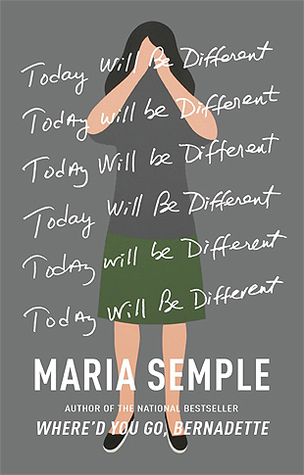
Review for "Today Will Be Different" by Maria Semple (2016)
Rating: No Rating (DNF)

DNF on page 87.

“Today will be different,” declares Eleanor Flood. She wakes up and decides to be polite: spend time with her son, have sex with her husband. Of course you know that today won’t be different, but anyway, so begins this book.

Zzzzz…

It’s interesting that even the author calls this book what it really is on page 7: “a normal day of white people problems.” It helps to know that even the author knows her character is complete bullshit: a rich doctor’s wife with too much time on her hands, grudging time with her son, her dog, her husband, pretty much everyone around her. It begins somewhat funny, but it declines into one a really bad joke. A book trying to be witty when it isn’t. Bleh.

And oh yeah, the plot is all over the place. Between learning about the main character’s long lost sister, her husband’s secret, her dysfunctional childhood, her former career as an artist–you just don’t care about what else is going to be thrown in during the course of one day in poor, rich Eleanor Flood’s life. I wouldn’t mind this clusterfuck so much if it were not for the fact that she’s not even a likable person–she’s ridiculously self absorbed, uninteresting, and obnoxious while pretending to be friends with people.

Perhaps other people find this book amusing, which is why it’s on the NYT Bestseller list. I normally don’t read books on the list though. I’d feed this book to wolves.

Review: The Book of the Unnamed Midwife

29806086
Review for "The Book of the Unnamed Midwife" by Meg Elison (2016)
Rating: 5 out of 5 stars

This book is so full of Win I don’t know where to start. Post-apocalyptic feminist fiction. Sign me up.

This novel takes place in a not-too distant future, with an unnamed female nurse-midwife waking up in a deserted hospital after a plague has ravaged most of the world’s population. The plague takes on the form of a fever, striking everyone but mostly women in childbirth, who give birth to dead babies and in turn die as well. Because of the extreme scarcity of women, the world has become a dangerous place for them. There are no rules or civility, and women in the world after the plague are regularly raped, mutilated, and enslaved by lawless bands of men, traded for goods and services, treated as property. It’s harsh stuff to read, but the Unnamed Midwife avoids this fate by dressing as a man and battling for survival. She helps all of the women she meets by rescuing them from their slavers, offering them birth control, and assisting with births. The story follows her as she journeys from San Francisco to the North and beyond, through hell on earth and finally, to something like hope.

This book takes post-apocalyptic fiction and completely turns it into something that I haven’t seen done before. I usually hate it when these kinds of stories don’t explain things (i.e., the cause of the plague, etc) but here I didn’t mind the not knowing, because it’s the story itself that’s so much more important. The midwife is very open about her own sexuality and although (I think) she identifies as bisexual, her constant changing of gender roles through her practice of dressing as a man turns this notion on its head. Either way, I loved it.

This book is a series, and there is a second book available (“The Book of Etta”) that came out earlier this year. I ran to my library and got it a couple of hours after I finished with this. There is also a third book (“The Book of Flora”) that is set to be published early next year, which I plan to read as well.

Meg Elison is an incredible writer and this is an equally incredible book. Do read this. You won’t regret it!

Review: Out in the Open

33113298
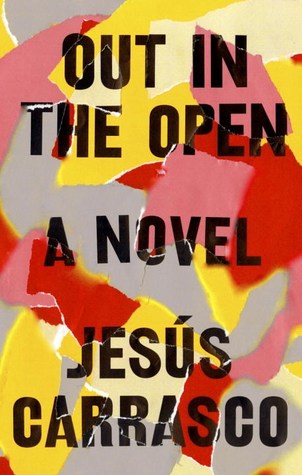
Review for "Out in the Open" by Jesus Carrasco (2017)

Rating: 3 out of 5 stars

In a desperate desert land, an unnamed boy flees his home and eludes a bailiff set on capturing him. The boy encounters a kind goat herder and together they brave the harsh terrain as they journey across the land, trying to keep one step ahead of the bailiff. We never find out the reason for boy’s flight or why the bailiff is so intent on killing him, though such an explanation may have helped me understand the story better. :/

Overall, the writing’s good but I wasn’t impressed. There’s a lot of description here of what the characters are doing at ALL times, and after pages and pages of such minutiae, I found myself skimming the book. Comparison between this novel and Cormac McCarthy’s “The Road” are inevitable, as they both feature pretty much the same elements–an unnamed man and boy, a bleak landscape, pursuit by evil people. Some have called this book dystopian, though for me it had a wild west kind of feel. Needless to say, I like McCarthy’s book better.

P.S. – This is the 3rd book I’ve read this year with unnamed main characters (“Chemistry” by Weike Wang, “One of the Boys” by Daniel Magariel, and this one.) Why is this happening? Somebody care to explain this to me?

[NOTE: I received a free copy of this book thanks to the publisher, Riverhead Books, because I won this book in a Goodreads giveaway. Opinions are mine.]

Review: One of the Boys

30753637
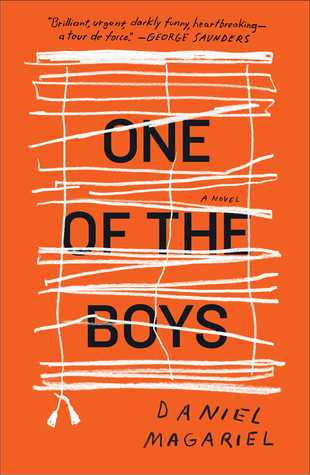
Review for "One of the Boys" by Daniel Magariel (2017)
Rating: 3.5 out of 5 stars

“One of the Boys” is the story of an unnamed 12-year-old boy, his older brother, and his father who move from Kansas to New Mexico after they win the “war” (his father’s term for his divorce and custody battle). As they settle into their new lives, it is apparent that the boy’s father has deep seated issues, which the narrator becomes more and more aware of as the story unfolds. While the boys go to school, Dad stays in his room for days at a time snorting cocaine, shooting heroin, and doing a myriad of other drugs. Exposed to a parade of weird strangers in their home, the boys are also subject to periods of abandonment and violent physical abuse by their father. Wanting to be “one of the boys,” the narrator desperately wants his father to protect him, but as his father become more and more paranoid, he gradually loses all trust and hope.

This is a nasty, brutal little book. I won’t say that it’s the most disturbing book I’ve ever read, but it comes close. There are some pretty graphic scenes here, so I would recommend reading this all in one sitting, as I did. At 176 pages its more novella than novel, though it still packs quite a punch. I thank God for this book’s brevity, as I would not continue to torture myself by going back to read it over and over had it been even 10 pages longer.

P.S. – This is the third book I’ve read recently where the main characters are unnamed. While I can understand why some characters aren’t named in a story, to not give the main character one is kind of odd. Is this a trend or something? If so, I wish it would go away. Pffft.

Review: What We Lose

33280160
Review for "What We Lose" by Zinzi Clemmons (2017)

Rating: 4 out of 5 stars

I have a confession to make. Like several other online reviewers, I too thought this was a memoir. About halfway through the book, I realized that the author is named Zinzi, and the character’s whose story is within these pages is named Thandi (*smacks forehead*). Though they are two different women their backstory is essentially one in the same, both are born of a South African mother and an African American father. Thandi navigates through life negotiating both identities, never really fitting into one or the other. The book chronicles her life from childhood all the way to adulthood as she stumbles in and out of relationships, loses her mother to cancer, marries, and eventually has a child of her own. The loss of her mother, however, is the clear focal point of this book.

This novel is written in sparse language and presented vignette style. There are photos, poetry, and snippets of nonfiction text, which is a pretty distinctive of a lot of the ‘new school’ memoirs that have come out over the past few years. Clemmons choice to present fiction in this way is interesting, though one of the drawbacks of this style is that all of the ‘space’ left me wanting more Thandi. It’s ok, however, because the words are powerful enough.

Do read this book. Clemmons is definitely a writer to watch.

P.S. – I’ll be disappointed if this book doesn’t win some kind of award this year. It’s that good. 🙂