Review: Happiness, Like Water

Merry, Merry Christmas ya’ll!!!

I love Christmas Break, as I get to do nothing but read (and write about what I read) for three straight weeks.
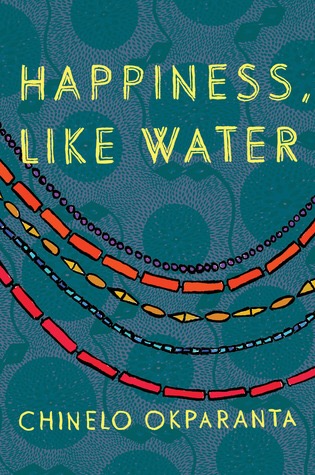
  
Review for “Happiness, Like Water” by Chinelo Okparanta (2013)

Rating: 4 out of 5 stars

Man, this woman can write…

As much as I love short stories, short story collections are always hit or miss. You may find one or a few good stories amongst the pack, or several decent offerings. Very rarely are ALL of the stories in a collection each a strong, workable a piece of art. This book of stories is one of the few exceptions.

“Happiness, Like Water” has 10 short stories, mostly featuring Nigerian woman who are dealing with contemporary issues such as unhealthy relationships, homosexuality, societal pressures, and what it means to be modern African woman in Africa, or, in some cases, America. Each of these stories are unapologetically feminist, with each character in each story making some kind of choice for her own future and taking her own destiny into her hands. In some cases, the choice has disastrous consequences, but in others, the characters find some kind of lasting peace.

The powerful story “Runs Girl” was my favorite in this collection, which tells the story of a young woman’s choice to dabble in prostitution to find the money to cure her mother’s illness. “Wahala!” is the tale of a woman who visits a traditional healer to cure her infertility and is forced to endure painful sexual encounters with her husband in order to have a child to conform to society’s expectations. “Fairness” is about one girl’s quest to be beautiful through the use of a skin bleaching technique that has dangerous consequences. “Story! Story!” is a suspenseful tale of a young woman’s obsession, with a shocking conclusion.

Several of these stories seemed to be companion pieces, ‘twins,’ if you will–two halves of the same event. In “America,” a young teacher tries to get a visa to join her lover in the U.S. In “Grace,” the focus is a romance between an older, divorced African American professor and a young Nigerian woman who is expected to be married. “Shelter” is the story of a young immigrant mother and daughter’s quest to leave an abusive marriage, and “Tumours and Butterflies” picks up that same story 20 years later, with a daughter’s choice to abandon her familial obligations in the face of her father’s cruelty and her mother’s complicity with their abusive past. 

The weakest story here was the only with a male protagonist. As far as characters go, there is not much variety. There is a lot of sameness that gets somewhat repetitive–nearly all except the one mentioned above was about young women, usually serving in the education profession as a teacher. 

Overall, this is a strong collection. It is hard to believe that this is Okparanta’s first book, as she is definitely an author to watch. Her writing is good and descriptions of events are solid. She does have a full length novel that came out several months ago that I will read, and I’m excited to find yet another talented contemporary Nigerian writer (Chimamanda Ngozi Adichie, A. Igoni Barrett, Sefi Atta are others) that people NEED to be reading right now.
Review: Eleanor & Park

I wrote this review a while back. It’s been through several revisions and may go through a few more. Some spoilers abound, so beware…

  
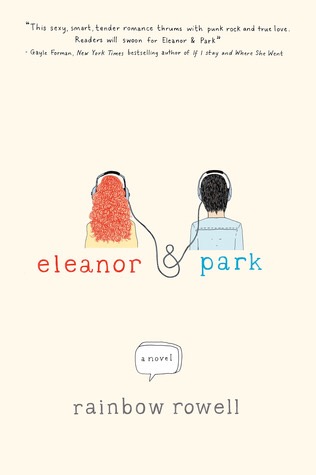
Review for “Eleanor & Park” by Rainbow Rowell (2013)

Rating: 3 out of 5 stars

I wanted to love this book. It’s been on all of the “Best Of” lists, everybody’s who’s anybody has reviewed it already, and its been damn near impossible to find in the libraries here for the last 2 years. So, naturally I jumped at the chance to read this when I stumbled into the YA section at my local branch and saw it sitting there. 

For everybody who doesn’t know, “Park & Eleanor” is a YA romance novel about the relationship between Eleanor, a slightly overweight girl with red hair and bad clothes whose family puts the capital D in “dysfunctional.” She lives with her mother,  young siblings, and her abusive loser of a stepfather, Rich, who terrorizes and bullies her. At the beginning of the story, the reader learns that Eleanor has been kicked out once before by Rich, and is forced by her long suffering mom to be ‘grateful’ that she has been allowed to return home. She is also bullied at school as well, for her weight and her appearance. Park is a half white, half Korean teen who gets stuck sitting on the bus next to Eleanor and eventually strikes up a friendship with her. From there, the friendship turns into romance. 

Let me start with what I did like first. I loved the music and pop culture references of this book. I’m a total 80’s baby, and all throughout are constant references to bands like The Smiths and Joy Division and other awesome music that I grew up listening to. I loved the references to TV shows like “Solid Gold” (GTFOH–now who remembers “Solid Gold?” I do!) and Walkmans and cassette tapes that were so full of WIN that I wanted to grab this book and never let it go. I’ll take a trip down 80’s memory lane any day. Whew!

Now on to what I didn’t like. The issue of race was kind of, well, strange in this book. Too strange. Park’s mother is Korean, his father is white, and they live smack dab in the middle of the cornfields of Nebraska in the 1980’s. Other than one reference by a classmate referring to Park as Chinese (you know, the “all Asians are Chinese” bullshit), there is never an instance where Park seems to encounter racism, among his peers or anyone else. And other than taekwondo lessons, Park seems to be almost oblivious to his Korean roots. Even his mother struck me as the “whitest” Korean lady I’ve ever read about. Why is Park’s Korean heritage completely whitewashed here? Or is it that Rainbow Rowell knows nothing about Korean culture, so she chose to exclude any thoughtful analysis of it here? One cannot simply say that Park does not encounter racism, or that race is not an issue in this book. If race is a non factor, it would seem that Ms. Rowell would have left this character as Caucasian and went along with the story. However, the added dimension of race is here, and it’s completely devoid of any meaningful commentary. Perhaps the reason why Park’s Asian-ness is in this book is to create a kind of fetishism, which Eleanor’s descriptions of Park completely fall into. She constantly describes the shape of his eyes (“almondy”) and his skin color (“honey”). And she refers to Park as “that stupid Asian kid” in the beginning far too much for my liking, to the point where it made me uncomfortable.

That’s not it either. Eleanor also has two black friends at school, DeNice and Beebi (WTF kinds of names are those?) and man…they are space cadets. They’re ridiculously immature, almost caricature-like, giggling and constantly beginning sentences with “girl,” obsessing over the men in their lives and going out dancing. As a black woman, I found their characterization so fucking ludicrous that I had to laugh whenever they appeared. Is this really what Ms. Rowell thinks young black girls are like? Come on.

Park and Eleanor’s romance is cute, but it seemingly comes out of nowhere. It’s literally like one day they hate each other (to Eleanor he’s the “stupid Asian kid”) and the next they are all over each other. Really? And why does Park like Eleanor anyway? Park’s attraction to her made little sense to me. Emotionally, he gets very little from her. We know she holds back because she is abused at home and psychologically damaged, but the characterization of Park as one who continues to radiate nothing but pure goodness in the face of her nonchalance (often to the detriment of himself) was quite unbelievable to me. Park IS in love with Eleanor, but it’s a blind, self-sacrificing, stupid kind of love and as a reader I knew it wouldn’t  last. I know I’m in the minority when I say that I was glad that it ended the way it did, ’cause good ‘ol Park was gonna run himself mad over this poor gal…

Logistically, this book dragged in the middle and I found myself skipping pages. The back and forth narration was cool at first, but after a while got confusing, because both Park and Eleanor’s voices pretty much sounded the same anyway. I wouldn’t rule out any of Rowell’s books in the future, but this one was a flat 3 stars, no more, no less.

Review: Messed Up

6122766

Review for “Messed Up” by Janet Nichols Lynch (2009)

Rating: 4 out of 5 stars

Aww shucks, I loved this book.

R.D. is a 15 year old Mexican-American kid starting 8th grade for the second time. His father is out of the picture and his mother is long gone away, serving time in prison for a drug offense. He is taken in by his grandmother, but she suddenly leaves him with her boyfriend Earl to go off with another man, a biker. Earl is a kind man, a Vietnam veteran with “Agent Orange” who eventually cares for R.D. in his grandmother’s absence until he dies unexpectedly one day while R.D. is at school.

Even though this book begins with R.D.’s first (or second ‘first’ day) in the 8th grade, the real story starts after Earl’s death. His grandmother is unreachable in an unknown location, and the last thing R.D. wants is for Child Protective Services to get involved and take him away from the only home he’s ever known. R.D. vows to tell no one of Earl’s death and is forced to navigate the world as an adult in her absence–arranging his funeral, having no money for bills, shopping for food. He is also still a child so he also juggles typical teenage issues as well–meeting a nice girl, dealing with gang bangers, handling a crazy girlfriend, etc. There are a lot of subplots here (normally I don’t like a story that’s too complicated) but I did not seem to mind, as they were all completely necessary to show the onslaught of “real-world” decisions that a 15 year old is forced to make in the face of extraordinary odds.

On a personal note this book hit very close to home for me. I taught middle school for 10 years. In my career I saw hundreds of “R.D.’s”–children who have good intentions but due to a chaotic home life and situations that are completely beyond their control (interrupted schooling, poverty, parents who simply don’t give a shit) they lack the adult guidance and resources to make wise choices and be the ‘good’ students that we want them to be. They drift through school until they eventually drop out, usually around 16 or 17, and from there they become unfortunate statistics–caught in a cycle of chronic joblessness or criminals in the prison system. This story moved me to tears because I knew so many kids like this, and even though R.D.’s story ends on a happy note, dozens of them don’t.

When I looked on the back of the book and saw that the author was a middle-aged woman I was completely floored because her use of voice was extraordinary. R.D. talks like most kids do, for example, “says” is spelled “sez” and the observations that he makes about the world (which are pretty funny) are completely consistent with a child his age. Loved this.

I could picture this book specifically for picky teenagers who are reluctant to read because they complain that all books are “boring.”

Anyway, great reading experience. A+.

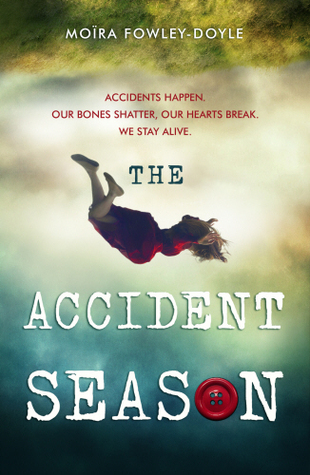
Review: The Accident Season

23346358

Review for “The Accident Season” by Moira Fowley-Doyle (2015)

Rating: 1 out of 5 stars

Umm, don’t read this.

I went into this book based on the title alone. Accident. Season. Two words that don’t go typically together, because accidents are usually random events and they aren’t seasonal. Hence, I jumped into this book. Needless to say, I am not pleased.

Cara and her family are ‘cursed’ during a period every October in which they become extremely accident-prone. They clutch the railings of stairs, they pad the edges of tables, they wear extra layers of clothing to protect against potential injury and death. It happens so regularly during this particular time of year that Cara and her family accept this as a normal part of life. That is, until one day, Cara discovers a childhood friend eerily present in her family photos. She recruits her tarot card reader friend Bea to help her with her friend’s mysterious disappearance, as well as the source of her family’s accident season.

Sadly, the first 100 pages of this book are a complete waste. There is literally NOTHING that happens here to compel you to give a damn about any one of the characters. Luckily I picked up on this around page 25 and skimmed my way to the middle, and boy am I glad I did. I didn’t miss much.

Miss Dowley (bless her heart) muddles this book with a lot of vivid imagery–broken bridges, old bookstores, a mysterious typewriter, etc. There is a gothy kind of appeal here…it’s lush and dreamy, but it does absolutely nothing for this book because you’re too busy trying to figure out when the hell the subplots (the disappearance, the accidents, etc) are all going to come together in any kind of meaningful way. It’s terribly confusing, and confusion while reading fiction is never a good thing. And yes, for those that ask: I’ll take a bad book (bad writing, weak characters, bad everything) over a confusing book any day, ok?

There is a romance in this book (it’s YA, people!) but even that is, umm…confusing, weird, awkward, strange. I won’t say any more about it. Matter of fact, I won’t give away any details here, because honestly, it doesn’t benefit me to spoil it for those who really want to read it. Like really, what would be the point? It just sucked.

The cover’s nice though.

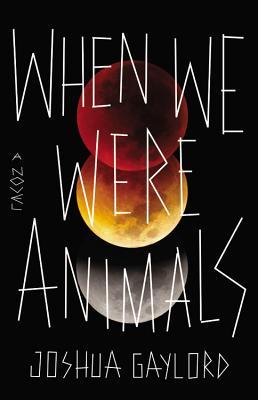
Review: When We Were Animals

22875090

Review for “When We Were Animals” by Joshua Gaylord (2015)

Rating: 4 out of 5 stars

Hmm…this is a very weird book. Weird in a good way, though, and well worth the read.

The story takes place in a small Midwestern town named Polikwakanda, where teenagers run wild every full moon for three days while their parents and the rest of the town’s citizens lock themselves safely inside their homes. This occurrence, called “breaching,” lasts for three straight nights during each full moon. The town’s teenagers leave their homes and fight, vandalize property, run in the woods, have sex orgies, etc. The reason why it only happens in this town is never explained (though an ancient Native American curse is hinted at), but we come to understand that “breaching” is a sort of rite of passage for the town’s citizens that begins at the onset of puberty.

Lumen, the main character, is a teenage girl living with her father (her mother died when she was an infant). She believes she is morally good, and that she will not breach. She is intelligent and an awkward late bloomer, ostracized from her peers as she watches all of her classmates begin to breach around her. Pretty soon, she finds herself escaping out of her bedroom window during full moons and doing the naughty, forbidden things she believes she will never do.

Early on in the novel we learn that Lumen is now Ann Borden, a middle aged woman who is married with a young son. The majority of this story is told in flashbacks, with Lumen narrating her story from the present day. As an adult and as a teenager she feels like an outsider, still coming to terms with the events of her past.

I read a review on GoodReads that described this book “another version of Twilight,” and I completely disagree–this is nothing of the sort. There is a romance here, but it’s not the centerpiece of the novel. Although the main character is a teenager through most of the book, I would not describe this as YA, this definitely an adult novel. There are supernatural elements here that could place it in the werewolf/vampire/horror genre, so I’ll leave it there.

This is ultimately a coming of age story, with deep philosophical questions. How do we reconcile our most primal urges (sex and the desire to do violence) with rational ‘human’ behavior? At what point do we lose the ‘mask’ we construct for ourselves and be who nature intended us to be? This book explores those questions and several more in a very thorough and insightful manner. There’s a lot of darkness here and the main character’s very name (Lumen) means ‘light.’ The Freudian implications of this book are fascinating and so far from the banality of “Twilight” that to compare the two is complete foolishness.

Please read this book. You won’t be sorry.

Review: Mosquitoland

18718848

Review for “Mosquitoland” by David Arnold (2015)

Rating: 1.25 out of 5 stars

Meh.

I didn’t like this book. I read about 100 pages, put it down for a week, and still just…meh. The last 100 pages I skimmed through, I gave no fucks…

Anyway, “Mosquitoland” is the story of Mim (an acronym for Mary Iris Malone), a 16 year old girl living in Jackson, Mississippi with her newly-remarried father and stepmother. Her mother, the reader quickly learns, is reportedly sick and living in Ohio. Mim overhears her father and stepmother discussing her mother’s illness and proceeds to take a stash of cash and catch a Greyhound bus to her mom in Ohio. What follows as Mim goes on an almost 1,000 mile journey is a series of misadventures that I won’t go into for fear of spoiling the book, but she does meet several people along the way–some nice, some not so nice–and somehow manage to reach her destination. In the end she learns a lot about herself and the meaning of family.

The book would have been mildly enjoyable if it had not been for Mim herself. Mental illness is alluded to as the source of Mim’s problem, but it’s never definitively confirmed. She is sarcastic, but she’s so overwhelmingly negative about everything (her parents, her life, the people around her, etc.) that her particular brand of sarcasm never grew on me. Mim is very much like that bratty grade school kid you all know (only ten years older) who has no filter: many times in the story she was just plain obnoxious towards the people around her or just flat out rude altogether. I understood that living with her dad and stepmom in country bumpkin-ville wasn’t her cup of tea…but sooo many times in the story I wanted to roll my eyes and yell at her to get over herself. Sheesh.

Plotwise, this book is all over the place. In addition to the road trip, a large portion of the story is letters she writes in her journal and general retellings of past events. Honestly I was done with Mim’s (aka the author’s) Holden Caulfield-esque posturing in the first 50 pages. I kept reading because, in the end, I guess I just wanted someone remotely likable here. Pfffft.

Apparently, I am in the minority with not liking this book. It is currently receiving overwhelming praise by readers on Goodreads and has received a “Best Of 2015” nomination there. I can certainly understand why this is, Mim is somewhat of a manic pixie dream girl character with a hell of a story. In the end, it’s just not MY kind of story. I generally don’t care for road trip novels and this one was no exception.

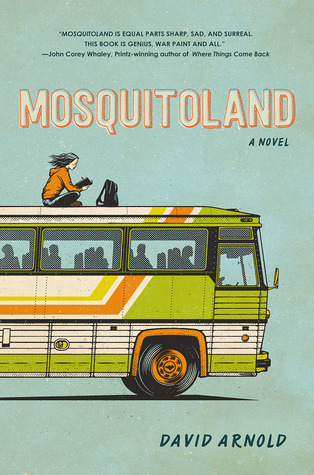
The cover art is stunning, however. I’ve always wanted to climb on top of a moving vehicle and write. Yassss!

Review: Finding Hope

25365508

Review for “Finding Hope” by Colleen Nelson (scheduled to be published in April 2016)

Rating: 2 out of 5 stars

Closer to 1.75 stars, because “Finding Hope” didn’t do it for me.

I won’t spoil this book with small details because there’s still quite some time left before its scheduled publication date. In a nutshell though, this novel focuses on Hope and her brother Eric, teenaged siblings who live in a small town in Canada with their parents. Eric is a promising soccer star with a bright future until he becomes entangled in a vicious meth addiction and gets kicked out of the family home. Meanwhile, Hope is sent to a private boarding school where she falls in (and quickly out) of favor with a cadre of mean girls. Their lives intersect at the most unlikely moment and Hope and Eric both make choices that impact their futures.

The story is told in the alternating POVs of Hope and Eric. This book is all over the place and a lot of topics are covered: sexual abuse, bullying, drug addiction, homelessness, etc. Hope is naive and an enabler of Eric’s addiction, stumbling into one bad choice after another at her new school. Eric’s chapters are far more compelling than Hope’s, but the one thing that got me here was the bland storytelling, the predictable plot lines. There’s nothing in this story that you don’t see coming a mile away. Although I sympathized with both characters, they became quickly forgettable once I turned off my Kindle. There’s nothing the author does here to draw you to either of them beyond just a general understanding of their respective situations.

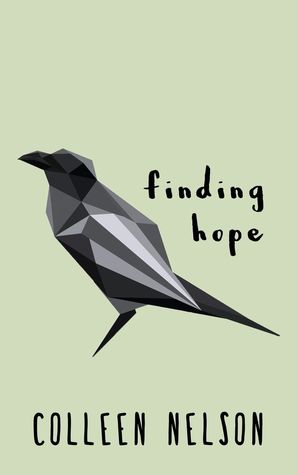
Wouldn’t read this again, but am open to reading more from this author. On a lighter note, I love the cover art of this book. BEAUTIFUL!

[Note: I received this advanced publisher’s copy from NetGalley and Dundurn Press in exchange for an honest review. :-)]

Other note: TOMORROW, NOVEMBER 29 IS MY BIRTHDAY!! YAYYY! I won’t tell you how old I am, other than to say that I have long been old enough to call myself a true “80’s baby.” I’ll pretend it’s my 32 birthday again, for the umpteenth time. Ha!

Review: Bad Sex

Ok, so I showed you my fresh-in-the-mail copy of this book last week. Here’s the review…

25330048

Review for “Bad Sex” by Clancy Martin (2015)

Rating: 3 out of 5 stars

Hmm, I read this one in a few hours last week. First impression after finishing: a familiar, but a very dark story.

Bad Sex is about a wealthy woman named Brett who breaks her sobriety and begins to drink again after she begins an affair with her husband’s banker. Eduard (the guy she’s having an affair with) doesn’t necessarily encourage Brett to drink, but he doesn’t discourage it either. Their sexual encounters are very detailed and often include really violent sex (some scenes were quite appalling–I’m surprised no one called the cops). Her husband discovers the affair and kicks her out of their home, and Brett continues with Eduard in a downward spiral of black outs, drinking, and ridiculous behavior.

The writing here is very minimal and told in short chapters. It reads more like a collection of vignettes than a novel, almost as if you are looking at a photo album of an alcoholic’s life. Brett is a highly unlikeable character–she’s rude, obnoxious, and extremely narcissistic. At times I found myself literally rolling my eyes and thinking: Really, bitch? The choice to make this book short was a wise one, as I don’t think I could have put up with reading about any more of Brett’s antics after 182 pages.

Despite everything, I just don’t think this was the book for me. The writing is good but I was literally counting down the pages until it was over, it was so disturbingly uncomfortable I just wanted it to be finished.

[NOTE: I received a publisher’s copy of this book from Tyrant Books in exchange for an honest review.]

Oh yeah…Happy Turkey Day everyone! Gobble, gobble, gobble!


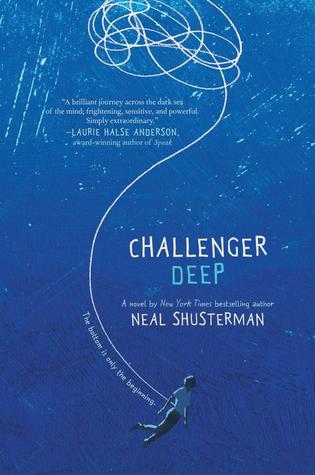
Review: Challenger Deep

18075234

Review for “Challenger Deep” by Neal Shusterman (2015)

Rating: 4 out of 5 stars


“Sometimes the darkness beyond isn’t glorious at all, it truly is an absence of light. A clawing, needy tar that pulls you down. You drown but you don’t. It turns you to lead so you sink faster in its viscous embrace. It robs you of hope and even the memory of hope. It makes you think you’ve always felt like this, and there’s no place to go but down, where it slowly, ravenously digests your will, distilling it into the ebony crude of nightmares.”

Wow…I liked this book. It’s one of the few YA books that I’ve read in the past few years (other than Francesca Zappia’s “Made You Up”) that actually manages to explore mental illness in a thoughtful, realistic way without becoming too technical or preachy in the process. I’m tired of YA books that seem to feature the so-called glamorous, damsel-in-distress kind of characters in mental institutions. It’s ridiculously unrealistic, as well as a mockery of the fact that mental illness is indeed real, that real people suffer from it. There’s nothing “beautiful” about it.

“Challenger Deep” is the story of Caden, a likable 15 year old kid who experiences mental illness first hand. The word ‘schizophrenia’ is mentioned only twice in the entire novel. Caden’s diagnosis is never named explicitly to the reader, but his experiences have all the hallmarks of this disease. The chapters are short and erratic, switching between Caden’s clinical observations of reality to highly detailed delusions of his role as a sailor on a ship with an evil captain, moving ever closer to the Mariana Trench and ‘Challenger Deep,’ the deepest point on earth. For a while no one seems to suspect what is going on, Caden mostly keeps his troubled thoughts to himself. As he becomes more and more detached from reality, however, his parents place him in a mental hospital for treatment, where he remains until the end of the book.

If you must have a definitive plot when you read fiction, then this is not the book for you. This story is not so much plot-driven as it is an extended, interior stream of Caden’s thoughts. It is a difficult book to read, the narration goes from third person to first person as he goes from normal to delusional and back again, with no warning as to when these shifts will occur. Every now and then a page is decked out with a haunting kind of scribble drawing, created by the author’s son when he went through his own journey with mental illness. Throughout the whole novel, there’s a weird kind of “calmness” to how Caden becomes unraveled that’s scary and heartbreaking. The confused, lucid manner in which the story is being presented is the only way that Caden knows to cope.

I personally felt that the ending was a satisfying one. We know there’s no cure for schizophrenia, and the author does not put on the pretense that Caden will not have challenges ahead for him. What is important is that this story ends with a suggestion of hope, some of kind promise of a normal life for Caden. This book carries an important message that is definitely worth reading about and definitely worth sharing. Highly recommended.

NOTE: With this story, I do admit that I wonder how younger readers with far less knowledge of mental illness will receive this book. As an adult reader with some background knowledge of this subject, I realized very early on what was going on here. Not so sure a teen reader would have the same experience. I’ve been wrong before though, so I dunno…


The book gods hath giveth…

IMG_0432

This book arrived in my mail yesterday. If I requested it from the many blog sites I’m a member of, I can’t remember. If I won it in a giveaway on Goodreads (I’m always entering something there) then I don’t see where I won it. Regardless, it looks bloody interesting and I’ll do a nice review on it soon.

And thanks, Tyrant Books. You’re super swell. 🙂