Top Five Book Moments

Ahh, memories. This is a good topic this week…

Certain books will always remind you of the past and the time period of your life you were in when you read it. I’ve listed a few that make me a bit nostalgic for that special moment.

Top Five Books That Are Linked to Special Moments in My Life

537296
Frog and Toad Are Friends – Arnold Lobel
This is one of the very first books I remember reading when I was a kid.
2266474
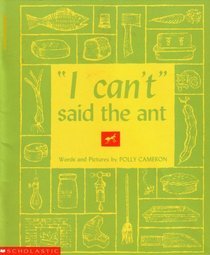
“I Can’t,” Said the Ant – Polly Cameron
Another book that makes me misty-eyed. I remember my Dad used to read this book to me and my younger sister every night before we went to bed. He used to do different voices for each character, and we both thought that was the greatest thing in the world.
1432
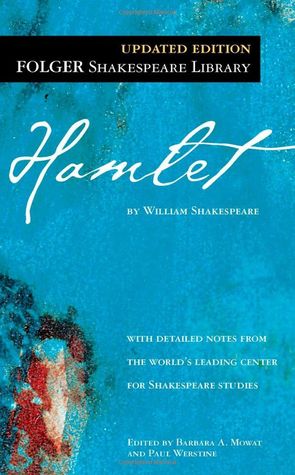
Hamlet – William Shakespeare
Hamlet has always been my favorite Shakespeare play, ever since I read it in high school. I remember reading this out loud when I was pregnant with my son, hoping he would “hear” it and the words would soothe him during the evenings when he would kick me like crazy. He is now a teenager and he loves to read, so I think that this book was an excellent choice.
395090
Ariel – Sylvia Plath
I first came to know about Plath when I was in 7th grade. I remember reading one of her poems (ironically entitled “Spinster”) and at that moment being really, really moved by it. I went to the library and looked up some of her other poems, and from there it became an obsession. I did my undergraduate thesis on Sylvia Plath. I’m very proud of that work.
11337
The Bluest Eye – Toni Morrison
Toni Morrison’s first book. This was the book that truly “awakened” me to the world of Black literature (before this point my reading was mostly White/European authors) and women’s literature. I read this book and thought: this is what I want to read and write about for the rest of my life. And it’s still the topic that I’m writing about today.
The ID Channel calls,
Kellan

Top Ten Tuesday: Favorite Novellas/Short Stories

Ok, ok…before I begin Top Ten Tuesday, the weekly meme by That Artsy Reader Girl, I have to confess to you guys that I’m a bit biased, as my choices for favorite short stories are a bit old-fashioned. Even though I read short stories and novellas all the time, I just don’t think anything comes really close to classics. Also keep in mind that I used to be a middle school teacher, so naturally a lot of classic stories pop up in kid’s textbooks. When you’ve read something umpteen times over the years, you can quote it with your eyes closed. Naturally you grow to like it too.

  1. “The Lottery” by Shirley Jackson – A small town’s terrifying ritual gone amok. I used to teach this story to my 7th grade students and pass out a small slip of folded paper with an ‘X’ on it to illustrate the plot.
  2. “Patriotism” by Yukio Mishima – Japanese writer’s story about a man and his wife committing seppuku (ritual suicide) in response to a military defeat. Strangely beautiful and mad deep.
  3. “The Tell Tale Heart” by Edgar Allan Poe – Another story I used to teach to my students. They used to love this!
  4. “Wild Child” by T.C. Boyle – Historical fiction account of Victor of Aveyron, the first documented “feral” child, in 1800’s France.
  5. “1922” by Stephen King – Greed and betrayal and rats. The Netflix movie was pretty close to the novella, thankfully.
  6. “Thank You, Ma’am” by Langston Hughes – A little boy gets more he bargained for when he tries to snatch a woman’s purse.
  7. “The Necklace” by Guy de Maupassant – Another one in my 7th grade curriculum about fakery and the power of an authentic life. There’s a twist at the end that always gets me, every time.
  8. “A Very Old Man with Enormous Wings” by Gabriel Garcia Marquez – Magical realism to tell a satirical tale about ignorance vs. power of freedom, or flight.
  9. “The Story of an Hour” by Kate Chopin – Story about a woman who loses her husband, then gains him back, and then dies–all within an hour. Powerful feminist message here too.
  10. “All Summer in a Day” by Ray Bradbury – Science fiction story about a class of students on Venus, where it rains constantly and the sun comes out for only one hour every seven years. My 6th graders used to like this one–lots.

xoxo, Kellan

Top Ten Tuesday: Best Reads of 2018 (so far!)

Alright, alright…we’re halfway through 2018. I set my yearly reading goal at 140 books back in January, right now I’m at 86. Here are the best books I’ve read this year so far, in no particular order:

  1. Brown Girl Dreaming, Jacqueline Woodson – Beautiful autobiographical novel written in verse about the coming of age of a Black girl in the 1960’s and 70’s.
  2. Calling My Name, Liara Tamani – Set in the 90’s, this is a beautiful fiction book about the coming of age of a Black girl growing up in Texas.
  3. Freshwater, Akwaeke Emezi – This book is a bit of a shape-shifter. To say it’s about identity or mental health is to deny its true power, so I’ll say it’s about certain subjects that are so thought-provoking it defies explanation. Let that sit for a minute.
  4. Sometimes I Lie, Alice Feeney – Pleasantly surprised by this one. Suspenseful, engaging, and full of drama. Loved this!
  5. Where the Dead Sit Talking, Brandon Hobson – “Quiet” kinda book that packs a helluva punch about the dysfunctional life of an adopted Native American teen in 1980’s Oklahoma.
  6. Heads of the Colored People, Nafissa Thompson-Spires – First collection of short stories this year that I actually liked. This is definitely one to read.
  7. Monday’s Not Coming, Tiffany D. Jackson – Another recent read that manages to be hopeful, frightening, and inspiring all rolled into one. Great book.
  8. Convenient Store Woman, Sayaka Murata – I was recently blown away by this one. This writer is definitely one to watch!
  9. Whatever Happened to Interracial Love? – Kathleen Collins – Kathleen Collins was a Black playwright, filmmaker, and writer who died of cancer in 1988. Several years ago, her daughter gathered many of her still-unpublished writings and issued them in this volume. The stories in this book are definitely revelatory and quite profound–the reason you haven’t seen a review for this on here is because I still just don’t have words for it yet. I read this back in March and it is extremely good. Definitely check it out!
  10. The Best We Could Do, Thi Bui – Another recent read that completely blew me away with its beautiful drawings and message.

Top Ten Tuesday: Kick Ass Graphic Novels

Another strange Top Ten Tuesday topic is official today, it’s “Series I’ve Given Up On.” I don’t read serial fiction much anymore, so this topic isn’t for me. There was a time, though, as a young grasshopper when I was obsessed with Sweet Valley High, Nancy Drew, and The Babysitter’s Club, but we won’t talk about that, will we?

I’ve decided to explore some graphic novels today. Whether you call it a graphic novel or a comic book, I find the medium to be highly underrated. There is always a visual element to storytelling, and some authors/illustrators are doing it quite well. The following graphic novels I’ve either read or have been on my radar for a while:

Top Eleven Kick-Ass Graphic Novels

  1. Maus, Art Speigelman. Maus is probably one of the best graphic novels ever produced, nearly 25 years after its first publication. It’s the story of the author’s father’s experiences during the Holocaust, told through very brilliantly drawn cartoons. Even though the Jews are represented as mice (the Nazis are cats), you still cannot help but to be deeply moved by it. When I was a classroom teacher I used to read this with my 7th graders and they loved this book.
  2. Persepolis, Marjane Satrapi. Another classic graphic novel all about a very precocious girl growing up during the Iranian Revolution of the late 1970’s and 1980’s. She’s feisty and definitely not your typical “little” girl narrator.
  3. Waltz with Bashir, Ari Folman and David Polonsky. A story of a soldier’s repressed memories during the 1982 Israeli invasion of Lebanon. The soldier follows up with various people who were in the conflict, trying to fill in the holes in his memory. The story is never completely there, but this is still a fascinating book.
  4. Deogratias, Jean Phillippe Stassen. A graphic novel about the Rwandan genocide. I didn’t like this book so much, there’s a lot of switching back and forth through time and I found the narration too confusing to follow. I do, however, recommend that you read it if you’re into graphic novels and form your own opinion on it.
  5. Diary of a Teenage Girl, Phoebe Gloeckner. I wrote a review for this book and you’ll find it here. Fashioned as a diary, this is a graphic novel about a 15-year-old girl growing up in the 70’s who begins having really creepy sex with her mom’s 30-something-year-old boyfriend. This relationship is not presented as grooming or pedophilia, but one in which the main character actively and happily takes part in. It’s disturbing, but it’s a book that provokes a level of thought that I didn’t think was possible.
  6. Rent Girl, Michelle Tea. Kinda funny but not-so-funny graphic novel about a lesbian’s adventures as a sex worker for mostly male clients. Totally raw and terrifying.
  7. Zahra’s Paradise, Amir. This one I haven’t read yet, though it’s on my radar. It’s about a protester’s death during fraudulent elections in Iran in 2009. The death was captured on social media, and this book is a fictionalization of this story.
  8. Yummy: The Last Days of a Southside Shorty, G.Neri. I also wrote a review for this book and you’ll find it here. Graphic novel that revisits the true story of Robert “Yummy” Sandifer, an 11-year-old child who died in Chicago in 1994. A member of a gang, he racked up 23 felonies and 5 misdemeanors before carrying out a violent hit, which mistakenly ended the life of a 14-year-old girl. Several days later, Robert was murdered by members of his own gang who feared he was an informant. It’s a meditation on inner city gangs and violence without sounding preachy. Gorgeous drawings too.
  9. Nat Turner, Kyle Baker. This one’s on my radar. It’s all about the 1831 Virginia rebellion led by Nat Turner, a slave who, upon hearing a voice from heaven that instructed him to do violence, rose up with a group and killed 55 slave holders before being captured and hanged. Even though don’t like the fact that it takes much of its info from William Styron’s Confessions of Nat Turner (a bogus, historically inaccurate account), this one’s still worth a read.
  10. The Best We Could Do, Thi Bui. This one’s on my radar and currently in my possession. With all the news lately on refugees and immigration, I think it is completely fitting to read this graphic novel about a family’s escape from the war in Vietnam and their subsequent life in America. I’ll have the review when I finish it.
  11. That’s right. I have 11. Anyway, the last book is Black Hole by Charles Burns. I currently have possession of this book and will be reading it over the next few weeks. It’s all about those awkward years you spend as a teenager. It’s good and thick and a really dark read, but I’m liking it so far.

Ok, that’s it. Read more graphic novels, ya’ll. 

xoxo, Kellan

Top Ten Tuesday: Summer TBR

I have a confession to make, ya’ll. I typically don’t do TBR lists. The reason for this is simple: I have a horrible reading attention span. I simply cannot guarantee that the books I tell you I’m going to read will be read in the allotted time frame I give. I am literally always looking at books–online, in stores, at the library, through emails I get, through requests. I just can’t say I’ll read x, y, and z during this month when the truth is I will probably find something else while randomly browsing the library one afternoon that will catch my interest.

I find that it’s best for me to base my TBR-isms on what’s currently on my shelf and in my Kindle with an expiration date or on reserve from the library. So here goes:

Books I’ll More Than Likely Read this Summer

1. How to Love a Jamaican by Alexia Arthurs (ARC, to be published on 24 July 2018). Short story collection from a debut author that promises to be really yummy.

2. Monday’s Not Coming by Tiffany D. Jackson (currently reading). I am floored by this book so far. Review forthcoming.

3. There There by Tommy Orange (currently on reserve). Debut fiction about urban Native Americans headed to a powwow. It’s gotten some good reviews and I’m curious about it, so I’m going to give this one a peep.

4. The Mars Room by Rachel Kushner (own a copy of this). Fiction book about an incarcerated woman. I’m interested where this one goes.

5. Dread Nation by Justina Ireland (currently in my Kindle). Kick ass Black girls and zombies. Sign me up and take my money…

6. A People’s History of the Vampire Uprising: A Novel by Raymond Villareal (currently on reserve). I told you: I love zombies, so this should be interesting.

7. The Terrible: A Storyteller’s Memoir by Yrsa Daley Ward (currently on my shelf; library copy). I loved her recent poetry volume, Bone, so this should be a great read.

8. Sick: A Memoir by Porochista Khakpour (currently on my shelf; library copy). A nonfiction account of the author’s long and expensive struggle to get a diagnosis for what is discovered to be late-stage Lyme disease. I have a sister-in-law with Lyme disease, and she nearly lost everything just to get a doctor to listen. I need to read this story.

9. Severance by Ling Ma (ARC, to be published on 14 Aug 2018). Interesting dystopian fiction read about a lady who loses her job while the end of the world is happening at the same time. Can’t wait to read this later this summer!

10. Fruit of the Drunken Tree by Ingrid Rojas Contreras (ARC, to be published on 31 July 2018). Fictional story set in Colombia at the time of Escobar’s violent hold on the country. Promises to be a great read by a debut author.

Ok, work in the morning folks.

xoxo, Kellan


Top Ten Tuesday: Book Loves and Hates

Once again, this week’s designated Top Ten Tuesday doesn’t agree with me…so I’m making my own topic. I’ll pretend I’m in a speed dating situation and I’ve got about 15 minutes to tell you about what I like and don’t like as far as what I read.

(This is silly, but play along here, OK?)

Top Ten Book Loves/Book Hates

Loves

  1. YA, YA YA. I pity people that don’t read YA. Seriously. Like, what do you do in your boring ass life? Young adult books are the shit because it’s where all the action is. Want to know what’s hot in the streets? Read YA. YA is a cool litmus test for finding out what’s hip, what’s controversial, what will be talked about next. As an educator I dive into YA often, because I want to know what young people think about, what types of messages about life they receive from older people. I also like YA because it’s a safe place for nostalgia, make believe, and uncomplicated, raw emotion. Where else can you be angsty as fuck and get away with it? YA, of course.
  2. Diverse characters. Ever since I took a Multicultural Literature class as an undergrad student in 2001, I’ve strove to make my reading as representative of society as a whole as possible. Here on 29chapters.com, you will find that I review books about people of all races, ages, gender identities, sexual orientations, ethnicities, religions, ability levels, social classes, as well as inside and outside of the U.S. This is done purposefully, not only keep me in the loop of the human experience, but to shine a light on people with experiences unlike your own whose stories deserve your attention.
  3. Nonfiction about social issues. I love reading nonfiction, but I strive to make the reading of mine worthwhile by reading to educate myself on social issues that interest me–particularly issues of crime and the criminal justice system, race, feminism, immigration, and poverty. Oppression of one is essentially the oppression of all, and learning how all of these issues are connected in our every day lives is critical.
  4. Dystopian lit. Books on how jacked up the future will be are always a treat for me. Perhaps it is because I am deeply pessimistic on the future as well, and believe that the changes we don’t make now will revisit us in the future, only three times worse. Either way, it’s fun to read about how the world’s going to hell, and there’s very little we can do about it but wait. Weee…
  5. “Thinking” while reading. If I’m thinking while I’m reading it, that’s always a good thing. Books that engage me intellectually and challenge me are always books that I will finish, whether I like them or not. It just drives home (for me, at least) that reading will always be a thinking process, not just some passive activity where I’m sitting and absorbing info like a plant. It also means that we can still be friends and disagree.

Hates

  1. “Chick” lit. Ewww, I hate anything that resembles this genre of literature. Books where the main objective is finding love, catfights, figuring out silly friendship drama, or a good pair of heels is not for me. I turn down offers to review on these kinds of books all the time and will continue to do so unapologetically. No chick lit here ever, I’m convinced it causes brain shrinkage.
  2. Romance novels. Another genre I don’t touch with a ten foot pole. As a matter of fact, if I go to a book review site and it’s full of reviews on romance novels (even if they are YA) and chick lit, I immediately back up and make a note not to visit that site again. Brain shrinkage occurs with this one as well, only at a more rapid rate.
  3. Books from Western canons. I’m not saying there aren’t classics because there are, but surely one has noticed that 99% of the books in the humanities considered “classics” are written by White men. I love All Quiet on the Western Front, Grapes of Wrath, Aristotle’s Poetics, and Huckleberry Finn as much as the next gal, but if these kinds of books is all one reads, I question why your reading perspective is limited to that of straight White dudes only. As if Western perspectives and being cisgendered is the center of the moral universe. Not so, I say. I’ll stay on the left.
  4. Mainstream bestsellers. I could care less what’s on the Amazon or New York Times bestseller list. I also don’t care about who won what award, or what book “everybody” is reading right now. As a matter of fact, if I see a book on “the list” I will usually avoid it for that very reason because yes, millions of people can be wrong. Occasionally I do read pop fiction, but it is only because I am curious about that particular book. But nah, I’ve never gone to “the list” and scanned it for something to read. To this day I maintain that I’ve never read a Harry Potter book and don’t plan to. My son has read them all though. Bless his heart.
  5. “Major Motion Picture” covers. So Everything, Everything is a movie now. That doesn’t mean you have to change the paperback cover. I know you want to sell movie tickets, but urrrrgghh…this burns me up. Keep it the same, don’t change it.

Rock on, guys…

xoxo, Kellan

Top Ten Tuesday: Books I Decided to DNF

Ok, it’s 11:28 pm Eastern Standard Time…and I know where my official Top Ten Tuesday is. A couple of weeks ago I discussed the intricacies of the DNF (book-speak for one that you willfully choose not to finish); this week I’ll list a few books that I’ve DNF’d over the years and the reasons why they ended up that way.

As I’ve explained before, I DNF books quite often for a variety of reasons. If I got over halfway through it and I can put together a somewhat coherent review, I’ll post it here. Often, however, I don’t. I just move on to another book.

So here’s my playlist of skipped books whose reviews I’ve never posted here and I’ve never mentioned to anyone but myself. You always get the latest hits, so here’s:

29chapters.com’s List of Not-So-Famous Misses

  1. Bastard Out of Carolina, Dorothy Allison. This book is actually quite good. I’ve read other books by Dorothy Allison and her work is taught in a lot of Women’s Studies classes, especially at the college level. The reason I DNF’d this book, however, is because of its graphic depictions of the sexual and physical abuse of the main female character by her stepfather. I’ve tried many times to just grit my teeth and read it, but I can’t get past the highly disturbing content here. I just…can’t.
  2. The Lovely Bones, Alice Sebold. Another wildly popular book whose disturbing content I just couldn’t stomach. The horror comes on very early in the book, around page 12 when the main character is raped, killed, and dismembered by a neighbor. After 3-4 times of pulling it off my shelf, reading it, only getting to page 12, and DNF’ing it, this book sat on my shelf for years until I finally got rid of it in a used book exchange last summer. It’s safe to say that I will probably never attempt to read it again. I also refuse to watch the movie version.
  3. Your Heart is a Muscle the Size of a Fist, Sunil Yapa. This is a historical fiction novel that examines several sides of the 1999 Seattle WTO protests from different perspectives–a riot cop, a politician, protesters. Somewhat decent, I just couldn’t get into this.
  4. Her Last Death: A Memoir, Susanna Sonnenberg. One of the few nonfiction books here that I’ve quit. Basically this is a book about a very dysfunctional mother-daughter relationship, which morphs into the author largely blaming her mother for many of her poor choices, including becoming promiscuous at an early age, being a pathological liar, her drug use. I got half way through this book before I just said enough already, I can watch this Dr. Phil episode on any given day of the week…
  5. Paint it Black, Janet Fitch. After her first novel “White Oleander,” I thought author Janet Fitch was untouchable. Au contraire. Her second novel was such a snoozefest that I put it down and never looked back.
  6. The Tsar of Love and Techno, Anthony Marra. This book had glowing reviews, but I kept falling asleep on this one. It’s a set of interconnected short stories, all centered around various characters during the history of modern Russia. Perhaps I also hated this because it brought back bad memories; I fell asleep during the Russian section of World History during high school too. Oh welp.
  7. The Dog Stars, Peter Heller. Post-apocalyptic story. About a man and his dog. And a plane. But the writing style. Was such a fucking distraction. That I put it down. (<— The whole book’s written like this, mates. It is an absolute pill to read.)
  8. Sing, Unburied, Sing, Jesmyn Ward. First off, I love Jesmyn Ward’s writing. I’ve read another nonfiction book of hers, Men We Reaped, and I absolutely loved it. This book, however, not so much. I found the plot kinda tedious and I just couldn’t get into the characters. I’m not surprised that this book won the National Book Award, because there is something special here, but the specialness is simply not for me.
  9. Severance, Robert Olen Butler. This book has an interesting premise: that human consciousness is maintained for 90 seconds immediately after one is decapitated. Therefore, this book is a collection of the “final thoughts” of many people (some famous, some not) who have ‘lost their heads’ throughout history. It’s a really morbid book, and the premise alone should have been enough to carry me through it, but for some reason the writing here was just plain weird. The friend who suggested it to me told me to read it like poetry, but that didn’t help, because I hate bad poetry. Blech.
  10. Blood Meridian, Cormac McCarthy. I’ve read my fair share of Cormac McCarthy over the years: The Road, Outer Dark, Child of God, No Country for Old Men. His writing is typically very dark and violent in nature, but that’s what makes him so special to me: that he can explore darkness and evil in such meaningful, creative ways. Anyway, Blood Meridian was just sloooooow. It’s also a Western (the other four novels I’ve read by him are not), and Westerns are just not my preferred genre.

There’s tons of other books I’ve DNF’d that could discuss here, but these are the ones that stood out most. Stay tuned!

xoxo, Kellan

Top Ten Reasons I DNF Books

Let’s talk about the DNF today, beloveds…

For those that don’t know, DNF is book-speak for a book that you start and, for whatever reasons of your own, decide not to finish. I’ve been rather outspoken about the fact that I DNF and that I do it quite often, with no absolutely no shame and no apologies for it. Some readers are outspoken for the opposite, that they never DNF a book, no matter what the reason. Other readers/book bloggers I encounter do DNF, but don’t speak about it publicly.

To DNF or not to DNF is a complex thing. There are many, many reasons why I stop reading a book, which I’ll explain below. Generally as a rule I give a book 50 pages to capture my interest and if it fails to do so, I’ll stop reading. These days, however, I find that my 50 page rule has gone wayyy down–hell, it’s 40 pages, in some cases, 25. Sometimes I will review the book here if I got past the halfway mark, but I will not give it a rating. I will certainly tell you why I didn’t like it though.

There’s a couple of factors that make me DNF-friendly, which I have to admit here. For one, I rarely buy books. About 85% of the books I read come from the library, so 86’ing it is no big deal, I just take it back and get another. I also find that I tend to DNF fiction much more often than nonfiction. Probably because it’s so author-driven, while non-fiction–not so much. With NF you are welcome to disagree with the author, skip pages and see if they change their mind. I usually don’t DNF memoirs though.

So here goes…

Top Ten Reasons I DNF (do not finish) a Book

  1. It’s boring. ‘Nuff said. If I wanted to fall asleep, I’d put on my Sleep Sounds playlist on Spotify. Seriously. I steadfastly maintain that if you are reading for pleasure, it should engage you and make you want to pick it up and keep going. If it’s nothing but a chore to read it, then put it down. Pleasure reading does not = boredom.
  2. Not in the mood, dawg. Sometimes I will pick up a book, read a few pages, then gauge my feelings. If it’s a nahhhh, then I’ll put it aside. This is not to say that I will never read it again at some other point in time, it just means that I am simply not feeling it in that current moment, right then. I will usually keep these books in my TBR pile but save them for later.
  3. I don’t get it. I’d rather have bad writing than confusing, incoherent, or just plain weird writing. If I can no longer (or I never did) discern what’s happening, then I’ll leave it in the dust. I don’t have time for code-cracking, it ain’t that deep.
  4. Large amounts of gratuitous, objectionable content. I don’t necessarily mind sex, drugs, and violence–but there is a point (and I’ve posted on this before) where such scenes just become, well…too much. It’s like a cheap horror film–we know the killer kills with an ax, but do we really need the camera to linger on the severed head for 5 minutes? We get it, he’s dead. Cut to the next shot. More of the same? Well, forget it. I have no interest in being “shocked” into reading further. If ultra-violence is the only rabbit they can pull out of their hat, then they’ve lost me.
  5. There is NO plot. None whatsoever. Nada. Zilch. Just pages and pages of no action, no character building, no dialogue, no nothing at all. Or there’s pages and pages of all of the things I just mentioned, but it’s a downward spiral into a yawning, mind-numbing void. I would have left this under the label ‘boring,’ but this is so bad it deserves its own category.
  6. I’m not connecting to the character. This is not the same as not liking a character. There are quite a few book bloggers that say that they will stop reading if they don’t like a character. Nah, I’m not that petty. I can stick through disliking a character’s actions and thoughts, but I can’t stick with one who I don’t find compelling. Strong dislike is a compelling reason to read further, it’s the macaroni to my cheese. It’s kinda like that Morrissey song “The More You Ignore Me, The Closer I Get.” Damn right.
  7. It’s too familiar, I already know what’s going to happen. The girl dumps the boy, but you know they’ll get back together in the end. Nerd boy falls in love with manic pixie dream girl. An abused wife leaves her husband, but you know he’s not dead, so a showdown will occur, somewhere in the last 50 pages. Do I need to go on? Let’s find more plots here…
  8. Writing style is too difficult to follow. No capitalization, no quotation marks, heavy use of parentheses, run on sentences, wordsthatruntogether. I know that some authors employ these devices for artistic reasons, but sometimes I just can’t be bothered with trying to decipher between thought and dialogue, which character is which. GTFOH…
  9. It ain’t gettin read, no matter how hard I try. I tend to read several books at once, so if there is a book lingering in my “currently reading” pile that’s been there for 3 months or more, I will usually extinguish it. It usually means something else has gotten my attention and my own behavior indicates that I’m avoiding it for a reason. Whether or not I come back to it later depends, though if I do, I will usually start the book over again.
  10. Not my cuppa joe. Sometimes I will stop reading because I just don’t believe I’m the right audience that the book was intended for. It’s not a bad book, it’s just not for me. Therefore my reading it won’t matter, the writer probably ain’t talking to me in the first place. I’m ok with that. So rather than reading it, wasting my time, and being pissed off, I’ll just stop reading it. Blah.

So what do ya’ll think? Do you DNF? Why or why not?

Top Ten Tuesday: Fiction Pet Peeves

Oh, fiddlesticks…the wtf topics keep occurring over at Top Ten Tuesday, so I’m making my own today. Since I did nonfiction last week, I’ll delve into fiction today. Here goes:

Top Ten Pet Peeves in Fiction

  1. The “woman of stone.” I love kick-ass women characters, but sometimes, in the pursuit of the ultimate bad-ass gal, the author will create a woman character so devoid of emotion that she is, in many ways, psychologically a man. Just the trophe the writer seeks to avoid by making the character a woman. I think it is ok to make women characters that do kick ass and take the time to do other things, like pause and cry, for instance. Nothing wrong with that.
  2. Atypical boys = homosexuality. I love quirk, but all too often quirk (lack of sports interest, nerdiness, awkwardness around girls, etc) in male characters is imagined as a gay character. I don’t have a problem with gay characters, but I do have an issue with the perception that there is only one way to be a straight boy, and anything beyond an interest in sports and chasing girls means he must be gay. I find this a lot in YA. Ugh…stop it.
  3. Contrived diversity/tokenism. Of course in the whitest of all White settings, the main character manages to have two chatty, Black girl best friends. Like, of course. For example, in the novel Moxie, we’re talking a very small Texas town that’s nearly 98% White. How, then, does the main character happen to find the only Latina, Black, and lesbian girls in town and befriend them in the name of feminism? Beats me. This is why tokenism sucks–it appears to be ‘diverse’ on the surface, but there’s no yielding of the dominant narrative and absolutely no knowledge of a different perspective is gained. The “color” here was for the purpose of symbolism only.
  4. Rape/torture porn. I’ve written about this a lot here, so I won’t go into super detail because you already know how I feel about this, but it goes like this: we don’t need any more excessively detailed descriptions of rape, torture, violence, sexual abuse, etc. on paper. We know what these horrors are and what they do psychologically and physically to a victim. If a writer does choose to explore those subjects in a book, I feel like it should be political/critical in nature or to emphasize the development or growth of a character. Simply writing about a woman getting raped over and over does not challenge the abuser or the act, it just assents to the notion that women should be somewhere suffering for the sake of good storytelling. Not cool.
  5. Love at first sight. I don’t know about ya’ll, but I’m tired of YA characters finding their soulmate on the first day of school as their lab partner in bio class. They have no chemistry, but he’s “hot” and after dating only once, they’re hopelessly and endlessly in love. Bitchhhhhh….please.
  6. Change through abuse. This is kinda related to torture porn, but in a different direction. Here, the love interest from bio class is an abusive jerk whose function is to change or “soften” the strongly-willed (usually female) main character. It’s a sad and very old, sexist trope–that “change” must occur through domination, the breaking of someone’s will. Also not cool.
  7. Forgiveness, always. I love the idea of forgiveness as much as the next gal, but sometimes the person hurting you is just so plain nasty that I don’t think forgiveness is possible. And that’s ok, Dr. Phil, because not everybody deserves to be forgiven. I’ve found this kinda kumbaya, “let’s-hug-it-out-at-the-end” b.s. in a lot of books where family dysfunction is at the forefront and it sucks, because let’s face it, sometimes family members will do more fucked up things to you than a stranger. It’s ok to say no to abuse and mistreatment, even by family members.
  8. Books where the writer describes the main character’s appearance. Yep, this is still happening. I always maintain that a good book need not describe the character’s looks–if the writer is doing their job right, details on their appearance never need to be explicitly shared. You can still have a fleshed out character without going into detail about how he’s a Harry Styles clone, ma’am. LOL.
  9. Very slow action. Like, reeeaaalll slow. Like, we’re on page 50 and the main character is just now leaving the house. Molasses in the plot, snails in the dialogue. First I’ll flip ahead, then it’s a quick DNF, next.
  10. Side characters with no real purpose. We all know this: books with a evil side character whose only purpose for existing seems to be to foil the main character’s intentions. Why are they so bitchy? Well, this is never explained. I understand that the novel isn’t from their perspective, and that’s fine, but if you’re going to make a side character psychopathic in their badness, a little insight is warranted, yanno?

Ok, back to studying…

Top Ten Tuesday: Nonfiction Reads

Hmm…I haven’t really been feelin any of the last 3-4 Top Ten Tuesday topics lately.  Book with my favorite color in the title? Poo. Books we’d “slay a lion” to get early? Nah…I like lions.

Anyway, I’ve decided to make up my own Top Ten Tuesday based a genre that I go to quite frequently: non-fiction. So here’s my Top Ten Favorite Non-Fiction Reads from the past 5 years or so. Enjoy!

Top Ten Nonfiction Reads

  1. Buck: A Memoir, M.K. Asante. This a very solid memoir about a young Black man’s upbringing in a middle class Philadelphia household in the 80s and 90s. His father is the very famous Molefi Asante, a scholar known for bringing Afrocentrism to the forefront of academia. Despite his well-known father, M.K. struggles with a lot of issues that don’t get talked about much, because most books written about Black life are not from a middle class perspective. Very solid, readable book.
  2. A Bestiary, Lily Hoang. This book kinda defies genre. If I could describe it, I’d give it the title of “nonfiction fiction memoir.” It’s a gathering of facts, personal stories, biographical insights, observations. Normally I hate this kinda of crazy quilt, pastiche effect (check this review) but I LOVED this book. Everything fit together perfectly.
  3. Pushout: The Criminalization of Black Girls in Schools, Monique Morris. This book’s a part of the dissertation research I’m working on, but it’s still an enjoyable and very fact-based read. As a Black female, I think it is lamentable that I am still more likely, simply based on my race, to be incarcerated, expelled from school, or drop out of school altogether. Black girls are also 6 times more likely to be suspended from school than White girls, even though they exhibit the same behaviors. Great read.
  4. $2.00 a Day: Living on Almost Nothing in America, Kathryn Edin & H. Luke Shaefer. This book is an eye-opener to the world of the working poor. It is not excuse making (see this review) nor is it poverty-shaming, it is just the day to day realities for people who work 40-60 hours a week and, due to the fact that we haven’t raised the minimum wage in fucking years, barely have enough to buy toilet paper. A very readable, informative book.
  5. Evicted: Poverty and Profit in the American City, Matthew Desmond. The author of this book traveled to Milwaukee and spend time with people on all sides of the low-rent housing market for year: investors, the landlords, the people who call these places home and get put out time and time again, the judges whose sole job it is to evict people, often to the streets with no other recourse. Normally I don’t care about who wins a Pulitzer Prize, but this book deserved it–hands down.
  6. Between the World and Me, Ta-Nehisi Coates. If you haven’t read any of Coates’ articles on race relations in The Atlantic then you definitely should be. He is pretty much the writer right now when it comes to critical race issues and the public conversations going on around them. I was going to write a review of this book here when I read it a while back but I realized that it was so good, I literally had nothing to say. A mic-dropper.
  7. They Poured Fire on Us from the Sky: The True Story of Three Lost Boys from Sudan, Benjamin Ajak, Benson Deng, Alephonsion Deng, & Judy Bernstein. When I included a quote from this book on this website, one of the authors (Judy Bernstein) sent me an email and offered me a copy of this book. Of course I said yes, because this book touched my heart. It’s the story of three boys, all very young (10-13 years old) and left orphaned by their families due to the civil war in Sudan. They escape the country, but cross rivers, hostile territories, deserts, endure dangerous predators, starvation. It’s a harrowing book.
  8. A Long Walk to Water: Based on a True Story, Linda Sue Park. Another book about one of the “Lost Boys” of Sudan, only with a YA centered focus and contrasted with a modern story from 2008. Salva is a boy who escaped the Sudanese Civil War in 1985, Nya is a girl who walks miles to fetch water. Their stories intersect beautifully. Loved this book!
  9. There Are No Children Here: The Story of Two Boys Growing Up in the Other America, Alex Kotlowitz. This story takes place in the 1980’s in the Henry Horner Homes, one of Chicago’s most notoriously violent, drug and gang infested housing projects. The story centers around Pharoah and his brother Lafeyette, living with their mother and literally dodging bullets on their way to school. Even though they’ve since torn down the Horner projects, this is still a relevant read, especially if you want to understand why Chicago leads the country in gun-related violence. There is a kinda humanizing effect here to inner-city lives that I haven’t found elsewhere in nonfiction.
  10. Fire in the Ashes: Twenty-Five Years Among the Poorest Children in America, Jonathan Kozol. I don’t think you can call yourself an educator if you’ve never read Kozol–he’s quite a prolific writer and his books are widely taught in teacher education courses. This book is a kind of follow-up to other books that he has written over the years about children in poverty. Some of the stories end on a positive note, some are tragic. It’s still a great book, however, by a great author.

Whew, my hand’s tired. I get fired up when writing about nonfiction, that’s all. See ya’ll later this week.

xoxo,

Kellan