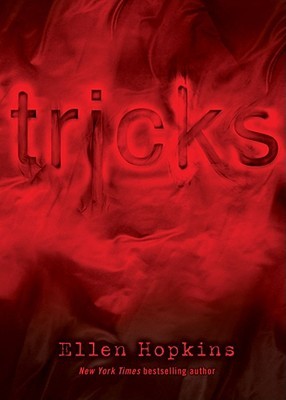
Review: Tricks

5510384
Review for "Tricks" by Ellen Hopkins (2009)
Rating: 3 out of 5 stars

This is my second book by Ellen Hopkins. My first was “Crank,” her novel in verse about a girl hooked on crystal meth, based loosely on the life of her own daughter. Hopkins is quite a prolific YA writer, tackling many of the issues that people tend to avoid when writing for teenagers. She’s written about drug abuse, mental health issues, sexual abuse, eating disorders. I’m not so much a fan of her verse as I am her fearlessness, because I admit that I’m drawn to her books for much of the reason I imagine most people are, to see how certain issues are portrayed for a YA audience.

“Tricks” is no exception; it tells the story of five teenagers who find themselves for various reasons lost in the dangerous world of prostitution. Eden is the daughter of a conservative religious family who is sent away to a Bible camp; Seth is a farm boy who struggles with his sexuality and finds himself a Vegas sugar daddy; Whitney is a goody-goody who stumbles into the arms of a drug-dealing pimp; Ginger is from a broken home and her entrance into the sex trade mirrors her own mother’s, and Cody is a kid who sells himself to men to ease his gambling debts.

I would have preferred to read each character’s story straight through, much like a short story. Instead, Hopkins focuses on one character for while, then abruptly switches to another. The constant starting and stopping of the narrative made it hard to get to know each character and made the book as a whole hard to follow. It never really had a good sense of cohesion and gave it the feel that it was five separate stories instead of one. There was some overlap of the characters, but it was fairly minor (one character mentioning another did occur, but only in passing).

This book is also really explicit in its sexual scenes. I won’t go into detail but if you’re unfamiliar with gay porn or girl-girl-guy threesomes I would leave this book on the shelf. I’m in my 30’s and I felt uncomfortable reading it, not because I’m a prude, but for the sake of the audience it was written for. Personally I wouldn’t allow my teen son to read this unless he was super-mature, which he isn’t. The details were a little too salacious for my taste and the story got lost in the process.

There is a second story in this series that picks up where the action of this story left off. I may read it eventually, but for right now I think I’m good with this.

Review: Saint Death

I just realized that this is my third NetGalley book that I’m about to write a less than flattering review about in the past few weeks. Ya’ll know how I feel about my reviews though. Anyway, on with the show:

31145190
Review for "Saint Death" by Marcus Sedgwick (to be published in the U.S. on 25 April 2017)
Rating: 2 out of 5 stars

This was a really strange book. The tone is dark and so is the subject matter, particularly for a YA book. It explores the world of Mexican immigrants, as well as a dark, spiritual world of guns, gangsters, violence, gods, and money.

Arturo is a young man living in the border of the U.S./Mexico in a shack, working for scraps at a garage and hustling card games for quick cash. Enter Faustino, a childhood friend who Arturo hasn’t seen in years who urgently needs Arturo’s assistance to get his girlfriend and their child across the border to a smuggler, who is to facilitate their illegal entry to the U.S. Together the two pray to Santa Muerte (Saint Death), and make a plan to go after some dangerous men for the money they need. Of course not everything goes according to plan and they run afoul of some gangsters in the process, and of course, there are consequences to pay.

I didn’t really like this story. It’s all over the place with the immigration plot, the supernatural elements of Santa Muerte, the narco stuff, and a couple of other subplots that I could go on and on about. I understand that the author is going for a modern retelling of the Faustian legend (if you missed it, one of the main character’s names is literally Spanish for “Faust”), but Arturo and his friend were never characters that I completely understood or related to. The action was too slow in coming and when it did come, I actually found myself skipping pages. Interspersed throughout the story were also informational factoids about NAFTA and borders and U.S. corporations, all of which could have been edited out for clarity and none of which seemed to match the tone of the story.

Even though I didn’t like this one, I don’t think I would rule out this author’s work in the future.

[Note: A free digital copy of this book was provided by the publisher, Roaring Brook Press, and NetGalley in exchange for an honest review.]

Review: The Most Dangerous Place on Earth

 32737635
Review for "The Most Dangerous Place on Earth" by Lindsey Lee Johnson (to be published on 10 January 2017)

Rating: 4 out of 5 stars

Happy New Year!!! I’ve got a goal of 130 books this year, up from 125 from last year. It’s highly likely I’ll accomplish it, given my classes and my personal schedule. Of course, you guys will be along for the ride, getting all the best of my reading adventures!

Anywho, this book’s four stars. Solid.

This novel begins with a group of young people in the 8th grade living with their parents in a small enclave near San Francisco. They are children of privilege–not Park Avenue or Hollywood Hills rich–but they are definitely living the life of affluence with parents who work long hours in high paying jobs. They have nice homes and luxury cars, high academic expectations. Credit cards given to sons and daughters with no spending limits. As 8th graders, they are learning their place in the world, as well as establishing cliques and pecking orders, of which their classmate Tristan Bloch happens to be at the bottom of. This book follows the next several years of the lives of the students who eventually bully and cyber-harass Tristan to his suicide.

There are also teachers in this novel, and the story follows the stories of two in particular: Molly Nicoll, an idealistic, early twenty-something teacher fresh out of college who can’t wait to teach and get to know her students, and Mr. Ellison, a creep who also loves his students (literally). Miss Nicoll’s evolution throughout the course of her first year of teaching is interspersed throughout the book in short vignettes.

Each student has a chapter that is told from a third-person point of view. Although I liked hearing their voices and backstories, the kids here were nothing more than your classic stock characters in a typical high school drama. There’s the jock, the pretty girl, the bad boy, the plain Jane athlete, the whip-smart drug-dealing slacker, the hippie, and the boy overachiever. Interestingly, the boy overachiever (and the only minority character in the whole book) happened to be Asian. Because all Asians are super-smart, right? Gtfoh.

Despite the lack of character development, the writing here is pretty extraordinary. It’s a quick and engaging read that kept me engrossed for the entire time while reading it. I actually finished this book way ahead of schedule, just because I liked it so much.

Definitely worth a peep. Check it out!

[Note: A free digital copy was provided to me by the publisher, Random House, and NetGalley in exchange for an honest review.]

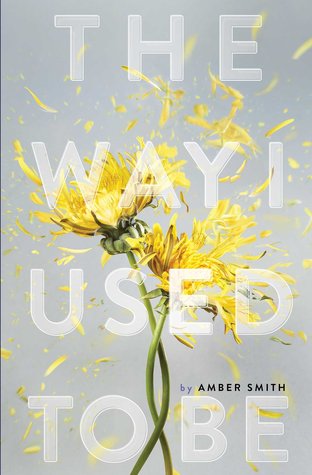
Review: The Way I Used to Be

23546634

Review for “The Way I Used to Be” by Amber Smith (2016)

Rating: 3 out of 5 stars

As you’ve probably already heard, this is a book about the aftermath of a rape/sexual assault. It joins the plethora of other recent YA books I’ve read over the past few years about this very same subject: Laurie Halse Anderson’s “Speak,” Louise O’Neill’s “Asking for It,” and “Exit, Pursued by a Bear” by E.K. Johnston. Each book takes the female victim’s perspective in a different direction, with very different results and conclusions.

It took me almost 2 months to read this book. This is partly due to my horrible case of reading ADD (I’m always book-switching) and partly because this was absolutely exhausting to read. When the book opens, we meet Eden, a likable 14-year-old girl who is viciously raped by a friend of her older brother. She tells no one of the incident. We follow her over the next four years of high school as she tries to make sense of her assault by becoming more and more rebellious–sleeping around, drinking, using drugs, fighting with her parents. While these things should have kept me interested and on the edge of my seat, they didn’t. Instead of wanting to reach out to hug her, I wanted to grab her and shake her.

Any therapist will tell you that there’s a range of victim responses to the trauma of rape and sexual assault. Some may become withdrawn (Melinda from Laurie Halse Anderson’s “Speak” stops talking), while others ‘act out’ with rebellious, angry behavior, as with the character of this book. Knowing this, however, doesn’t make reading about it any easier. I tried to suspend my judgements of Eden for this reason but each time I went to open it, it was more sex, more drugs, more drinking, more yelling at her parents about what glasses she wants to wear. Watching her downward spiral was truly frustrating, mind-numbing, and exhausting.

There is some hint of a healing process in the story, but it’s a very brief sliver at the end. I wish there had been more of this.

This is a great debut. It’s worth reading, but there’s no way I’d ever re-read this.

Review: Uses for Boys

11958608

Review for “Uses for Boys” by Erica Lorraine Scheidt (2013)

Rating: 1 out of 5 stars

Yo, this book is pure shite….

Everything about this book is a disappointment, a trainwreck, a failure. Even the cover is an utter disgrace, because it’s awkward and has nothing to do with the words inside.

The story is told by Anna, the neglected child of a single mother who’s way too busy chasing men and money to have any kind of meaningful relationship with her daughter. After going through several of her mother’s failed marriages as a child, Anna enters her teenage years with all of the wrong ideas on how to get attention from the boys around her. She develops a reputation among her peers and she eventually drops out of school. I won’t tell any more of the plot here, but I will say Anna goes further and further down a dark path and that her mother remains just distant enough to continue not to care. It doesn’t end well for her.

The worst part about this book is that I actually DO get it. I understand the author’s intention to write about a neglected girl who uses meaningless, empty sex with losers as a source of comfort. I also came into this book knowing that it would have a large amount of *mature* content, so that’s not my criticism here. My problem is that there is no compelling message here, no theme, just a bunch of sex scenes with a supposed teenage girl narrator and not much else.

And the writing here is effin’ terrible, ya’ll. Choppy and uninspiring. I wouldn’t be surprised if the author took a bunch of Post it notes, strung them together, and spat out this book. The chapters and sentences are short, but this only seems to make sense with the beginning, with the 7-year-old voice of Anna. The problem here is that her voice never ages nor changes throughout the novel. It’s flat and monotone, the only indication that Anna is getting older is an occasional sentence where she states her age (“I’m thirteen,” “I’m fifteen.”).

Case in point:
“I’m fourteen. I go to school. I dress the way all the other kids dress. I wear my Levi’s with expensive twill shirts. I wear the right tennis shoes, the white leather ones with the green stripes. But the outfit buys me nothing. Everyone has heard how I let Desmond Dreyfus feel around under my shirt while Carl Drier and Michael Cox watched. Everyone knows about Joey. The boys make V signs when they look at me and tongue the crack between their fingers. The girls call me a slut.”

And because the whole novel is in the unchanging voice of a 7-year-old, the sex scenes take on a icky, perverse kinda quality. Judge for yourself.

“I angle my body, arm outstretched, and stuff my right breast into the warm depression under his arm. His ribs press against mine. I penetrate him with my breast. We’re boob fucking. It’s awkward and mysterious. Fulfilling.”

It’s rare when I’m so negative with a review, but I’m still trying to figure out what the point of this book was. Steer clear of this one, don’t bother.

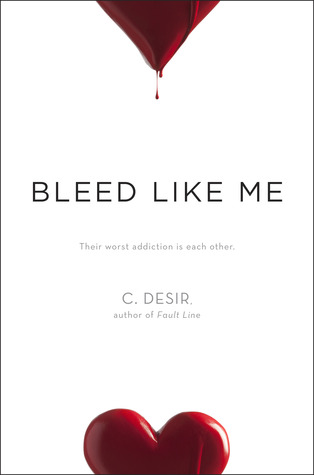
Review: Bleed Like Me

17335930

Review for “Bleed Like Me” by Christa Desir (2014)

Rating: 3 out of 5 stars

This book touts itself as “a Sid and Nancy-like romance full of passion, chaos, and dyed hair.”

In a lot of ways, this novel does deliver on that promise. Amelia Gannon’s (called Gannon by her friends) home life is not a happy one. Five years ago, her parents adopted three boys from Guatemala whose chaotic behavior overwhelms her parents to the point where they have no energy left to give her. Other than her job at a local hardware shop, cutting herself with a razor is the only relief for her anguish. She eventually meets Michael (called Brooks by his friends) and they immediately begin an obsessive, dangerous relationship. When Brooks first appears you immediately know he’s bad news: he’s a drug user, paranoid, controlling, and equally damaged, selfishly demanding all of Gannon’s heart and soul.

This book was not an enjoyable read. Both of these people were so toxic by themselves, together the ol’ proverbial ‘train wreck’ metaphor didn’t do them enough justice. I read this book in about 4 sittings, and honestly I believe that was way too many. I didn’t want to finish this book but found myself so emotionally invested in the characters that I wanted to find out what happens, just to see how far down the rabbit hole they would go.

The ending of this book felt rushed. There’s an interesting story unfolding, and suddenly everything explodes and subsides within three pages. Big let down. Big big let down.

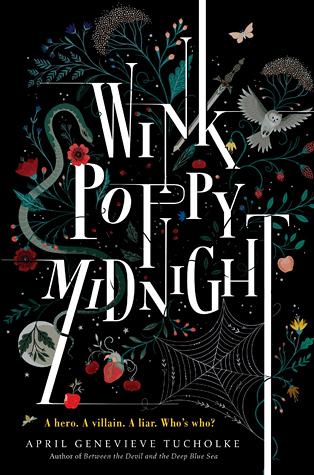
Review: Wink Poppy Midnight

23203106

Review for “Wink Poppy Midnight” by April Genevieve Tucholke (2016)

Rating: 1 out of 5 stars

A hero. A villain. A liar. Who’s who?

This book begins with the tagline above. There are three main characters–Wink, a wild child with tea-leaf reading mother and siblings she calls “Orphans,” Midnight, a beautifully misguided boy-child who’s mourning the loss of his absent mother, and Poppy, a spoiled, rich brat of a girl who gets anything she wants. To tell you anything about how or why these three become connected is to give away what little plot this book does have. The problem with this book is that we already know that people are villains, people are heroes, and people are liars. The characters are thin, and the main point of this story seems to be the all-too-common theme that people aren’t what they seem. The author goes straight into the narrative of the three characters right away, with short chapters narrated by each. About 70% of the way in you find out that there is some kind of conflict here, but you never had enough time in the beginning to figure out what the truth was anyway. When the so-called ‘twists’ are revealed in the end you could care less because you had nothing to work with in the first place.

And let’s talk about the writing here. It’s reminiscent of a style that you find in the fantasy genre, with images of cobblestone walks, twisting forest paths, the scent of jasmine, etc. But at about 25% in, the author’s schtick becomes repetition, repetition, and more repetition. Usually in groups of three. It’s awful.

“Clawing, scratching, scrape, scrape, scrape…”
“I hate that place, hate it, hate it, hate it.”
“Not again, not again, not again…”
“…I’d snap back, cruel, cruel, cruel, relishing every little lick of my tongue.”
“I’m bored with being mean. Bored, bored, bored.”

I wish I was making this up. In response I’m closing, closing, closing this book forever.

Thankfully this is a quick read. About the only good thing I can say is that it’s got a swell cover.

Review: This is Where it Ends

24529123

Review for “This is Where it Ends” by Marieke Nijkamp (2016)

Rating: none

DNF’d at 250 pages. Yep, I was actually almost finished. But the horror of this…oh no, not today, Satan…

What this is: a narrow, ridiculously unclever book told from the perspectives of four students in an Alabama high school surrounding the events of a 50-minute shooting spree/hostage situation. Several students, teachers, and the principal are gunned down after the student shooter traps the unsuspecting student body in the auditorium during an assembly and kills some and terrorizes others for nearly an hour. The characters are bland and indistinguishable from the other, and the shooter is so cartoonish in his evilness it’s laughable. It’s literally just bang bang bang…then one of the characters presents us with a flashback. You get to the end and find out that he shoots and kills his classmates not because he was bullied or had a mental problem or he was angry but because well…he wanted to.

Maybe it was the violence at the LGBTQ club in Orlando the night before that caused this book to strike such a sour note for me. I am not saying that mass shooters aren’t evil, but the acts they commit cannot afford to be reduced to such simplicities. I don’t shun violence in literature, but it pays to give those who perpetrate it depth, specifically if you would like to understand why it occurred in that particular context in the first place.

I recommend Jennifer Brown’s “Hate List,” Jim Shepard’s “Project X,” and Shaun David Hutchinson’s “Violent Ends” if you’d like more fleshed out, realistic, and thoughtful discussions of school violence in YA literature.

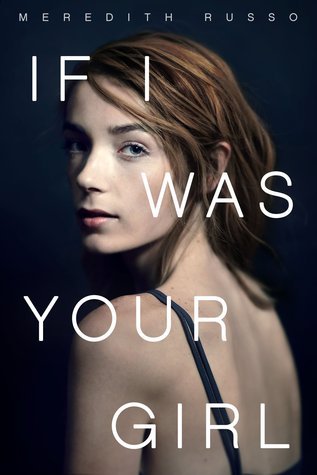
Review: If I Was Your Girl

26156987

Review for “If I Was Your Girl” by Meredith Russo (2016)

Rating: 5 out of 5 stars

This is truly a book after my own heart. It’s really really good, and I mean that. I had heard a lot of buzz about this book before it was published, so after a few weeks of watching my reserve status at the library, I finally got a notice to pick this up. Needless to say, I read this book in three days. I only paused to work on my lit review for my summer class, eat, and sleep.

Yes, it was that serious. This book had my soul.

“If I Was Your Girl” is the story of Amanda, a male to female transgendered teenager. When we first meet her, she has just moved from her mom’s house in Atlanta where she has recently been physically attacked to her dad’s apartment in a small town several hours away. At her new school, she quickly attracts the attention of a popular athlete and they begin a romance. Amanda is also surprised by how fast she makes friends and gains their trust, yet never revealing her own secret because she knows that her life could be in danger.

I can’t tell you how this story compares to other stories of transgendered individuals, because I have to admit that this is the first of its kind that I’ve ever read before. There is no discussion of genitals or body parts, because from the first page you are simply seeing the character as you are intended to see her–as a girl named Amanda. There are several flashbacks throughout the book that give you a bit of info on Amanda’s past (instances of bullying, a suicide attempt, her parents’ divorce) but from this I came away with even more of an appreciation of Amanda and her bravery to live her life in the way that makes her happy.

There is a note by the author at the end that clears up some of the criticisms I could have made about this book. For one, Amanda is able at a young age to have the surgery and access to the hormones that so many cannot afford. She’s also able to seemlessly transition into life as a female (she’s told that she’s beautiful, other people cannot tell that she was born male). The author writes that she did this so that readers could fully accept Amanda as a teenage girl. There is so little fiction right now that focuses on the trans community, so I think the author gives a decent argument for why she chose to portray Amanda this way.

“If I Was Your Girl” is one of those stories that, in my opinion, has to be out there right now. The fact that the author gives numbers for suicide hotlines in the conclusion shows that as a society, we have not progressed as far as we think we have when it comes to accepting people as they are. As a resident of North Carolina and home of the HB2 legislation (the infamous ‘bathroom bill’ that bans transgendered people from using the restroom that coincides with their chosen gender) makes it all the more important that we hear stories like Amanda’s and remind ourselves that she and people like her are real people who deserve legal protection, consideration, and respect–just like anyone else.

Needless to say, I loved this book. If you read nothing this year, save room on your TBR list for it. You will NOT be disappointed!

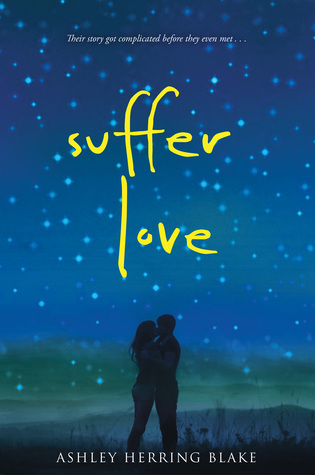
Review: Suffer Love

25897851

Review for “Suffer Love” by Ashley Herring Blake (2016)

Rating: 3.5

First impression: mehhh….

Hadley St. Clair and Sam Bennett are two teenagers that have gone through an emotional wringer in the past year, and just so happen to be paired together by chance for a school project. Hadley’s dad, a college professor, had an affair with Sam’s mom, a graduate student, which leaves everyone involved (including the children on both sides) angry and emotionally despondent. Very early on, Sam learns who Hadley is and despite his misgivings, starts to fall in love with her. He chooses not to tell her what he already knows about her. Meanwhile, Hadley likewise begins to fall for Sam, completely unaware of his connection to her family. This novel follows their courtship, the revelation of the secret that binds them, and their eventual ending.

The writing of this book is quite nice. I managed to get sucked in early on and found myself not wanting to put it down. Sam and Hadley narrate in alternating chapters, which I liked, as their voices are very distinct and allow the story to unfold quite nicely.

So why 3 stars?

Despite the ‘niceness’ of this book, it never seems to rise out of generality, its own bland pedestrian-ness. Think: a taco with no sauce, sweet tea with no sugar. Sam likes Hadley, Hadley likes Sam. It stays this way for about 100 pages. Ho hum. We know their parents are cheaters, but why? We’re never given a reason why their seemingly perfect parents screwed around or why their kids know so much about their sex lives. There is a hint toward the end of forgiveness and normalcy, which I guess makes this a cool book overall, but there were so many Dr. Phil moments that I wondered why the author bothered to go there. This book is pretty on the surface, but ultimately lacks depth, which makes it just ok for me.