Review: Paperback Crush

40093255

Review for "Paperback Crush: The Totally Radical History of '80s and '90s Teen Fiction" by Gabrielle Moss (2018)

Rating: 4.5 out of 5 stars

Nancy Drew. The Wakefield twins. The Babysitters Club. Christopher Pike. R. L. Stine. The Girls of Canby Hall.

Don’t forget the series. Always in an endless parade of series, people…

If you know any of the names above, you were an 80’s/90’s reader girly like me and read all things mass market, pop teen fiction. My favorite activity at the local mall (after copping a slice of Sbarro’s pizza) was going to Waldenbooks, finding a nice spot on the floor and deciding which paperback I was going to buy with my babysitting money to read that week. I collected these books and wouldn’t let anyone touch them, especially my baby sister at the time (who used to rip up books, yikes!).

“Paperback Crush” is a time machine back to that period, a dive into the history of teen fiction from the late 60s to the early 00’s. The format is excellent and easy to follow, there are tons of pictures of the books I definitely read and remembered. There’s also interviews with some of the authors who changed the game with more diverse characters and situations that teens were reading about. The book is split into categories that were also very interesting: love/sex, friendships, family, teen jobs/sleuthing, paranormal, danger, and so on. It’s a pretty broad overview of the development of the genre, complete with a beautiful gem of nostalgia.

This book also brought me back mentally to a time when much of the world to me was very “safe”–suburban, heterogeneous, heteronormative–and of course, White. Of course I still read the books regardless, but it took me back to the very real feeling I got (and still get) often as a Black girl reader: where was I? Why does no one in this entire book look like me? Sure there were characters of color here and there (i.e., Jessie and Claudia in the Babysitters Club), but they were generally ‘otherized’–mystical tokens in a sea of whiteness. This book barely scratches the surface of the deeper discussions of race, class, and representation in literature, which I wish had taken up a larger portion of the book.

I realize now that I owe a tremendous debt to pop teen fiction. Its where I learned not only how to read, but how to analyze, criticize, roll my eyes and yell out “oh please” when a character did something stupid. It made me the reader I am today.

Definitely get this one.
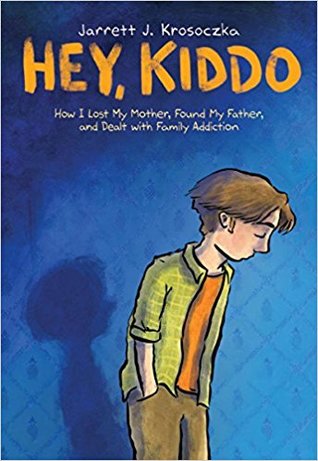
Review: Hey Kiddo

35794239
Review for "Hey Kiddo" by Jarrett Krosoczka (2018)

Rating: 5 out of 5 stars

Ayyy…first post of the New Year!! Happy 2019!

Heartbreaking but hopeful nonfiction graphic novel about the life of the author, Jarrett Krosoczka. After giving a TED talk about his upbringing and receiving an overwhelmingly positive response, he decided to create this book. I’m glad he did.

Jarrett was born in 1977 in Worchester, Massachusetts. His mother was young at the time of his birth and, as he would later find out, struggling with heroin addiction. His father’s identity remained somewhat of a mystery, Jarrett does not learn his name until he is almost a teenager. For a time when he is small, Jarrett lives with his mother, though she eventually turns back to heroin and criminal activity. At the age of 3 he goes to live with his grandparents, who despite their own rocky marriage, love and raise Jarrett with all of the nurturing he could ever ask for. They take him to visit his mother in jail and throughout her detox stays, answer his questions and see him through school, but most importantly they encourage his desire to draw, which he does to escape from the pain of not having a mom.

The novel follows Jarrett until he graduates from high school. Although he does eventually discover his dad and develop a relationship with him, he continues intermittent contact with his mother due to her drug addiction. Years later, as a successful and best selling author, he decides to share this story to connect with other people.

Anyway, I loved this book. It is YA, but deals with very adult issues. I imagine that it resonates with many people, particularly now due to the overwhelming prevalence of the opioid/meth epidemic. Even as a middle school teacher, I taught many students who were being raised by aunts and uncles and grandparents, mostly due to their own parents being incarcerated or simply gone, addicted to drugs.

Five stars. Don’t miss this.

Top Fifteen Tuesday: Reads for 2019

I’m so hyped for some great reads coming down the pipe in 2019 that I couldn’t cull my list down to 10, so here goes:

Nonfiction/Memoir

1. Maid: Hard Work, Low Pay, and a Mother’s Will to Survive – Stephanie Land

39218350

2. Body Leaping Backward: Memoir of a Delinquent Girlhood – Maureen Stanton

40796214

3. The Bold World: A Memoir of Family and Transformation

40163156

Fiction

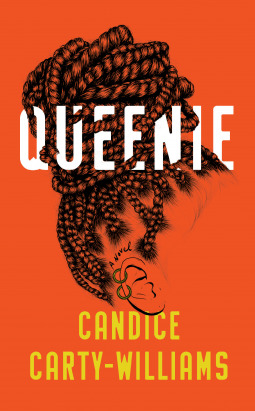
4. Queenie – Candice Carty Williams

36586697

5. The Other Americans – Laila Lalami

34851317

6. An Orchestra of Minorities – Chigozie Obioma

35003282

YA

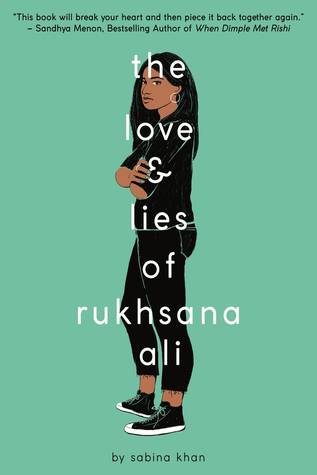
7. The Love and Lies of Rukhsana Ali – Sabina Khan

36362234

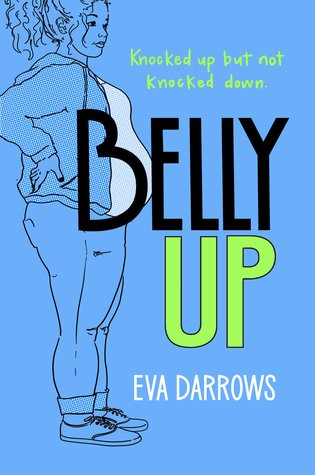
8. Belly Up – Eva Darrows

35128563

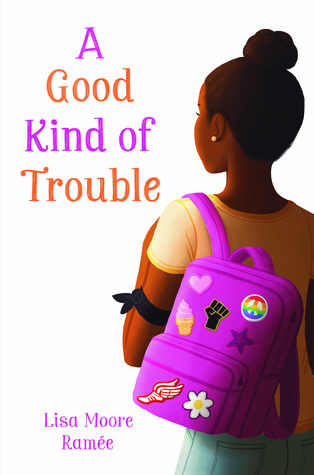
9. A Good Kind of Trouble – Lisa Ramee

38251243

10. With the Fire on High- Elizabeth Acevedo

38739562

11. Watch Us Rise – Renee Watson

40025175

12. The Revolution of Birdie Randolph – Brandy Colbert

38097294

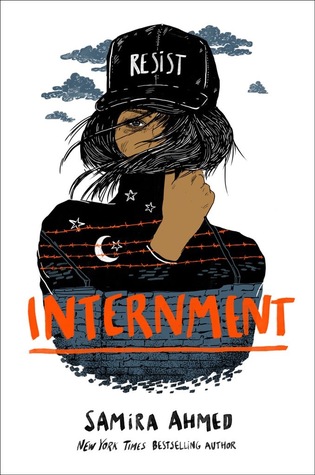
13. Internment – Samira Ahmed

38167114

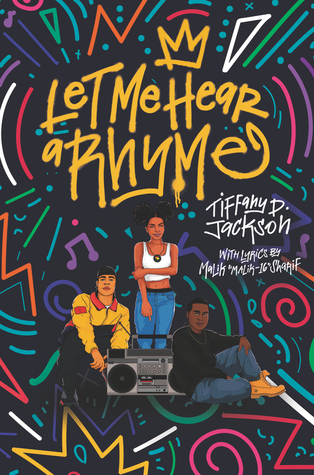
14. Let Me Hear a Rhyme – Tiffany D. Jackson

36285129

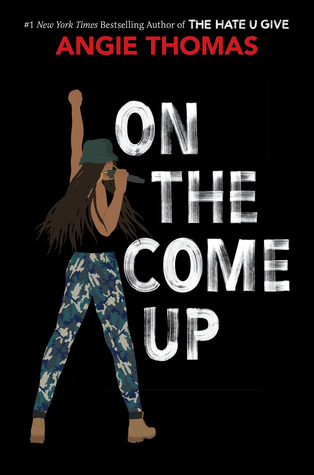
15. On the Come Up – Angie Thomas

35068618

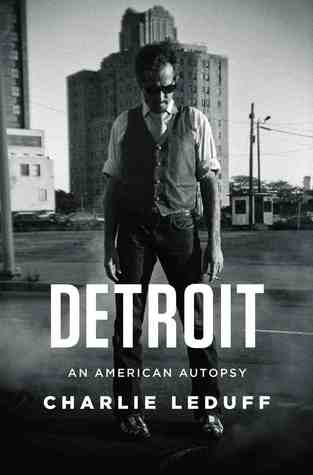
Review: Detroit: An Autopsy

3 inches of snow here today in Charlotte, North Carolina. Any kind of snow accumulation of over an inch is fairly rare here, so naturally the city shuts down. Major roads are ok but side streets are impassable, schools close, and necessities like grocery stores aren’t open. I’m huddled under a blanket on the couch with hot tea, because cold weather is a great time to read.

15811520
Review for "Detroit: An Autopsy" by Charlie LeDuff (2013)

Rating: 4 out of 5 stars

Today’s review takes me to a cold weather place: Detroit.

I liked this book. It’s written by a native of the city who comes back home after spending years away as a reporter and finds it gone completely to hell.

The scenes of this book are what make it interesting. There’s a homeless man the writer finds frozen solid inside an abandoned house. There’s the city’s woefully underfunded fire department, who spends most of its time putting out the work of arsonists because it’s cheaper to start a fire than it is to go to a movie. There’s a porn-style tv political ad with a corrupt lady politician at the center. There’s the author’s brother, who, after being laid off from a well-paying car manufacturing job, is doomed to put together useless parts for a low wage. And, because this is Detroit, there’s all manner of political corruption. Failing schools, corruption, racism, corruption. It’s depressing as hell. But such a good read.

Charlie LeDuff positions Detroit as a microcosm of America, when consumerism, debt, aging infrastructure, and just plain bad policy decisions go wrong. He’s sympathetic toward his city but he pulls no punches as he calls out politicians, local leaders, family members, and even himself on his own bullshit. His premise? Want to know what’s wrong with Detroit? Look in the mirror.

I wholly recommend this book.

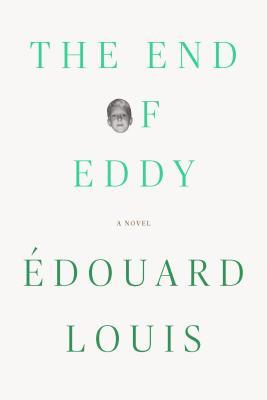
Review: The End of Eddy

31574750

Review for "The End of Eddy" by Edouard Louis (2017 in US, 2014 in France)

Rating: 5 out of 5 stars

This book’s got trigger warnings up the wazoo: rape, bullying, assault, child abuse, animal abuse, homophobia, racism

A short and unrelenting autobiographical account of the author’s coming of age in a small town in northern France. Originally published in French, Eddy was only 21 when he wrote this book.

Much of this was hard for me to read. Eddy grows up poor and gay in a large family, a target of obvious scorn by his parents, his siblings, his classmates, and the people of his town. The depiction of French society here is a sharp contrast with what many of us Americans picture when we think of the region, with its artistic sensibilities and beautiful scenery. In Eddy’s town of Hallencourt, jobs are scarce, children drop out of school, and women have their babies young. Alcoholism is everywhere, violence is routine and part of a typical day’s events. Growing up, Eddy is assaulted daily, spat upon, and called derogatory names because his mannerisms, speech, and behavior does not fit the expectation of what is “manly.” He submits to these beatings because brutality is all he knows. His sexual initiation, which is not entirely consensual, is the hallmark of this book, because it’s after this event that he decides to take on the persona of ‘tough guy.’ He fails miserably, however. Eddy comes to accept his own homosexuality and eventually gets accepted into a theater program in a nearby city, pursues a degree, and eventually changes his name to Edouard Louis.

As much as I didn’t like reading this due to its graphic descriptions of such horrible things, I have to give it five stars. Something in me broke while reading this. It’s terrifying because of its urgency–you know that this kind of terrorism is happening to someone else as you read this. Even though this book takes place in France in the 90’s, it could be present day in your city or really anywhere in the world where people still practice the routines of toxic masculinity and violence.

Five stars, mates.

Review: The Line Becomes a River

34818440

Review for "The Line Becomes a River: Dispatches from the Border" by Francisco Cantu (2018)

Rating: 4 out of 5 stars

In keeping with #NonfictionNovember, I really liked this book. I am glad that I did not read the many negative reviews of this before picking it up, much of which is not about the content but full of personal rancor towards the author, a former Border Patrol officer. Did these reviewers even read the book? Apparently not.

What the author does do is present a pretty fair and balanced view of U.S. and Mexican lives on both sides of the border. The first section covers his early days on patrol, catching people who activate sensors in the desert. There are many stories here–desperate immigrants wishing for a better life who are deserted by their coyotes (smugglers), people who live on the border whose properties are continually trashed and broken into by immigrants, those who aid cartels through drug smuggling. Both criminals and non-criminals are almost always rounded up and deported. There are also some pretty shocking accounts of Border Patrol agents being cruel and just plain racist (destroying immigrant water sources, calling them “wets”). In addition to this, the author describes countless dead bodies, those not fortunate enough to make it out of a scorching desert hell. The middle section of the book deals with Cantu’s moral conflicts and eventual disillusionment with the work after he is assigned to a desk job. The desk job involves profiling cartels, their victims almost always killed through unimaginable violence. Border Patrol officers have a particularly high turnover rate, which, for a morally conflicted person such as Cantu, is wholly understandable.

The last section of the book is the most poignant, in my opinion. After his departure from the Border Patrol, Cantu befriends a Mexican man from Oaxaca named Jose. Although he is undocumented, he is a hardworking man with a wife and three sons. Returning from a trip to visit his mother in Oaxaca, he is caught by Border Patrol attempting to cross back into the U.S. Cantu assists the family by showing up to his trial, getting him a lawyer, taking his sons to visit him in detention. I won’t tell you Jose’s fate, other than to say that the last part of this book is not the author’s but the voice of Jose himself.

Nowhere in this book does Cantu position himself in favor of U.S. Border Patrol policies. While participating in their enforcement as an officer, he is a part of the institutional violence against immigrants, which he acknowledges. The story of Jose is a good balancing act for the critics to show that immigration presents an ever present challenge with no easy solutions. People on both sides of the border ultimately suffer.

I recommend that you don’t read the negative reviews and read this book for yourself.

Four stars.

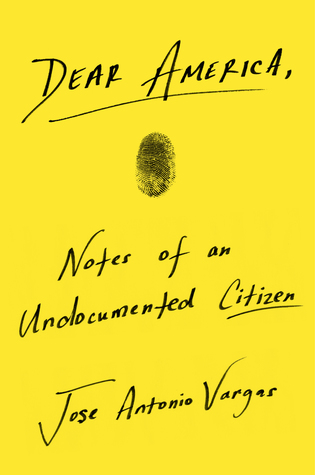
Review: Dear America

36544614

Review for "Dear America: Notes of an Undocumented Citizen" by Jose Antonio Vargas (2018)

Rating: 4.5 out of 5 stars

This is a great book. It is about life as an immigrant, but it is not about politics. Through his connection to journalism, Vargas wrote an op-ed in 2011 outing himself as undocumented. He also wrote a Time magazine cover story on the subject in 2012.

“Dear America” is mostly a story about the author, Jose Antonio Vargas, whose mother hastily put him on a plane from the Philippines to join his grandparents in America at 12 years old. He grows up in California and does not realize until he attempts to apply for a driver’s license that the paperwork provided by his grandfather was fake. He confides in several trusted colleagues and administrators, who eventually get him to college and into several prestigious journalism gigs, despite his undocumented status.

Vargas explores how the “path” to citizenship does not exist for him and many, many other people. He cannot simply apply for legal citizenship, because he came here illegally and risks deportation. Leaving the U.S. and returning to the Philippines effectively bans him from coming back for 10 years, and even then, approval for U.S. citizenship is not guaranteed. He could attempt to pull off a sham marriage (i.e., marrying a U.S. citizen for a green card), but Vargas refuses to do this because he is gay. As a result, he discusses a sense of constant homelessness even though he considers America his country. Many aspects of American life are continually out of reach for him because he is undocumented. Though he pays taxes through his job, in many states, he cannot drive or legally work. He cannot travel overseas and has been effectively cut off from his extended family. He also faces constant fear of detainment and deportation, which he goes through later on in the book.

Overall, this is a short book that puts a human face on the argument around illegal immigration, which is far more complex than building walls and talk about caravans. What does it mean to be an American? If it is simply a matter of being born on U.S. soil, then I, as a ‘natural’ resident, did not “do” anything to earn my status. Why do we as citizens feel the need to make people like the author do the same? Lots of complex arguments here, many of which have no quick answers.

Definitely recommend this book.

Review: In My Father’s House

I’m back, guys. I’ve been busy. Dissertation, fellowship applications, conferences. Le sigh.

But anyway, let’s celebrate. It’s November, lovelies! The days are short, there’s a crisp in the air. I’m going to try something a little different here,  in observance of #NonfictionNovember I am going to attempt to review only nonfiction books this month. I’ve got quite a healthy backlog, so here goes…

38395060

Review for "In My Father's House: A New View of How Crime Runs in the Family" by Fox Butterfield (2018)

Rating: 5 out of 5 stars

This well-written nonfiction book begins with a very interesting statistic: that ‘5 percent of American families account for half of all crime, and 10 percent of families account for two thirds.’ This point is driven throughout the entire book with Mr. Butterfield’s multi-generational documentation of the Bogles, an impoverished White family who moved from the Reconstruction South to Texas in the early 1900’s. The story begins with the marriage of Louis Bogle and Elvie, two young people with a propensity for cons and swindles who become hard drinkers and carnival workers. They eventually have seven children, all of whom end up in prisons or reformatories for various crimes–drinking, stealing, fighting, and beating their wives.

The narrative then shifts to one of the sons of the original Bogle family, the youngest and most particularly troublesome son, nicknamed Rooster. Enabled by his mother, Rooster terrorizes his own family through physical and sexual abuse. He “marries” two women and keeps them in the same house, occasionally beating them and having several children by both. He does not allow his children to socialize outside of the family and takes them on his various criminal schemes, encouraging them to steal and even going by the state prison and telling them that they will end up there one day. Eventually all of Rooster’s children do go to either jail, prison, or state reformatories, only this time for more serious crimes–drugs, burglary, theft, rape, and murder.

Butterfield is still not finished, continuing to trace the stories of cousins, uncles, aunts, and other Bogle family members. He goes into the next generation of Rooster’s grandchildren and describes their history of meth use, burglaries, child endangerment, and more crimes. In the back of the book is an exhaustive list of over 60 Bogle family members, all of whom have either spent time in a prison or jail for various crimes.

This book does end on a bright note, with the story of one of Rooster’s grandchildren, Ashley. With strong social ties through her mother (not a Bogle), community support, and education, she graduates from college and pursues a career in the medical field. She is the first Bogle family member to graduate from college in 150 years.

This is a good book but it is somewhat depressing, as it forces you to consider how much the role of family and upbringing is overlooked in the modern theories of crime. Butterfield is careful with this argument, however. He acknowledges over and over that leaning too heavily on the link between family upbringing and crime reinforces racism, with Blacks and people of color typically being demonized and incarcerated as if they are the sole perpetrators of crime. I think this is why he chooses a White family to illustrate his point in this particular book (though his previous book I’ve reviewed, “All God’s Children,” deals with crime in a Black family).

This is an excellent read if you are interested in the criminal justice system, theories of crime/criminology, and the “nature vs. nurture” argument. It’s also cool if you just like narrative nonfiction too.

Five stars.


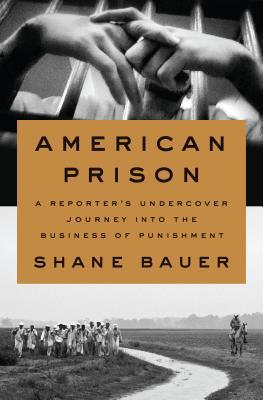
Review: American Prison

38561954
Review for "American Prison: A Reporter's Undercover Journey into the Business of Punishment" by Shane Bauer (2018)

Rating: 5 out of 5 stars

I could not put this book down. Five stars.

In 2015, Shane Bauer, a reporter with Mother Jones, went undercover for four months at a privately owned (“for profit”) prison in rural Louisiana called Winn Correctional. Managed by Corrections Corporation of America (CCA), he is hired to work as a prison guard for $9 an hour. He carries a pen that doubles as an audio recorder, a small notebook, a coffee thermos with a small camera in it, and documents his daily dealings with staff and inmates at his new job. What he finds at Winn is pretty much a nightmare: a dangerously understaffed facility, guards that openly brag about beating inmates, daily stabbings, reports of rapes, other examples of gross negligence and mismanagement. There are no education classes, no regular rec time, or any kind of ‘set’ schedule for the prisoners, each day’s activities are determined by how many staff decide to show up for work. There is one psychiatrist and one social worker for the entire prison. There is only one doctor and medical treatment is substandard.

At Winn, Bauer finds that every attempt is made to save CCA money. Because there is a profit motive in keeping inmates at the facility, he observes an inmate repeatedly complaining of chest pain but is refused hospital treatment and given ibuprofen. He later dies. Another inmate violently kills himself after consistent threats to do so. Corners are cut and log books are falsified. Another prisoner manages to escape and no one misses him for hours, due the fact that it costs CCA too much to staff the guard tower.

In between the chapters of undercover reporting is powerful research Bauer writes on the history of America’s for-profit prison system. Locking people up for revenue, convict leasing, and state-enforced prison labor is nothing new and has always resulted in the abuse and torture of inmates, particularly men, women, and children of color. By creating laws across the American South that criminalized minor misdeeds (drinking, vagrancy, truancy), many Black men were forced to work in prison labor camps. When one died from routine overwork, beating, or disease, the system simply got another. It has always been a system that cheapens human lives, therefore it is no surprise that CCA’s stock shares are up and they are profiting under the current president and his hateful policies towards immigrants. Corporations like CCA are beginning to turn away from contracts with jails and prisons and turn its attention to building detention centers, most of which now house Mexican and Central American immigrants.

I could say so much more about this book but it would be too much to type here. I do, however, wholeheartedly encourage you to read this, even if you read nothing else this fall.

Review: We Built the Wall

39849489

Review for "We Built the Wall: How the U.S. Keeps Out Asylum Seekers from Mexico, Central America and Beyond" by Eileen Truax (2018)

Rating: 4.5 out of 5 stars

As an educator, I hold the steadfast opinion that until everything’s equal (money, wealth, opportunity), we’ll continue to grapple with the same issues: race and gender inequality,  poverty, crime, and a failing criminal justice system. So when it comes to nonfiction, naturally, these are the topics that I usually find myself reading about.

The other big one–immigration.

We Built the Wall  is a very well written book about Mexican and Central American (Guatemala, Honduras, and El Salvador) immigration. The author interviews immigrants living on both sides of the border and in detention centers, as well as the lawyers and organizations that help them.

I must admit that reading this book helped me understand what a complex issue both legal and illegal immigration really is. To those who simply tell immigrants to “go home” because they are here illegally, this book details how going home is nearly impossible, with violence, police corruption, extortion, and threats by criminal gangs making the lives of ordinary people there a living hell. Applying for legal immigration is an option but not very likely to happen for many. For one, it can last years. When a gang threatens to kill your whole family unless you pay them extortion money and your preteen son agrees to join them, there’s an urgency to your movement. Second, legal immigration usually carries with it a highly complicated set of criteria (you must have $$$ to apply, a U.S. citizen to sponsor you, or an employer in the U.S., etc.) that make the process damn near inaccessible to poor people. Therefore, it is understandable that many come illegally, and when caught, attempt to apply for political asylum. This rarely happens, and most are detained during this months-long process.

This book also discusses how much of America’s political asylum policies are still deeply attached to Cold War politics. Cubans who come to the US usually get their asylum request granted, due to the fact that their country is not a democracy. Mexico and much of Central America, however, does not fit this criteria. This policy has gone unchallenged for many years, and upholds a certain status quo that privileges people from certain countries (usually European-influenced) over others and leaves Mexicans, Central Americans, and people from poorer, less industrialized countries at the bottom.

The “Wall” to keep undesirables out of America is not physical but a political one, and has been firmly in place since the Cold War. I won’t give away the whole book here, but I will agree that this is a highly detailed and readable book about the current politics of immigration that I would definitely recommend to anyone.