Review: Hell is a Very Small Place

25159286

Review for "Hell is a Very Small Place: Voices from Solitary Confinement" by Jean Casella, James Ridgeway, & Sarah Shourd (2016)

Rating: 4 out of 5 stars

As an educator I’ve always been interested in the criminal justice system–how so many people get caught up it, how they survive there, and of course, how they can stay out. This book is a collection of essays about the subject of solitary confinement, otherwise known as administrative segregation (ad segs), special housing units (SHUs), and various other names depending on the state and institution responsible for their use. Regardless it’s all the same–23 or 24 hours a day in a small cell alone, often with no books, tv or radios, communication with outside people, papers to write with, or any form of stimulation other than the concrete walls. It is such a mind numbing and soul crushing experience that the UN has declared it torture and countless doctors and mental health experts have denounced its use. Yet, it continues on an unprecedented level in our nation’s jails and prisons.

There’s a really good historical perspective on solitary confinement in the U.S. in the beginning of the book. Solitary confinement was used widely in the 1800’s and then abandoned due to its terrifying psychological effects. In the 1970’s, the practice was picked up again, mostly due to prison overcrowding, lack of educational and training programs, higher levels of violence, etc. The essays in this volume are particularly powerful, all of them either from people currently in solitary who have been there for long periods of time (20 years or more) or from people who are now free individuals, living with the psychological effects of this practice. The last section is a series of articles by experts, all of which condemn the practice and offer solutions.

It is easy to dismiss this book and the issues it brings up with the Trump-era view that criminals are terrible people who belong in prison. It’s even easier to say that these terrible people deserve punishment on top of the punishment they’ve already received for not following the rules. This is simply not true. Many of the people who are sent to solitary are sent there for non-violent offenses, sometimes for something as simple as “possessing too many postage stamps,” “associating with known gang members” (California), or in New York state, for “wearing shower shoes outside of the shower” or “using profanity.” Time in the SHU is usually given by prison officials and the prisoner often has no right to a defense. And the punishments can be as long as the officials deem necessary–weeks, months, even years. Or, in some cases, life.

I definitely recommend this book. Despite what we think of the people in the correctional system, the fact remains that many of these “terrible” people will get out–someday. They will live next to us and share our social spaces. The question becomes one of whether we would prefer someone who’s been rehabilitated with kindness or someone who’s been locked in a cage like an animal. I personally prefer the former.

This is a great book. Read it!
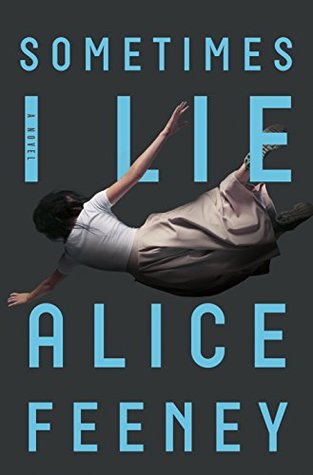
Review: Sometimes I Lie

36112959

Review for "Sometimes I Lie" by Alice Feeney (2018)

Rating: 4 out of 5 stars

Ahhh…man. THIS book.

To tell you anything specific about the plot or the characters of this novel is to ruin it–so I won’t. It’s gotten really good reviews online, and this time I must say that the hype is well deserved. There is a blurb on the author’s website that this book has been green lit for television, which is cool because as I read this I could totally picture this on Netflix or Hulu or something. Bingeable TV. There’s also a sequel being written, which is set to come out in 2019.

So here’s the basic “basics”: When the book begins, Amber, the main character, is in a coma. She confesses immediately that she tells lies, and that her husband doesn’t love her. She hears everything going on around her (her husband and her sister’s visits, for instance) though she doesn’t remember the event that landed her in the coma. She eventually discovers that she’s been in a car accident.

This book is essentially split into three parts that are narrated interchangeably: now (Amber’s observations while in her lucid, comatose state), then (events leading up to the week before the accident), and before (childhood diary entries). Throughout much of the novel, I have to admit that I was completely in the dark about what each strand of the narrative had to do with the other. Gradually, however, the connections came into focus and lemme tell ya…things (and people!) were not what they seemed. There are several twists here, and even though I’m not a “twist-a-plot” lovin’ kinda person, it worked perfectly here.

As I finished this book I immediately realized that it plays with two very common tropes–the unreliable narrator and the complex nature of female friendships. It’s really nothing new in fiction, but both of these things are mashed up here in a really hip, interesting way.

I loved this book. If you do read it, try to do so in as few sittings as possible–I guarantee it’s better that way.

[A digital copy of this book was provided to me by the publisher, Flatiron Books, as well as NetGalley in exchange for an honest review.]

Review: The 57 Bus

33155325
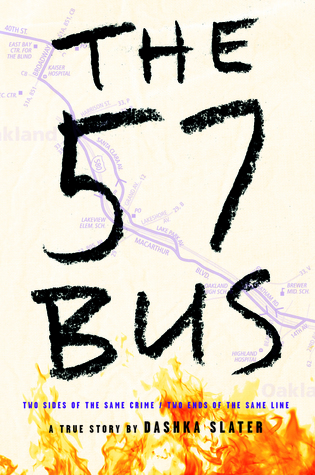
Review for "The 57 Bus" by Dashka Slater (2017)
Rating: 4 out of 5 stars

After reading this book I came to the realization that I rarely read YA nonfiction. I need to change that. This was a decent book.

“The 57 Bus” probes the real life case of a Black male teenager who sets a White agender teen’s skirt on fire as they rode on a commercial bus on the way home from their respective schools in Oakland, California in 2013. It was a chance encounter–neither teen knew the other–but lives were changed forever. I think Slater does a great job of setting the scene, introducing us first to Sasha, the agender, Aspberger’s teen who wears skirts to express himself, and then to Richard, a Black male who grows up with a mother who works two jobs, the constant threat of arrest and incarceration. I also think the author does an exceptional job with the point of view of the perpetrator, being careful not to pathologize his behavior, but at the same time not excusing it either. This is hard to do, as most authors who write about people of color committing crimes generally tend to take one role or another.

Anyway, this is a great book. Definitely a quality read.

Review: Heart Berries

35840657

Review for "Heart Berries: A Memoir" by Terese Mailhot (2018)
Rating: 2 out of 5 stars

Let me start this review off by saying the Terese Mailhot is a sensational writer. “Heart Berries” is a raw, personal account of Mailhot’s life and experiences as a First Nations woman who has witnessed abuse, poverty, addiction, as well as generations of family members who have passed through Canada’s brutal residential school system, which separated indigenous children from their families and, in many cases, subjected them to sexual and physical abuse. Mailhot talks about this and a myriad of other topics in her writing, often taking on the form of missives to former lovers.

There were definitely moments in this book where I found myself underlining passages in my Kindle, saying “yes!” But then these flashes of brilliance would signal the moment when the magic would end, because moments later the author would switch time, location, and subject without warning. I am a bit confused with the classification of this book as a memoir, because the selections together as a whole seemed terribly disjointed and didn’t tell a cohesive story. The lack of cohesion put up a barrier for me–I wanted to understand her and the writing was certainly drawing me in, but the lack of a solid story here made this something I couldn’t access.

I almost feel bad for giving this two stars, because this book has gotten glowing reviews in the mainstream press. I definitely like the way the author writes, but I just don’t think this is my kinda book.

Review: Speak No Evil

35396904
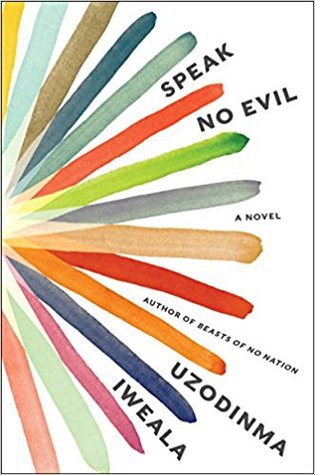
Review for "Speak No Evil" by Uzodinma Iweala (2018)
Rating: 2 out of 5 stars

Nah, I didn’t like this book. Thankfully it’s a short one (about 200 pages), so I was able to muster the courage to get through it quickly without chalking this one up as a DNF.

“Speak No Evil” is the story of Niru, the first generation, American-born son of conservative, upper class Nigerian parents. Although he lives a life of material wealth, he cannot escape the realities that cause him considerable distress: impossibly high standards set by a successful older brother, police harassment due to driving while Black, the racist microaggressions by White classmates at the prep school he attends. The one person he relates to is Meredith, a classmate to whom he confesses that he is gay. His father discovers his secret and, after a violent confrontation, takes his son to Nigeria to visit a special preacher to “pray the gay” out of him. Niru returns to school but his spirit is even more troubled, restless, and confused. He is a shadow of his former self.

The story doesn’t end there. Niru goes continues struggling with his sexuality before meeting a violent end, the circumstances of which did not seem to go with the premise of the book. It is obvious that the author wanted to prove a point about race with Niru’s demise, but I dunno…this kind of “switch” seemed uncalled for. There is also a shift in narrative–when Niru stops talking, Meredith steps in and ends the book. I didn’t like this either. I think he could have stayed with the original voice. The inclusion of Meredith’s voice seemed rather sloppy to me, kinda like he originally drafted two novels and put them together in the same book.

Strangely, I also found this book terribly hard to read. I shouldn’t have, though. Iweala writes this book in the same way he did his last, “Beasts of No Nation.” There is no speech punctuation in that book either, whole conversations appear within huge blocks of text. Though the lack of punctuation didn’t bother me in BoNN, for some reason, it bothered me immensely here. Perhaps it is because there was more description and internal thoughts with “Beasts of No Nation,” less dialogue. I don’t know. Hmmm.

I won’t give this book one star, I respect Iweala greatly as a writer. I just don’t think this particular book was my cup of tea.

Review: The Triangle: A Year on the Ground with New York’s Bloods and Crips

20948820

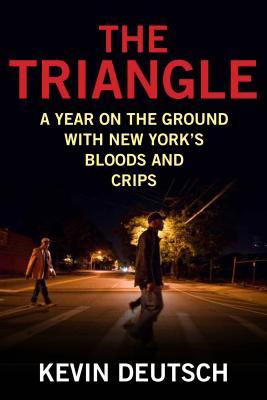
Review for "The Triangle: A Year on the Ground with New York's Bloods and Crips" by Kevin Deutsch (2014)
Rating: 1 out of 5 stars

Good Lord this book sucks…where do I start?

“The Triangle” is a reporter’s ‘first hand’ account of a year in the lives of Crips and Bloods gang members in the community of Hempstead, Long Island, NY. Both gangs, long associated with the urban center of NYC, have now moved out into the suburbs. Priced out of their former boroughs through gentrification, the suburbs of Long Island and its surrounding towns are now the setting of murders and gang warfare, as well as open air drug markets run by both gangs.

Much of this book takes place during a gang war between the two sets. It’s not a pretty picture. There are accounts of beatings, rapes, and murders on both sides, reported with the same mind-numbing, casual tone as one would describe a routine activity such as making a sandwich. The Crips strike the Bloods by gunning down one of their high ranking members, Bloods then retaliate by kidnapping and raping a Crip female associate. The circle repeats itself over and over as each gang goes back and forth, back and forth. By page 75, I was completely annoyed with this.

Which brings me to the major problem here: the tone of this book. There’s nothing here. For narrative-style nonfiction to be effective, there has to be emotion conveyed, somehow, somewhere, people have to live outside the page. Otherwise, reading about them is just boring, pointless facts. Ladies and gentlemen: this book is just boring pointless facts. There’s no emotional investment in this story by the author or by me in reading it. Here, the main players sling drugs, smoke weed, terrorize their community, then die in a hail of bullets. An awful lot. At no point did I feel any emotion over this, just irritated at the voyeuristic nature of the violence.

Another problem: much of the action of this book takes place through dialogue. In a note at the end, the author mentions that only about 40-50% of the events were witnessed by him first hand. This means that the majority of this book’s events were constructed or inferred by the author, or solely based on the verbal accounts of the subjects (who, even the author admits, had a tendency to lie or embellish details to bolster their reputation on the street). How much, then, of this story is really true? A quick Google search of the author’s name turns up several accusations of suspicious journalism practices for work he did on a later book. For all we know, this book could be mostly fiction too, passed off as nonfiction with the use of fake/nonexistent sources.

I don’t recommend this book at all. If you really want in-depth, emotionally gripping stories of gang related violence and the urban drug culture beyond just play-by-play tales of violence, I would check out the work of David Simon. He’s written “Homicide: Life on the Streets,” “The Corner,” and, of course HBO’s show “The Wire.” Much better writing too. Check those out. Not this.

Review: An American Marriage

33590210
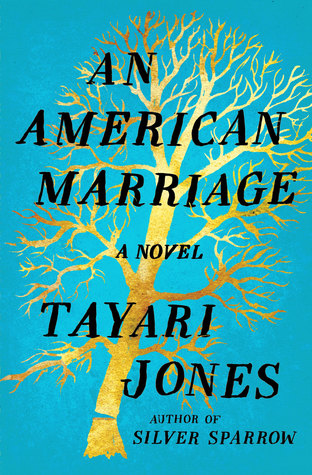
Review for "An American Marriage" by Tayari Jones (2018)
Rating: 4 out of 5 stars

Because there’s such a long waiting list to check out this book at my city’s library, I ended up getting a hold of the audiobook version of this through Hoopla. Ultimately I’m glad I did that, because I thoroughly enjoyed the audio version. The two actors reading the story breathe a kind of life into it that I don’t think I would have experienced had I chosen to read it.

“An American Marriage” is the story of Celestial and Roy, a newly married couple residing in Atlanta. For all intents and purposes, they are a mismatch: Celestial is well-grounded and from an urban upper class family; while Roy has a roaming eye for trouble and is from a rural working class upbringing. Despite their differences, they are happy. The couple is only a year and a half into their marriage when Roy is falsely arrested for rape and sentenced to 12 years in prison. From here the novel goes into epistolary form, with the separated couple writing letters back and forth to one other. Roy finds himself adjusting to prison life, while Celestial makes the most of her loneliness and despair in Roy’s absence by creating dolls with her husband’s likeness. She also finds success as an entrepreneur, traveling the country and selling her dolls.

Eventually, Roy is released from prison after 5 and a half years due to a technicality with his trial. He returns home, but both Celestial and Roy find that the terrain of their marriage, as well as who they are as people, have vastly changed. I won’t give away the rest of the story, but I will say that Roy’s release from prison happens early on, at about 35% into the book. There is literally an entire story line after this event that gets very messy for both Celestial and Roy, and not in a good way.

This novel is not a quick read. It’s a slow burn of emotion, with a marriage disintegrating at the center. Both the motives and lives of Roy and Celestial are explored in detail, both characters take turns being both right and wrong.

This book is a solid 4 stars. I can definitely understand why it’s getting the press it’s getting, because it’s definitely well deserved. This one’s a triumph, definitely read it!

Review: Gun Love

35758074
Review for "Gun Love" by Jennifer Clement (2018)
Rating: 2 out of 5 stars

Meh, didn’t really like this book.

“Gun Love” is the story of Pearl France, a 14-year-old girl living with her mother in a parked car in a derelict Florida trailer park. Intriguing characters abound in and about the Indian Waters Trailer Park: Pearl’s best friend April May and her parents, Rose and Sergeant Bob, the clergyman of gun buy-backs, Pastor Rex, and Corazon, a Selena-loving, gun toting Mexican woman.

Pearl and her mother share a special bond until she forms a relationship with a mysterious man who hangs around the trailer park named Eli. I won’t tell you what happens specifically with this character for the purposes of this review, but I will say that after he comes into the novel (about 30% of the way in) the narrative begins to fall apart completely. Characters come and go after this point, and none of them are fleshed out enough to move the story along. I also skimmed the last 10% of this book, the events of which seemed totally pointless.

Overall, I liked the writing here but I think the plot could have been handled better.

[Note: I received a free digital copy of this book from the publisher, Hogarth Press, and NetGalley in exchange for an honest review.]

Review: A Land of Permanent Goodbyes

35082445
Review for "A Land of Permanent Goodbyes" by Atia Abawi (2018)

Rating: 3 out of 5 stars

This is a heartbreaking, modern day story about a young man named Tareq from Syria who loses his mother, several of his siblings, and his grandmother in the tragic bombing of his home during the Syrian war. He flees with his father and sister to his uncle’s home in Raqqa, though he soon discovers that it is not safe in this location either. Tareq eventually leaves Raqqa with his cousin and escapes to Turkey. However, due to the large amount of Syrian refugees like himself, there are few job opportunities available. Deciding to continue his journey into Europe to gain asylum, Tareq travels to Greece, hoping to gain some kind of sense of normalcy.

I liked the premise of this book but its execution was a firm ‘no’ for me. Though the story itself is extremely compelling, the author’s choice to go with an omniscient narrator, “Destiny,” was a strange one. “Destiny” interrupts the story often, giving us its thoughts on war, the human condition, people’s sufferings, insights on various unconnected character’s lives, etc. I didn’t like this. As a matter of fact, every single time “Destiny” began to narrate I found myself skimming pages and disengaging from the story. I feel there was no need for this kind of storytelling, Tareq’s story was certainly strong enough to maintain its own narration.

Also included in this story is a young Greek woman’s account of her interactions with Syrian refugees. Although she is connected to the events of the novel, the author’s choice to include her narration (in addition to “Destiny”) was odd as well. Other than a shallow representation, her account of the events were pointless and really seemed to serve no purpose other than to propagate a kind of ‘kind White savior’ trope.

When I got to the end of this, I noticed this was a YA book. This book is pretty graphic in its descriptions of war–there are descriptions of beheadings, executions, and other pretty harsh realities that a child is in for should they decide to read this. But as an educator, I don’t believe in censorship, so this is a very eye-opening and timely book.

Review: Where the Dead Sit Talking

35663633

Review for “Where the Dead Sit Talking” by Brandon Hobson (2018)

Rating: 4 out of 5 stars

Set in late 1980’s rural Oklahoma, “Where the Dead Sit Talking” is the sad, dark tale of a 15-year-old Native American teenager named Sequoyah, sent to live with a foster family after his mother’s imprisonment. From the outset of the novel, it is evident that Sequoyah carries many emotional scars, having dealt with his mother’s alcoholism and abuse in previous detention settings.

Harold and Agnes Troutt are also the foster parents of two other children: George, a younger, also emotionally damaged boy (his behavior strongly suggests that he’s possibly on the autism spectrum), and Rosemary, an older Native American girl with whom Sequoyah becomes obsessed. They bond over their shared heritage (he is Cherokee, she is Kiowa), smoking cigarettes in her bedroom at night and sharing their deepest secrets with each other. Their relationship is equal parts platonic and disturbing, with Sequoyah’s violent fantasies and obsessive thoughts of Rosemary taking up much of the novel.

This book has a very dark, brooding tone all throughout. There is no happy ending or ‘triumph’ by the main character. What is here is an unsettling silence at the heart of the story that betrays the notion that even though everything seems ok on the surface, it’s apparent that it isn’t. Despite the Troutts kindness and “good” intentions, they are powerless to stop the human catastrophe that simmers beneath the surface of their home. I think the author does a great job of depicting how even the most well-intentioned acts of goodness can be misdirected and to the complete detriment of the individual.

I highly recommend this book.