Review: Let’s Talk about Love

Hey folks!

I’m writing this from a hotel in Manhattan. I’ve been here for 5 days now for an education conference and so far I’m totally in love with the city. Anyone who would like to see my NYC adventures can follow me on my IG: kellythegreat.

Anywho, on to the review:
31625039
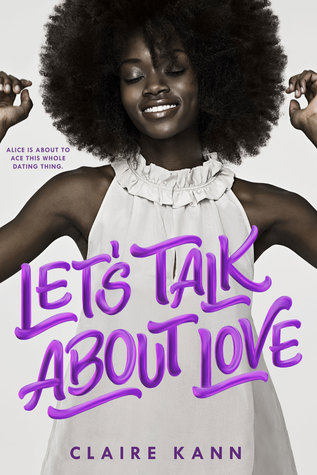
Review for "Let's Talk About Love" by Claire Kann (2018)

Rating: 2 out of 5 stars

I’m sad to say that I didn’t really like this book.

It’s disappointing because I wanted to love it, to grab it and go out and buy my own instead of a library copy. I did finish it, but honestly, after 25 pages, I knew this wasn’t the book for me.

Alice is a bi-romantic, asexual Black girl college student. As the story opens, she is being dumped by her girlfriend Margot because her gf believes that she doesn’t want to have sex with her. Heartbroken, Alice moves out of their shared space and into an apartment with another friend, Feenie, and her boyfriend. Meanwhile, she develops an intense romantic attraction for one of her co-workers, Takumi. The remainder of the book details Alice’s romance with Takumi and her struggles with her asexuality, as well how she deals with a whole host of family problems to boot.

I liked this novel because it is the first book I’ve read in which asexuality (or “ace,” as some asexual individuals call themselves) is discussed like the very real thing that it is. It is not ‘weird’ or a mental illness. Although there are a wide variety of perspectives on sexual activity within this community (some do have it, some don’t), it is widely accepted by people who identify in this manner that it is an orientation, not a “choice.” Even though they may lack interest in sex, they do indeed have romantic inclinations. Alice, the main character of this book, is featured in this way. I appreciate the fact that this book’s purpose was to allow people to understand asexuality without the long-winded explanations of an academic paper or a textbook. It’s timely and informative.

My dislike of this book, however, was in the characterization of Alice. While she’s not the worst character I’ve ever encountered, I loathed the way the author portrayed her–less like a real college student and more like a 12 year old. For example, Alice has mental categories called “Cutie Codes” to describe her attractions to people. She constantly refers to this all throughout the novel: Cutie Code Orange, Cutie Code Red, Cutie Code Yellow, all the way to Cutie Code Black (Takumi, according to Alice, is the ‘perfect’ black). She also has the nerve to refer to a tv character on pg. 48 as a ‘cutie patootie badass.’

((*eyeroll*))

Are you serious? What adult (or, as I said earlier, anyone over the age of 12) in 2018 talks this way? While I can understand making character relatable and giving the protagonist some quirks, the author was trying entirely too hard for this angle. Alice’s wide-eyed, child-like nature was problematic for me, because I don’t think real ace people go around acting like a bubbly 12 year old. It’s completely ok for an ace character to say someone’s hot or that someone they like is sexy without resorting to infantile language associations.

And the writing…while it’s not bad, it’s nothing to write home about. This book is plagued by an overuse of parentheses, usually employed between paragraphs to represent Alice’s thoughts. This is weird, because this book is written in 3rd person. If there is so much emphasis on the thoughts of the main character (which there is) why not use the 1st person and make it official? Reading this book in a 3rd person POV seemed unnecessarily awkward, because I always had the sense that it was a 1st person narrative.

Once again, I appreciate the diversity of racial representation in this book (a Black ace female, an Asian male), as well as what it attempts to do when it comes to portraying a sexual orientation that few people understand. I just wish it could have been executed better.

2 stars.

P.S. – The cover is Cutie Code Black.

Top Ten Tuesday: Books I Loved But Will Never Re-read

“In the end, we’ll all become stories.” – Margaret Atwood

I read a lot of different kinds of stories. Some of them are downright disturbing and reflect a side of life that we  would rather not see. The following are books that I found wonderfully awe-inspiring, but for reasons I’ll explain, I would never read them again:

  1. The Coming, Daniel Black. Written in the collective first person (“we”), this book follows a group of Africans taken from the continent in the early 1800’s and their horrific journey to America by ship (“The Middle Passage”), to their sale as slaves in the New World. If you really want to understand what African Americans endured to get to the U.S., you must read this book. It is absolutely devastating, an emotional wringer.
  2. Everything I Never Told You, Celeste Ng. Despite the fact that this is a good book with good reviews (and deservedly so), the dysfunctional nature of the family in the book is one that I don’t ever want to read about again. Everybody’s clueless, and their oblivion to real life put me in such a tizzy that I wouldn’t do this twice.
  3. Aquarium, David Vann. Another great book, about a family that puts the “D” in dysfunctional. The mother is a monster, and there’s a little girl at the center of the action that you just want to hug forever.
  4. An Untamed State, Roxane Gay. Haitian American attorney Mirelle is vacationing in her native Haiti with her husband when she is kidnapped and held for ransom. When her wealthy father refuses to pay for her release, her captors retaliate with a campaign of rape and torture. It’s heavy, heavy stuff. Forgiveness and healing does come, but it’s not in the form that you’d expect. Great book, but I would never dream of opening it again.
  5. The Summer that Melted Everything, Tiffany McDaniel. This is a “thinking” book about what happens when “The Devil” in the form of a child comes to a small Ohio town in 1984. It’s an excellent book I read this two years ago and I’m still thinking about a lot of the questions this book brings up. Still no answers.
  6. Problems, Jade Sharma.  Maya is a married woman with a lover, a dead end job, and a heroin habit. She’s also one of the most unlikable characters I’ve ever read about. Her descent into chaos is the reason why, even though I loved this book, I’d never read it again.
  7. The Warmest December, Bernice McFadden. Another book about a girl’s experiences growing in a highly dysfunctional family in 1970’s Brooklyn. It’s a good book but a hard one to read, I remember having to take frequent breaks to finish it.
  8. Dime, E.R. Frank. A very gritty YA book about a young girl’s life while in the sex trade. It is raw and terrifying, but I was completely blown away by this book.
  9. Notice, Heather Lewis. Several months after this book was published, the author, Heather Lewis, committed suicide. When you read this book you will understand some of the demons that tortured her, because this is, quite frankly, the most profoundly disturbing book I’ve ever read. It’s good though. Really good. Read it again? No way.
  10. Delicious Foods, James Hannaham. A book about modern day slavery, drug addiction, greed, pain. This book had a profound effect on me because I distinctly remember that at the time I read this, my son was the same age as the protagonist of this book. Excellent read, but wouldn’t read it again. It’s too much.

Review: Hand to Mouth: Living in Bootstrap America

21944886

Review for "Hand to Mouth: Living in Bootstrap America" by Linda Tirado (2014) 
Rating: 1 out of 5 stars

Ladies and gentlemen: this is a long review. I also have a potty mouth. Don’t say I didn’t warn you.

I wanted to read this book all the way through but I just couldn’t. I did finish it (thank God it’s short), but skimmed through most of it. I’ve never read a book in which the author’s tone is so negative, angry to the point where the arguments they are attempting to make are almost laughable because its obvious that they’re affected by their emotions. I got this over as quickly as possible.

Linda Tirado was an average “poor” person on the internet one evening when she came across a message board where a poster asked why poor people make bad choices (smoking, drinking, having children they cannot afford). She responded to the poster in a strongly-worded diatribe on why life is hard for poor people. Her post went viral and apparently she started a GoFundMe account and raised $60k. She promptly went on a Vegas vacation got herself a book deal.

In “Hand to Mouth,” Tirado takes us on a kind of “tour” of what it means to be poor. In the introduction, she breaks down poverty as “when a quarter is a miracle,” poor as “when a dollar is a miracle,” working class as “being broke, but in a place that’s not broke down,” and “middle class” as “being able to own some toys and to live in a nice place–no leased furniture.” “Rich,” according to Tirado, is anything above this.

[Pause]

From this page forward I knew that this individual was completely insane, but I decided to give her a chance.

Anyway, I call BS on this book for the following reasons:

— Despite the “poor-middle class-working class-poverty” distinction Tirado makes in the intro, she spends the entire book only talking about two types of people–rich and poor. If she’s just going to speak in a dichotomy, then her definitions are meaningless, because by doing so everyone who is not rich is, in her own view, “poor.” In applying the term “poor” to such a large swath of the population, she falsely attributes the same attitudes she has to everyone who is not rich. This is a classic logical fallacy. It is also simply not true, and it permeates the whole book.

— Tirado was going to college, but admits that she dropped out because, financially, she “didn’t think it would amount to anything.” While I’m not one of those snooty folk who believe college is for everyone (it’s not), I am curious to why the author did this with no apparent backup plan for a career. She also does not bother to learn a marketable trade or skill (i.e., paralegal, nursing, auto mechanic) in the place of college. Instead, after dropping out, she complains to us about working a series of low paying jobs that she hates. With no advanced degree or training, how then, can she expect better than low-paying work? Does she seriously expect, by stroke of luck, to land a job making $25 an hour despite not having demonstrated any kind of skill to do it? I’m a bit confused with her logic here.

— Tirado also admits that she was mediocre at several of the jobs she’s held, even screaming at her boss once because she was stressed and has “anger issues.” Putting anger issues aside, I am not sure what “being poor” has to do with simply being a bad employee. The “poverty” she’s referring to here seems to be one of the spirit.

— The author also attributes every unfortunate thing in her life to “poor” financial circumstances. Her lawn is shitty because she can’t pay someone to fix it. There’s tires in her grass because she can’t pay someone to haul them away. She can’t land a nice secretarial job because she’s poor and not pretty. She doesn’t want to open a bank account because they take a monthly fee, and she’s poor. There’s roaches at her house because, well, she’s poor. At some point you wonder where a sense of personal responsibility sets in, or the strength and amazing resilience of people like my grandparents (who, trust me, were dirt poor, Black, and living on a cotton field in the Mississippi Delta) and still managed to keep a clean house, a nice lawn, arrive on time to maintain stable jobs, and raise 10 law-abiding children in the process. Yes poor people are poor, but they still thrive. They find meaning in their lives, they get out of bed in the morning and yes, they manage to keep up a decent looking lawn. Fuck that.

— Makes no point at all about race and/or privilege. Despite how “poor” Tirado claims to be, her being White still gives her a privileged existence over many minorities who could write this same story. At least she doesn’t live in the projects, or live in a violent, gang-infested neighborhood. At least she speaks English. At least she is a documented U.S. citizen, and doesn’t have to deal with the fear of being deported every time she leaves her house. At least her and her husband don’t have a juvenile criminal record which would prevent gainful employment. At least she doesn’t have a physical disability or a severe mental illness that completely prevents her employment. I could go on and on, yet she mentions nothing of the fact that even she has it a lot better than some because of the systemic racism and discrimination that privileges Whites and able-bodied individuals over minorities.

Now Tirado does make some points that I agree with:
— Yes, universal health care is needed.
— Yes, the myth of meritocracy (the idea that anyone can be rich, all they have to do is try hard; as well as the idea that if one is not rich, they did not try hard enough) is very real and is still very much bullshit.
— No, we shouldn’t judge poor people’s decisions to have children. We may not like the fact that a poor woman has more kids than we’d prefer, but that’s not my decision to make.
— I also agree that poor people aren’t the only ones who get hand outs from the government (bail outs and corporate tax cuts are the wealthy person’s welfare).
— No, rich people should not look down upon people in service industries (cooks, washers, retail workers, food service).

But this book is simply too angry, too simplistic, and far too emotional in its tone to be taken seriously. I don’t advise reading it.

Review: The Hunger

30285766
Review for "The Hunger" by Alma Katsu (2018)

Rating: 4 out of 5 stars

First of all, I have to admit that frontier-sy stories have always appealed to me. Like many kids, I grew up reading “Little House on the Prairie” books, stories about Daniel Boone, and playing “The Oregon Trail” in school. “The Hunger” has got all of that and more in this retelling of the infamous Donner party.

In April 1846, a group of settlers left Independence, Missouri headed for a better life in California. The party was led by George Donner and his brother, Jacob. For the first several months, they followed a well established wagon trail, The California Trail, and reached Fort Laramie, Wyoming without incident. There, they took the advice of a trail guide who suggested that he knew of a quicker route. This route proved treacherous and hard to navigate, and the settlers wasted much-needed time chopping their way through dense forests and idling through deserts to get to the other side. They reached the Sierra Nevada mountains late in the year, and became trapped by snow. After killing all of their oxen and horses, they ran out of food. Those who survived the famine ate the bodies of those who died in order to survive. In the end, only half of the original group of settlers arrived in California.

Anywho, this is what history tells us what happened to the Donner party. “The Hunger” fictionalizes this account and gives you a much more terrifying version of the journey. In Katsu’s version, the na’it, or the hunger, is a contagion that causes men to become monsters and cannibalize one another.

This book is strongly character based. There is no romanticizing of historical figures, they are realistically portrayed as flawed, people with secrets. I wouldn’t call this a ‘scary’ book per se, but the tone is definitely a creepy one. People disappear, animals are attacked, and bodies are discovered, picked clean of flesh. The horror took a while to build as the settlers realize that not only are they running out of supplies and hope, but that they are being hunted by an unseen force.

This is an easy 4 stars for me. This book is definitely not one to miss. A blurb on the author’s website reveals that the film rights have been purchased for this book, so I look forward to seeing this on the big screen soon.

Review: The Grip of It

31574739

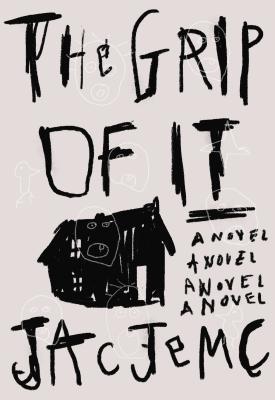
Review for "The Grip of It" by Jac Jemc (2017)

Rating: 2.5 out of 5 stars

This book is the cliche of all cliches: the Haunted House. Of course I was aware of this before proceeding, because who knows, perhaps there was Something New in these pages, a grand twist on The Oldest Plot Known to Man. Needless to say, I was grandly disappointed. Not only is there nothing added to this classic genre that’s worthy of note, there’s really nothing here at all.

James and Julie are a pair of married yuppies who move out of the city and into the perfect country house. There’s a small beach nearby, room for a garden, surrounded by quiet woods, and to top it all off–the house is practically a steal. Immediately after they move in they notice strange things–ominous breathing sounds, secret passageways, child-like drawings on the walls, an old journal with indecipherable writing. Julie develops strange bruises all over her body. Their creepy old man neighbor can’t stop watching them from across the street. I have to admit that I did get swept up in the weirdness of this tale, because the occurrences are never really explained. Are they really experiencing something supernatural? Or is it just a dream?

But anyway, that’s where the enjoyment of this book ended. The story is told in short, alternating chapters of the POVs of Julie and James. There is very little discernible difference between the voices of the two. There were many times where I had to stop, flip back a few pages, and figure out who was speaking. There are also long passages where the characters’ actions run on and on and nothing’s really gained as far as knowledge to what’s going on.

And oh yeah, the writing…I didn’t like that either. The tone here was too objective, too matter of fact, and far too emotionally detached. There’s nothing inherently wrong with this kind of storytelling, but I don’t think it fit this narrative. There are no real thoughts or emotions given with either character, it’s just a kinda hmmm…there’s drawings on the wall we didn’t put there and the other’s nod of agreement. It’s weird.

The horror here is rather PG too. At no point in this book was I even remotely scared (pronunciation: “scurred”). I was just weirded out, counting the pages left, and wondering when it would be over with.

Review: When My Heart Joins the Thousand

35098416

Review for "When My Heart Joins the Thousand" by A.J. Steiger (2018)
Rating: 4 out of 5 stars

I really really liked this book.

Alvie Fitz is a 17-year-old girl with Asperger’s syndrome. When the book begins we learn that her mother has died several years before, and after a series of unsuccessful stays in residential care centers and foster family placements, Alvie now lives alone in her own apartment and works a stable job at a local zoo. She is checked on weekly by a psychologist, Dr. Bernstein, in preparation for her request to be legally emancipated. Typical of people with Asperger’s, Alvie has above-average intelligence but difficulty with the most basic of social interactions. She has an obsessive interest in animals, scientific facts, and the book Watership Down (where the title of the novel is from). She also suffers from anxiety and depression, which she copes with by turning to animals and avoiding people altogether.

At its core, this is a love story. Despite Alvie’s difficulties bonding with other people, she falls for Stanley, a very shy college student also with a disability. Life has not been kind to either of them, yet what they find together is extraordinary.

I have to admit that I struggled with Alvie through a lot of this book. During certain scenes where she attempts to interact with people I found myself shaking my head in frustration, sighing. Her difficulties interacting with people are extreme, and even though I was aware of how large her hurdles would be, I don’t think I was prepared for just how much of her motivations, reactions, and thoughts are due to Asperger’s. Stanley has an incredible amount of patience with Alvie, even though her efforts to be “normal” at times seemed like acts of self sabotage.

I think this book really challenged me to move past my ableism and develop empathy, as well as understand what life is like for people with autism. The author has incredible insight into this disability, and although I’ve read many books about people with them, this one really moved me.

Do read this book.

Review: Tyler Johnson Was Here

35604682
Review for "Tyler Johnson Was Here" by Jay Coles (2018)
Rating: 3 out of 5 stars

From the moment I saw this book I knew I had to have it. I’m always down for YA books by and about people of color that are overtly political in nature, as well as books that challenge young people to think critically social issues. And yes, THAT cover. Gor-juss…

“Tyler Johnson Was Here” is just such a book that is destined to provoke conversation, particularly on police killings and the role of Black Lives Matter movement. The novel centers on the lives of twins, Tyler and Marvin, growing up in the fictional town of Sterling Point. The twins are raised by their single mother while their father, who is incarcerated, makes frequent appearances throughout the book in the form of letters written to Marvin.

Even though this is the story of twins, the story is told through Marvin, the more grounded of the two. Marvin hangs out with his friends Guillermo and Ivy, makes decent grades, watches reruns of “A Different World” and hopes to get into MIT. Tyler is the more restless twin, directing his energies toward social pursuits and hanging with a tough crowd. Much to Marvin’s dismay, he notices a rift between him and his brother and cannot convince Tyler to stay away from trouble. One night, after a party thrown by a local drug dealer, Tyler does not return home. Several days later, he is found deceased. A leaked video reveals that Tyler was unarmed when he was shot by police. As Marvin deals with his grief and anger over his brother’s death, he turns his efforts to protest and making sure that his brother’s memory isn’t forgotten.

What’s wrong with this book? A lot. Hell, I’m just going to bullet point here:

— The pacing of this novel was a problem for me. We’re told on the front flap of the book that Tyler is going to disappear and later be discovered dead. However, the characters do not discover Tyler’s death until well over halfway into the book. I felt as if the author could have skipped the ‘missing’ part, because it slowed the pace of the novel significantly. You’re literally just sitting around waiting for the inevitable for the first 150 pages. That’s not fun.

— Characterization fell a bit flat in this book as well. Even though I felt I understood Tyler, when I finished this I realized that I really didn’t. The limitations of a single perspective (Marvin’s) is apparent here. We know he was a good kid who got mixed up in a troubled crowd, but we’re never told the exact nature of his last days, his dealings with his friends. The author spends a great deal of time making the point that although Tyler may have been troubled, this was no reason for the manner of his death. While this is true, I think this point would not have required so much emphasis with more character-building as far as Tyler was concerned.

— There’s also a side character that goes absolutely nowhere: an aunt who’s a police officer, mentioned several times in the novel, who’s “always on the phone” with Marvin and Tyler’s mom. Considering that the police are the bad guys here who murdered Tyler and all of law enforcement in this book is portrayed as the epitome of evil, a relative of Marvin’s who happens to be a cop may have added to the complexity of this book. But that’s never explored. Weird.

— Marvin meets a girl, Faith, through his attempts to discover his brother’s whereabouts after the fateful night at the party. They eventually become involved with one another, but I never got a sense of their chemistry, her relevance to the story beyond the standard YA romance requirement, or really why she is in the book at all.

— The multitude of references to the tv show “A Different World”: Marvin is obsessed with this show, viewing it as a way to “understand” diverse Black characters. I’m not sure why this is, especially when there are more modern (and diverse!) shows with Black characters that could have been referenced here. I’m an 80’s baby, so I watched “A Different World” as a teenager (it went off the air in 1993, right as I went into high school). A teenager in 2018 still fixated on characters from a show from well over 25 years ago seemed strange, kinda like a kid who watches a dated show like “Hogan’s Heroes” expecting to find enlightenment. Yikes.

Comparisons to “The Hate U Give” are inevitable (both have Black main characters, both are about the subject of police violence), and if I had to pick between the two I’d say in a heartbeat that “The Hate U Give” is the much better book. Despite my criticisms, however, I won’t go lower than 3 stars for “Tyler Johnson Was Here.” I also wholeheartedly recommend this to other people to read. Even though TJWH has problems in its execution, I respect what it does accomplish successfully, and that’s place the narrative surrounding police violence in the hands of Black youth, within the context of their own language and culture. The value of those things in and of itself is immeasurable, respectable, and deserves notice.

And yes, the cover. It’s quite beautiful.

*sigh*

Review: Hell is a Very Small Place

25159286

Review for "Hell is a Very Small Place: Voices from Solitary Confinement" by Jean Casella, James Ridgeway, & Sarah Shourd (2016)

Rating: 4 out of 5 stars

As an educator I’ve always been interested in the criminal justice system–how so many people get caught up it, how they survive there, and of course, how they can stay out. This book is a collection of essays about the subject of solitary confinement, otherwise known as administrative segregation (ad segs), special housing units (SHUs), and various other names depending on the state and institution responsible for their use. Regardless it’s all the same–23 or 24 hours a day in a small cell alone, often with no books, tv or radios, communication with outside people, papers to write with, or any form of stimulation other than the concrete walls. It is such a mind numbing and soul crushing experience that the UN has declared it torture and countless doctors and mental health experts have denounced its use. Yet, it continues on an unprecedented level in our nation’s jails and prisons.

There’s a really good historical perspective on solitary confinement in the U.S. in the beginning of the book. Solitary confinement was used widely in the 1800’s and then abandoned due to its terrifying psychological effects. In the 1970’s, the practice was picked up again, mostly due to prison overcrowding, lack of educational and training programs, higher levels of violence, etc. The essays in this volume are particularly powerful, all of them either from people currently in solitary who have been there for long periods of time (20 years or more) or from people who are now free individuals, living with the psychological effects of this practice. The last section is a series of articles by experts, all of which condemn the practice and offer solutions.

It is easy to dismiss this book and the issues it brings up with the Trump-era view that criminals are terrible people who belong in prison. It’s even easier to say that these terrible people deserve punishment on top of the punishment they’ve already received for not following the rules. This is simply not true. Many of the people who are sent to solitary are sent there for non-violent offenses, sometimes for something as simple as “possessing too many postage stamps,” “associating with known gang members” (California), or in New York state, for “wearing shower shoes outside of the shower” or “using profanity.” Time in the SHU is usually given by prison officials and the prisoner often has no right to a defense. And the punishments can be as long as the officials deem necessary–weeks, months, even years. Or, in some cases, life.

I definitely recommend this book. Despite what we think of the people in the correctional system, the fact remains that many of these “terrible” people will get out–someday. They will live next to us and share our social spaces. The question becomes one of whether we would prefer someone who’s been rehabilitated with kindness or someone who’s been locked in a cage like an animal. I personally prefer the former.

This is a great book. Read it!

Review: Sometimes I Lie

36112959

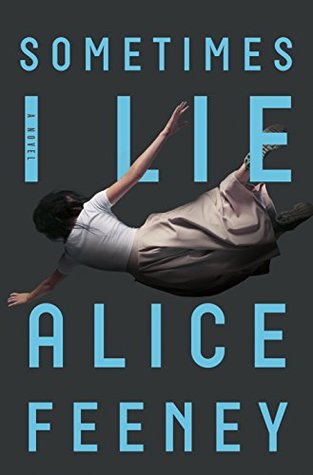
Review for "Sometimes I Lie" by Alice Feeney (2018)

Rating: 4 out of 5 stars

Ahhh…man. THIS book.

To tell you anything specific about the plot or the characters of this novel is to ruin it–so I won’t. It’s gotten really good reviews online, and this time I must say that the hype is well deserved. There is a blurb on the author’s website that this book has been green lit for television, which is cool because as I read this I could totally picture this on Netflix or Hulu or something. Bingeable TV. There’s also a sequel being written, which is set to come out in 2019.

So here’s the basic “basics”: When the book begins, Amber, the main character, is in a coma. She confesses immediately that she tells lies, and that her husband doesn’t love her. She hears everything going on around her (her husband and her sister’s visits, for instance) though she doesn’t remember the event that landed her in the coma. She eventually discovers that she’s been in a car accident.

This book is essentially split into three parts that are narrated interchangeably: now (Amber’s observations while in her lucid, comatose state), then (events leading up to the week before the accident), and before (childhood diary entries). Throughout much of the novel, I have to admit that I was completely in the dark about what each strand of the narrative had to do with the other. Gradually, however, the connections came into focus and lemme tell ya…things (and people!) were not what they seemed. There are several twists here, and even though I’m not a “twist-a-plot” lovin’ kinda person, it worked perfectly here.

As I finished this book I immediately realized that it plays with two very common tropes–the unreliable narrator and the complex nature of female friendships. It’s really nothing new in fiction, but both of these things are mashed up here in a really hip, interesting way.

I loved this book. If you do read it, try to do so in as few sittings as possible–I guarantee it’s better that way.

[A digital copy of this book was provided to me by the publisher, Flatiron Books, as well as NetGalley in exchange for an honest review.]

Top Ten Tuesday: Books that Take Place in Another Country

For this Top Ten Tuesday I had to go back in my mental filing cabinet for a moment. I try to keep my reading choices diverse–plenty of books about people of different races, ages, religions, cultures, social backgrounds, ethnicities, sexual identities, dis/abled persons. I’ve ready plenty of books ABOUT and BY people from countries outside the U.S., but how many have I read that take place IN another country, where the entire context of the narrative is outside of the U.S.?

So in order to be consistent with my interpretation of this topic, here’s the criteria I followed:

  • The book had to take place entirely in another country. America could not be a point of reference at any time (i.e., immigration to or from the U.S. was a no-no)
  • The book could not be about Americans in countries outside the U.S. (that would make it an American experience, wouldn’t it?)
  • The book could not take place in another industrialized, European influenced nation that’s kinda like the U.S. (i.e., Canada, Britain)
  • The country could not be unnamed. There are a lot of books that have foreign settings, but for whatever artistic reason, the author does not specifically name the country where the action takes place. For example, “Beasts of No Nation” is framed in this way (the setting is understood to be Africa, but the actual name of the country is never given).
  • The country could not be fictional. I love Wakanda too, but because it technically does not exist, it wouldn’t count. I know, I know… (*frowns*)
  1. Prayers for the Stolen, Jennifer Clement. Locale: Mexico. Didn’t really care for this book, but it’s a very interesting story set in the Mexican countryside about a girl who lives in fear of kidnapping by narco-traffickers.
  2. Golden Boy, Tara Sullivan. Locale: Tanzania. Very informative, well written YA story about a young boy with albinism. Due to cultural beliefs, he is shunned by his community and sought out by shamans for slaughter for his body parts’ use in special potions. There’s a good ending here, fortunately. I loved this story!
  3. Hold Tight, Don’t Let Go, Laura Rose Wagner. Locale: Haiti. Story about two cousins, raised as sisters, who lose their family in the Haitian earthquake of 2010 and work to survive the next day, and the day after that. I cried when I read this. (*sigh*)
  4. Things We Lost in the Fire, Mariana Enriquez. Locale: Argentina. Very macabre, but well written short stories that take place after Argentina’s “Dirty War.”
  5. Stay With Me, Adebayo Ayobami. Locale: Nigeria. An interesting novel about the life of a middle-class Nigerian couple who cannot bear children. Lots of twists and turns here, along with cultural expectations and a whole lotta drama.
  6. Lotus, Lijia Zhang. Locale: China. Novel set in modern-day China about a young woman who, rather than go home and face shame for losing her factory job, chooses a life as a sex worker. I really liked this book.
  7. Men Without Women, Haruki Murakami. Locale: Japan. Insightful set of short stories about men who, at some time or another, either could not or would not have a successful relationship with a woman. I did the audio version of this and loved it.
  8. Every Falling Star: The True Story of How I Survived and Escaped North Korea. Locale: North Korea. Great YA nonfiction book about a young boy’s life in North Korea and eventual escape to South Korea.
  9. The Vegetarian, Han Kang. Locale: South Korea. Beautiful book about a young woman’s choice to become a vegetarian. Things don’t go well for her. There’s a whole lot more to this book though, and mannnn…it’s good.
  10. The Story of a Brief Marriage, Anuk Arudpragasam. Locale: Sri Lanka. Short novel about a young man and woman’s marriage during the Sri Lankan civil war. Very excessively detailed, but it’s a great read if you’re patient enough.