Review: There’s Someone Inside Your House

15797848

Review for "There's Someone Inside Your House" by Stephanie Perkins (2017)

Rating: 2 out of 5 stars

Whew Lawd this was bad

First off, I love YA thriller/horror. If you spent your high school days reading R.L. Stine and Christopher Pike, then you know what I’m talking about. So when this book came out, I was on it faster than a speeding ticket.

This is my first Stephanie Perkins novel. From my understanding she mostly writes YA romance and this was her first foray into horror. After reading this drivel, it’s my determination that she should probably stick to writing romance.

The run-down: Makani Young, the main character, is sent to live with her grandmother in a small Nebraska town following her parents’ divorce and after a mysterious incident in her Hawaii hometown that’s not revealed until the end of the novel. She has eyes for Ollie, a pink-haired emo kid, and after they meet they make like rabbits for most of the book. While Makani and Ollie are exploring each other’s anatomies, meanwhile, there’s a psycho running around killing members of their high school student body for reasons unknown.

So where do I begin? For the whole “Who will be next?” hook, this book had only about 5 deaths and still turned out to be 99.9% romance. The book pivots between Makani and Ollie’s relationship and the killer’s next victim, which we follow in a brief chapter as it happens. We’re never told why the killer is picking people off, and his identity is fully revealed at about 60% into the book. What happens after this? Nothing. For me, it’s was a hazy blur of wtf moments and skipped pages.

And Makani and Ollie…what a mess. For a romance writer, the author manages to make their relationship strictly about lust and nothing else. Despite all the physical fun these two are having, it’s mindlessly boring. Even an old pervert like me started flipping pages after awhile. On to the next slashing please…

I was expecting more blood and gore here. Two stars.

Review: The Weight of This World

30763901

Review for "The Weight of This World" by David Joy (2017)

Rating: 3.5 out of 5 stars

This is my second David Joy read, the first having been “Where All Light Tends to Go.” I read that one, gave it 3 stars. This one is slightly better, though not by much.

This book literally begins with a bang–with shocking act of violence committed by young Aiden McCall’s father upon his mother. Without parents, he is sent to a group home that he quickly runs away from. Aiden finds a friend in Thad Broom, a brooding, often violent boy with his own problems. The two boys grow up in the same home together, though Thad eventually leaves to join the Army and fight in Afghanistan. Thad returns from combat injured and hopeless, a shell of a man. Aiden, without his friend for six years, doesn’t fare much better: he’s unemployed, bitter, and a part-time drunk. He hopes to escape from their miserable lives and move away, but Thad will not hear of it. In the meantime both Thad and Aiden do drugs (mostly methamphetamine) to get through their days.

In the middle of the drama is April, Thad’s mother. She lives with secrets of her own, and also wants to move on and, in her words, “get off the mountain.” She is swept into the subsequent drama when Aiden and Thad’s drug dealer accidentally kills himself and leaves all three with a large stash of drugs and cash. What follows after this point in the book is a really dark and violent cycle of revenge, suffering, and just plain bad decision-making.

None of the characters in this book are likable, but I think in the end their likability is completely irrelevant to the reason why I gave this book three and a half stars. I can see that the author is perhaps meditating on the power of fate over free will, though as a reader after a while I was just plain tired of the characters and their ensuing Stupidity Olympics. You realize that these people don’t want to better themselves and they simply want to be miserable, end of story. I tried to feel some kind of empathy (nope!) for their choices, maybe even some kind of compassion for these characters but there’s none (absolutely none!) to be found. Three-quarters into this, I just got tired of reading and plodded my way to the end. Needless to say, I was glad when it was over.

Despite my rating, I would recommend this book. Though the violence is not for the faint of heart, but the author’s writing is not that bad and this novel does, in many ways, still manage to hold your attention.

Review: Moxie

33163378
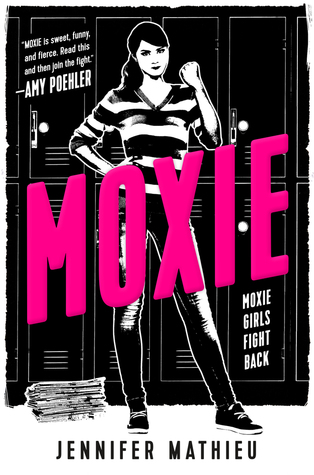
Review for "Moxie" by Jennifer Mathieu (2017)

Rating: 3 out of 5 stars

I know this book has gotten glowing praise from many of its readers, but I was underwhelmed with this one. I know I’m jumping off a cliff by saying this, but this book was just ok for me.

Vivian is an average teen living with her single mother in a small town in Texas. Aided by her mother’s Riot Grrl memorabilia and fed up with sexist administrators, Vivian makes an anonymous zine to protest the unfair treatment of girls at her high school and empowers them to fight back. The zine catches on, and most of the girls at the school eventually join in her fight. In the middle of all of the brouhaha, Vivian manages to snag the hottest artsy guy in school, who, it turns out, is sympathetic to her feminist goals.

My main concern with any feminist text is how it addresses intersectionality. As a woman of color, I’m critical of any text that claims to be feminist, yet focuses exclusively on the voices of White middle class women. Fortunately the author does address the issue, about midway through the novel when Vivian reveals that her mother once said that “Riot Grrls weren’t as welcoming to other girls as they could have been.” Well, no ma’am, they weren’t. There is a Latina and and Black girl at Vivian’s school who join the Moxie movement, yet we’re supposed to believe that their perspectives and concerns (jerky football players and dress code checks) are the exact same as Vivian’s. Sorry, but I simply don’t believe this. Where is race here? How does the author manage to make women of color so one-dimensional in this book? Gimme a break.

Which brings me to the last issue: race. While she does addresses the problem of inclusivity, Mathieu’s fictional small-town Texas world is devoid of any mention of racism. I praise the author for addressing the elephant in the room, but I just don’t think it goes far enough. As far as gender, there is a reference to a lesbian character, albeit a brief one. The problems that arise from race, class, sexuality, and gender will always overlap (hint: why it’s called intersectionality), and I simply wanted more from the Black, Latina, and LGBTQ characters here. What you get instead with this book is a lot of romanticizing on the 90’s Riot Grrl movement, which, let’s face it, was not as inclusive to race and gender as it should have been.

Overall, not a bad book, but not a great one either. Three stars is my best recommendation here, though I look forward to (possibly) reading more of this author in the future.

Review: Life as We Knew It (Last Survivors, #1)

213753
Review for "Life as We Knew It" by Susan Beth Pfeffer (2006)

Rating: 1 out of 5 stars
Dumbest. Apocalypse. Ever.

I’m not a one star kinda gal unless I hated the book. Needless to say, I really really really hated this book.

First off, I love dystopian lit. This one rang a bell because it’s two of my favorite things: dystopian and YA. So I read it. And man, that’s where the problems began.

NOTE: Spoilers abound & I don’t care…

Part of the thrill of reading dystopian fiction is reveling in the fact that it COULD happen–you just never know where or when. Another part of the game is that the scenario presented has to be scientifically sound, even on a basic level. Not so with this book, because there ain’t no way in hell any of this shit in this book could actually happen. In this one, the moon is knocked off course by an asteroid (which, strangely, no one sees coming), which brings it closer to Earth. The tides fall out of whack, bringing massive tsunamis that kill most of the population in low lying and coastal areas.

Then there’s mosquitoes (huh? why?) that threaten the population with malaria, massive earthquakes around the world, and finally Yellowstone volcanoes, seemingly triggered by the gravitational chaos. There’s a little bit of ash, it’s dark early, and it’s cold out. Umm…excuse me…WHAT? A massive eruption in Yellowstone would spell death by burning ash and darkness for much of America within WEEKS. Not just a slight temperature change like it’s an early winter. And it certainly would not involve characters strolling around in their Pennsylvania hometown, going to the library and ice skating like there’s nothing going on.

And oh…the characters. Miranda is a 16-year-old high schooler whose diary makes up this book. She whines about not seeing her friends and being unable to eat as many chocolate chip cookies as she wants while the end of the world is going on. Her mother rails against the government and her daughter seeing boys. Somewhere in the middle of all the earthquakes and the electricity going out, the family still manages to send her little brother to baseball camp. Another one of Miranda’s friends is a religious psycho-nut who doesn’t want to eat because God will take care of her. As a matter of fact, nearly everyone in this book who holds Christian beliefs is portrayed as a delusional weirdo. Not that I care about the author’s personal beliefs about organized religion, but all the proselytizing didn’t help the narrative. At all.

There’s other improbable scenarios. There are no police, yet Miranda takes it on herself to wander around her hometown alone, going swimming and ice skating, seemingly unbothered. When the power comes on intermittently, the internet (somehow) works also. Services such as the post office and the library are still open, yet we’re told there is no gas. A deadly flu epidemic kills most of the people in the town and several members of Miranda’s family fall ill, but miraculously Miranda never falls sick and no one dies. When the family runs out of food at the end, Miranda spends her last bit of energy going to city hall and learning about all of the food shortages and crop failures out in the world–and then receives a bag of food that city hall has been giving out every Monday. How is this possible? If there is a shortage of crops, where does this food come from in a land of no gas?? The final abasement here is when the power comes on at the end of the book–despite the fact that we’re told most of the country is either dead and/or lying under ash. 

And the story just plain sucks. Page after page in the middle of the book is nothingness, just play by play details of the family’s life in their sunroom, having conversations about food and books and what not. Yawn.

Apparently there are three other books in this series, however, I won’t be reading them. I don’t recommend this, I’d stay far away from this book.

Review: Enrique’s Journey: The Story of a Boy’s Dangerous Odyssey to Reunite with his Mother

158277

Review for "Enrique's Journey: The Story of a Boy's Dangerous Odyssey to Reunite with his Mother" by Sonia Nazario (2006)

Rating: 4 out of 5 stars

This is the fourth book in my personal knowledge quest on illegal Latin American migration to the United States (Luis Urrea’s “Across the Wire” and “The Devil’s Highway” were the first two I read). Nazario’s book goes hand in hand with another I’ve read recently, Lauren Markham’s “The Far Away Brothers,” which discusses the topic of children from Central America who come to the United States, without their parents and through some of the harshest and most dangerous situations in the world.

Enrique is a Honduran youth whose mother leaves him as a young boy to come to the U.S. Left with relatives, he at first misses her, then longs for her, and finally, after experiencing the hopelessness and crushing poverty of his home, decides to join her in the U.S. To get there, he rides atop the Beast, freight trains that begin in southern Mexico and go all the way to the U.S. border. Riding the trains is nothing short of a hellish nightmare: there are brutal gangsters and criminals who rob, rape, and kill riders atop the trains and along the tracks, Mexican police out to catch and send the migrants back, Mexican natives who offer little to no help (depending on where you are), and of course, the train, which often mutilates and kills migrants who attempt to catch it and climb on top.

Seven times Enrique attempts the journey to the United States, and seven times he is caught and sent back to Guatemala by Mexican authorities. On the eighth try he manages to make it to America, yet the story doesn’t end there. Nazario painstakingly continues to document Enrique’s adjustment to the U.S. and reunion with his mother. Hint: it’s bittersweet.

I loved the writing, the attention to detail. There are also photographs, taken by Nazario herself as she rode the train north to reconstruct Enrique’s journey. She interviewed people along the route, priests, migrants, mission workers, and Mexican authorities. The only complaint I have about this book is that the information is somewhat repetitive from chapter to chapter, but that is probably because each chapter was once a feature in the LA Times. The articles won a Pulitzer Prize, so it’s definitely worth reading.

Even though Enrique took his journey in 2000 and the book was published in 2006, the information is just as timely as if it were written yesterday. Definitely worth a read.

Review: The Far Away Brothers: Two Young Migrants and the Making of an American Life

33573808
Review for "The Far Away Brothers: Two Young Migrants and the Making of an American Life" by Lauren Markham (2017)
 
Rating: 4.75 stars

I tend to be attracted to books that showcase timely social issues in a readable, narrative format. This is just such a book.

This is the true story of Ernesto and Raul Flores, identical twins who left their home in El Salvador in 2013 and illegally came to America without their parents at the age of 17. In their small rural town, the twins live with seven other siblings and their parents in crippling poverty and in constant fear of violent criminal gangs, which rule the countries of the Northern Triangle (El Salvador, Guatemala, and Honduras) with a iron fist. For $7000 each, Ernesto and Raul’s parents seek out a loan shark to pay for the services of a coyote, a smuggler who moves people through Central America and Mexico and finally through the desolate desert interior of the U.S. The story goes into detail of their capture in the desert by border patrol, detainment in a facility for unaccompanied minors (mostly from Central America), and their reunion with an older brother who also came north in the same fashion several years before.

The story, however, doesn’t stop there. Markham follows her subjects through the myriad of challenges that make up the twins’ new American life: entering school, finding legal representation to fight deportation, learning English, paying down their accumulating $19,000 coyote debt, the struggle to send money home, family problems, and of course, the struggles that simply come with being teenagers. Interspersed throughout the book are snippets of ‘boots on the ground’ research done by the author of the various aspects of the Central American immigrant experience–their journey, frequent capture, detainment, and (almost always) deportation.

I really loved this story because it was told in an easy to follow narrative style that completely humanizes the “illegal aliens” that the current president would love to build a wall to keep out. You learn about the high, very human cost of these efforts and how, despite what laws or wall is erected, many are still willing to risk it all to live the American dream, even if it means death.

Loved this book. Get it right away!

Review: We Were Eight Years in Power: An American Tragedy

33916061
Review for "We Were Eight Years in Power: An American Tragedy" by Ta-Nehisi Coates (to be published on 3 October 2017)
Rating: 4.5 out of 5 stars

Great book, I tell ya…

When I heard that Ta-Nehisi Coates was writing another book, I signed up to read it on NetGalley with lightning quickness. I also read his writings elsewhere such as The Atlantic, Twitter. Matter of fact, I’ll usually drop everything I’m doing to read Mr. Coates because his perspective and words on the most pressing issues of our time are impeccable.

If you aren’t reading Ta-Nehisi Coates then you probably should be. Like “Between the World and Me,” “We Were Eight Years in Power: An American Tragedy” is a searing testimony to the ongoing quagmire of race in the United States: to high hopes, to failed promises, to the uncertainty of what lies ahead. These are a collection of eight essays that appeared in The Atlantic (one for each of the eight years that President Obama was in office) with a short preface added by Coates before each, which give the reading more perspective and insight.

Do read this. It should be required reading in all schools and universities.

[Note: A free digital copy of this book was provided by the publisher and NetGalley in exchange for an honest review.]

Review: Sing, Unburied, Sing

32920226
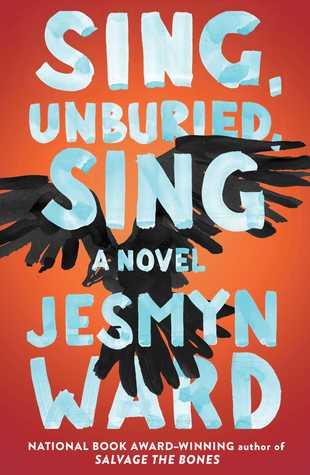
Review for "Sing, Unburied, Sing" by Jesmyn Ward (2017)

Rating: none

DNF, right around 54%.

I simply couldn’t get into this book. Not that it wasn’t good, or that Jesmyn Ward isn’t a sensational writer (she is), but I just don’t think that this book is quite for me at this time. I go through phases with my reading, sometimes I can endure what I’m not into and sometimes I find it so unbearable I can’t finish. This one of those times.

Despite what the reviews say, I found this to be a very depressing novel from the outset. Preteen Jojo and his sister are from an impoverished family near the Mississippi border, living with (and pardon my French) the most fucked-up parents imaginable. Michael, his father, is a former convict, and Leonie, his mother, is a drug addict who gets high on the regular and talks to her dead brother. Despite his parents’ waywardness, Jojo is a good kid who manages to take on a parental role to his sister Kayla. He is wise beyond his years in a way that a child should not have to be, which made my anger toward his parents all the more apparent. Pop, Jojo’s grandfather, is also a kind man, who seemed to add a bit of tenderness to the story.

There is a lot of magical realism in this novel (ghosts that are very much real, etc.) and even though I’ve read plenty of stories with it, I found this element to be kind of confusing. As the story went on, I felt farther and farther away from it, which is pretty much why I stopped reading it.

I see myself coming back to this book, probably in the near future. For now though, I won’t rate it, other than to say that it wasn’t quite for me.

[Thanks to NetGalley and Scribner for a free digital copy of this book.]

Review: Black Mad Wheel

31752345
Review for "Black Mad Wheel" by Josh Malerman (2017)
Rating: 2 out of 5 stars

Oooh, no. Just…no. HELL NO.

Maybe my hopes were a little too high for this one, especially after the success of Josh Malerman’s first novel, Bird Box. My reaction to this one was: WTF? And not in a good way, either.

The U.S military hires a rock band of former WWII soldiers for a top secret mission in the Namibian desert, to search for the source of a mysterious sound that incapacitates people who hear it and makes their weapons useless. The band hesitates, but finally accepts the offer to go to the desert in search of the sound after the promise of a large salary.

There are a few moments early on that manage to pull you in and give you just enough hope that this book would be creepy, much like Bird Box. But this one just ended up being weird, boring, and just plain silly. Plus, I just didn’t get it. We also see the Big Bad Guy, which is a psychological thriller no-no.

Skip this one.

Review: All the Dirty Parts

33590627
Review for "All the Dirty Parts" by Daniel Handler (2017)

Rating: 2 out of 5 stars

Well, this is umm, interesting…

Daniel Handler’s (aka Lemony Snicket) latest novel is a look inside the mind of Cole, a teenage boy with one of the most intense obsessions with sex in the history of literature. At the beginning of the novel Cole tells us that so far he’s had sex with 11 girls and has even developed quite a reputation at his school for sleeping around. He also watches porn endlessly, masturbates, trades dirty stories with his friend Alec. Things continue in much of the same manner for the first 50-60 pages until Cole eventually meets a girl he likes, whose sexual appetite appear to closely match his. I won’t give the rest away, other than to say that I found this book really disappointing.

Of the 134 pages of this book, there is no blank space that does not focus on the character’s thoughts of sex or detail some aspect of him engaging in it. While the highly sexualized subject matter didn’t really offend me, the lack of a plot did. This novel is a stream-of-conscious, helter skelter jumble of thoughts that seemingly go nowhere. There is some vague idea of a ‘lesson’ that the main character learns in the end, though it could have been executed much, much better. In the meantime there’s nothing here that really keeps you going, other than a need to finish.

I also take issue with the description of this book by the publisher as ‘an exciting novel that looks honestly at the erotic impulses of an all too typical young man.’ OMG…there is nothing about Cole’s all consuming obsession with sex here that suggests that his behavior is ‘typical’ of a teenage boy. To me, he came off as a raging sex addict in need of some serious psychological help. While Cole’s actions and thoughts may indeed be normal teenage impulse and logic, the ways in which he used sex to act on those his emotions was not, in my opinion, ‘typical.’

This certainly is not a YA book, and some adults may question why they are reading such a pornographically detailed account of the life of a teenage boy. The whole time I’m reading this I’m wondering who the real audience of this book is. Not that it matters so much, but just a consideration. Hmm.

2 stars. Blech.