Review: Another Day in the Death of America

29502379
Review for "Another Day in the Death of America: A Chronicle of Ten Short Lives" by Gary Younge (2016)
Rating: 4 out of 5 stars

“Another Day in the Death of America” is a look at the effects of gun violence on children in the United States. Younge, a British reporter, picks a random day (November 23, 2013), and identifies 10 children who died of gunshot wounds around the country within that 24 hour period. He follows up with their families and acquaintances, interviewing them and seeking insight into the victim’s short lives.

All of Younge’s subjects are male. The youngest victim was 9 years old, the oldest, 18. They hailed from large cities and small towns, inner cities and suburbs. Seven of the victims were Black, one was White, and two were Hispanic. Some of their deaths were accidental and some were intentional. In at least four of the cases, the killer (or killers) is still unknown. What matters the most, however, is that all of them were loved by their family, the majority of which agreed to be interviewed for this book.

The author puts a very human face on the tragedy of gun violence. He also probes, quite extensively and justifiably, issues of race and social class, which play a part in the prevalence of violence in some communities more than others. While he says that this book is not a plea for gun control, I’m not sure how this book can be read by anyone as anything but. It is clear that the point the author is making is that Americans are not inherently more violent than the citizens of any other country, yet the availability of guns make deaths more likely and more prevalent.

This book was written in 2016, and yet, two years later, it is still a timely one. The author admits that he began the research and writing on this book shortly after the Sandy Hook shooting. I read this in 2018, and we’re only several months removed from yet another school shooting, this time in Parkland, Florida. The questions raised in this book two years ago are the same questions we face today over gun control, and we’ve done absolutely nothing since.

I try to refrain from getting overtly political on my site, because, well, it’s all about the books, right? However, I realize more and more that the books I choose are political, and that every time I post my thoughts about them it is clear where I stand on certain issues. I’m OK with that. I am not a Democrat or a Republican, but I am a mother who sends my 14-year-old son off to school every morning with a hug and a kiss, just like everyone else.

I pray every single day that he comes home without a bullet in his body.

Review: Barracoon

2590136

Review for "Barracoon: The Story of the Last "Black Cargo" by Zora Neale Hurston (2018)

Rating: 4 out of 5 stars

Barracoon is the field work of legendary writer and anthropologist Zora Neale Hurston. It is the story of the last known survivor of the African slave trade, Cudjo Lewis, in his very own words. In 1927, Hurston traveled to visit Cudjo to his home in Alabama, and over several weeks interviewed him directly, transcribing his account of how he was taken captive at the age of 19 in an area now known as the country of Benin and transported illegally to America in 1860. She completed a book containing Cudjo’s story in 1931. However, her book never found a publisher and remained locked away in her archives at Howard University for over 80 years.

The reasons why Barracoon was never published are quite obvious. For one, Hurston insisted that Cudjo’s voice be heard and he be allowed to speak in his own dialect. Second, it implicates Africans as profiteers within the nexus of the slave trade, a fact that many historians have long denied. Originally named Oluale Kossola, Cudjo was captured by a rival tribe and was sold into slavery, a common practice on the continent for hundreds of years. He spent three weeks in a stockade (called a barracoon) and was subsequently shipped to America on a ship named Clotilda. Once in America, Kossola is renamed Cudjo and lives as a slave for five years until he is freed by Union soldiers in 1865. He eventually marries and has six children, all of whom die before his own death in 1935.

If you are unfamiliar with rural Black Southern dialect, you will have a helluva time with this book. Hurston was right to insist on not changing Cudjo’s words, and as you read this book you will understand why. I am fairly familiar with the cadence and the speech patterns of Black dialect, yet I still found it helpful throughout this book to read Cudjo’s words aloud, his speech ‘as is’ is critical to the understanding of his story, along with Hurston’s prose. Also telling were the many times in the book where Cudjo refused to speak, preferring instead to sit on his porch and eat a peach or share a watermelon with Hurston in silence instead of talk about the horrific experiences he’d gone through.

I loved this book. I feel it is definitely a story that demands to be told, especially when there’s an open bigot in the White House and one ignorant public figure in particular who is dumb enough to actually open his mouth to suggest that “slavery was a choice.” This book seems timely and well-intentioned, in the climate of so much rhetoric that seeks to undermine the horrors of slavery and its present-day implications.

Highly recommended–don’t miss this one.

Top Ten Tuesday: Books I Decided to DNF

Ok, it’s 11:28 pm Eastern Standard Time…and I know where my official Top Ten Tuesday is. A couple of weeks ago I discussed the intricacies of the DNF (book-speak for one that you willfully choose not to finish); this week I’ll list a few books that I’ve DNF’d over the years and the reasons why they ended up that way.

As I’ve explained before, I DNF books quite often for a variety of reasons. If I got over halfway through it and I can put together a somewhat coherent review, I’ll post it here. Often, however, I don’t. I just move on to another book.

So here’s my playlist of skipped books whose reviews I’ve never posted here and I’ve never mentioned to anyone but myself. You always get the latest hits, so here’s:

29chapters.com’s List of Not-So-Famous Misses

  1. Bastard Out of Carolina, Dorothy Allison. This book is actually quite good. I’ve read other books by Dorothy Allison and her work is taught in a lot of Women’s Studies classes, especially at the college level. The reason I DNF’d this book, however, is because of its graphic depictions of the sexual and physical abuse of the main female character by her stepfather. I’ve tried many times to just grit my teeth and read it, but I can’t get past the highly disturbing content here. I just…can’t.
  2. The Lovely Bones, Alice Sebold. Another wildly popular book whose disturbing content I just couldn’t stomach. The horror comes on very early in the book, around page 12 when the main character is raped, killed, and dismembered by a neighbor. After 3-4 times of pulling it off my shelf, reading it, only getting to page 12, and DNF’ing it, this book sat on my shelf for years until I finally got rid of it in a used book exchange last summer. It’s safe to say that I will probably never attempt to read it again. I also refuse to watch the movie version.
  3. Your Heart is a Muscle the Size of a Fist, Sunil Yapa. This is a historical fiction novel that examines several sides of the 1999 Seattle WTO protests from different perspectives–a riot cop, a politician, protesters. Somewhat decent, I just couldn’t get into this.
  4. Her Last Death: A Memoir, Susanna Sonnenberg. One of the few nonfiction books here that I’ve quit. Basically this is a book about a very dysfunctional mother-daughter relationship, which morphs into the author largely blaming her mother for many of her poor choices, including becoming promiscuous at an early age, being a pathological liar, her drug use. I got half way through this book before I just said enough already, I can watch this Dr. Phil episode on any given day of the week…
  5. Paint it Black, Janet Fitch. After her first novel “White Oleander,” I thought author Janet Fitch was untouchable. Au contraire. Her second novel was such a snoozefest that I put it down and never looked back.
  6. The Tsar of Love and Techno, Anthony Marra. This book had glowing reviews, but I kept falling asleep on this one. It’s a set of interconnected short stories, all centered around various characters during the history of modern Russia. Perhaps I also hated this because it brought back bad memories; I fell asleep during the Russian section of World History during high school too. Oh welp.
  7. The Dog Stars, Peter Heller. Post-apocalyptic story. About a man and his dog. And a plane. But the writing style. Was such a fucking distraction. That I put it down. (<— The whole book’s written like this, mates. It is an absolute pill to read.)
  8. Sing, Unburied, Sing, Jesmyn Ward. First off, I love Jesmyn Ward’s writing. I’ve read another nonfiction book of hers, Men We Reaped, and I absolutely loved it. This book, however, not so much. I found the plot kinda tedious and I just couldn’t get into the characters. I’m not surprised that this book won the National Book Award, because there is something special here, but the specialness is simply not for me.
  9. Severance, Robert Olen Butler. This book has an interesting premise: that human consciousness is maintained for 90 seconds immediately after one is decapitated. Therefore, this book is a collection of the “final thoughts” of many people (some famous, some not) who have ‘lost their heads’ throughout history. It’s a really morbid book, and the premise alone should have been enough to carry me through it, but for some reason the writing here was just plain weird. The friend who suggested it to me told me to read it like poetry, but that didn’t help, because I hate bad poetry. Blech.
  10. Blood Meridian, Cormac McCarthy. I’ve read my fair share of Cormac McCarthy over the years: The Road, Outer Dark, Child of God, No Country for Old Men. His writing is typically very dark and violent in nature, but that’s what makes him so special to me: that he can explore darkness and evil in such meaningful, creative ways. Anyway, Blood Meridian was just sloooooow. It’s also a Western (the other four novels I’ve read by him are not), and Westerns are just not my preferred genre.

There’s tons of other books I’ve DNF’d that could discuss here, but these are the ones that stood out most. Stay tuned!

xoxo, Kellan

Review: Sex Money Murder

36236094
Review for "Sex Money Murder: A Story of Crack, Blood, and Betrayal" by Jonathan Green  (2018)
Rating: 4 out of 5 stars

Like a good pair of heels, every gal needs a good ol’ fashioned true crime book. The ones I prefer tend to be concentrated in urban environments and focus on fantastical tales of violence, drug dealing, and hip hop martyrdom. It’s great stuff, and this is a great book.

Before beginning this book I knew only vaguely about Sex Money Murder, a notorious gang that controlled the drug trade in the Bronx in the late 1980s and 90’s. Aside from a lone episode of the weekly documentary Gangland from The History Channel several years ago and a couple mentions in hip hop songs, the history of this group has been mostly unknown to those outside of the urban realm. The story of SMM revolves around three childhood friends–Peter “Pistol Pete” Rollock, Emilio “Pipe” Romero, and Shawn a.k.a. “Suge.” They come of age in a particularly violent NYC housing project, the Soundview Homes. Eventually Pete turns to the drug trade and he and his two lieutenants’ operation take over the area, mostly through intimidation of residents, extortion of other dealers, and brutal violence. They also traffick crack to other markets, mostly in cities on the East Coast. Like a Shakespearean tragedy, all three live out their wildest fantasies of success until pride, greed, and disloyalty eventually take them all down and cause them to turn on one another. While one of the original three members of SMM is a free man, Pipe is currently serving time and “Pistol” Pete has been in jail since 2000, serving a 100+ year sentence in isolation for several murders and racketeering in one of the most secure federal prisons in the nation, ADX Florence.

Author Jonathan Green brings new life to the tale of Sex Money Murder with fair and balanced research of his subjects. It is evident that he spent extensive time with the people whose stories that he tells. Also profiled are the cops who brought SMM down, as well as an examination of the urban de-industrialization and the racist housing practices that created SMM in the first place.

Be forewarned, however, that this is not an easy book to read. There is all manner of violence, tales of drug dealings, shootings, and a lack of remorse by all involved that permeates this book. However, it is a story that begs to be told, and the author does a great job here. I definitely recommend this book.

Review: All God’s Children

2624807
Review for "All God's Children: The Bosket Family and the American Tradition of Violence" by Fox Butterfield (2008 reissue, originally published in 1995)
Rating: 4 out of 5 stars

This book is fascinating. It’s a shame that the original hardcover edition is out of print and quite hard to find at any library in my city. In the end, I had to order it through interlibrary loan.

Anyway, “All God’s Children” traces five generations of the Bosket family, from their days as slaves in rural South Carolina all the way to Willie Bosket’s incarceration in 1978 as one of the youngest murderers in New York City’s history. At 15 years old, Willie, recently free from a reform school, killed two subway riders in cold blood and shot another. Under the laws of the time, the maximum he could get was 5 years. The public outcry was so great against this that the Juvenile Offender Act was passed later that year, making it possible that children as young as 13 could be tried as adults.

Fox Butterfield uses Bosket’s family history as a way to discuss the history of violence in America. Willie’s great grandfather was a violent man, his grandfather, as well as his father. Details of all of their lives and crimes are given here. He avoids the typical fluff arguments about the causes of violence (poverty, television, etc) and instead characterizes it as something deeply embedded into the fabric of American life, a product of the White slave-holding class, the pre-Civil War South. He also discusses the violence of reform schools and prison institutions whose function is to “correct” violent individuals. Willie believes he is merely the product of these institutions in its grossest form. I can’t disagree.

The amount of research in this book is exhaustive. I commend the author for writing this book. I just wish that it was more available in 2018.

Top Ten Tuesday: Nonfiction Reads

Hmm…I haven’t really been feelin any of the last 3-4 Top Ten Tuesday topics lately.  Book with my favorite color in the title? Poo. Books we’d “slay a lion” to get early? Nah…I like lions.

Anyway, I’ve decided to make up my own Top Ten Tuesday based a genre that I go to quite frequently: non-fiction. So here’s my Top Ten Favorite Non-Fiction Reads from the past 5 years or so. Enjoy!

Top Ten Nonfiction Reads

  1. Buck: A Memoir, M.K. Asante. This a very solid memoir about a young Black man’s upbringing in a middle class Philadelphia household in the 80s and 90s. His father is the very famous Molefi Asante, a scholar known for bringing Afrocentrism to the forefront of academia. Despite his well-known father, M.K. struggles with a lot of issues that don’t get talked about much, because most books written about Black life are not from a middle class perspective. Very solid, readable book.
  2. A Bestiary, Lily Hoang. This book kinda defies genre. If I could describe it, I’d give it the title of “nonfiction fiction memoir.” It’s a gathering of facts, personal stories, biographical insights, observations. Normally I hate this kinda of crazy quilt, pastiche effect (check this review) but I LOVED this book. Everything fit together perfectly.
  3. Pushout: The Criminalization of Black Girls in Schools, Monique Morris. This book’s a part of the dissertation research I’m working on, but it’s still an enjoyable and very fact-based read. As a Black female, I think it is lamentable that I am still more likely, simply based on my race, to be incarcerated, expelled from school, or drop out of school altogether. Black girls are also 6 times more likely to be suspended from school than White girls, even though they exhibit the same behaviors. Great read.
  4. $2.00 a Day: Living on Almost Nothing in America, Kathryn Edin & H. Luke Shaefer. This book is an eye-opener to the world of the working poor. It is not excuse making (see this review) nor is it poverty-shaming, it is just the day to day realities for people who work 40-60 hours a week and, due to the fact that we haven’t raised the minimum wage in fucking years, barely have enough to buy toilet paper. A very readable, informative book.
  5. Evicted: Poverty and Profit in the American City, Matthew Desmond. The author of this book traveled to Milwaukee and spend time with people on all sides of the low-rent housing market for year: investors, the landlords, the people who call these places home and get put out time and time again, the judges whose sole job it is to evict people, often to the streets with no other recourse. Normally I don’t care about who wins a Pulitzer Prize, but this book deserved it–hands down.
  6. Between the World and Me, Ta-Nehisi Coates. If you haven’t read any of Coates’ articles on race relations in The Atlantic then you definitely should be. He is pretty much the writer right now when it comes to critical race issues and the public conversations going on around them. I was going to write a review of this book here when I read it a while back but I realized that it was so good, I literally had nothing to say. A mic-dropper.
  7. They Poured Fire on Us from the Sky: The True Story of Three Lost Boys from Sudan, Benjamin Ajak, Benson Deng, Alephonsion Deng, & Judy Bernstein. When I included a quote from this book on this website, one of the authors (Judy Bernstein) sent me an email and offered me a copy of this book. Of course I said yes, because this book touched my heart. It’s the story of three boys, all very young (10-13 years old) and left orphaned by their families due to the civil war in Sudan. They escape the country, but cross rivers, hostile territories, deserts, endure dangerous predators, starvation. It’s a harrowing book.
  8. A Long Walk to Water: Based on a True Story, Linda Sue Park. Another book about one of the “Lost Boys” of Sudan, only with a YA centered focus and contrasted with a modern story from 2008. Salva is a boy who escaped the Sudanese Civil War in 1985, Nya is a girl who walks miles to fetch water. Their stories intersect beautifully. Loved this book!
  9. There Are No Children Here: The Story of Two Boys Growing Up in the Other America, Alex Kotlowitz. This story takes place in the 1980’s in the Henry Horner Homes, one of Chicago’s most notoriously violent, drug and gang infested housing projects. The story centers around Pharoah and his brother Lafeyette, living with their mother and literally dodging bullets on their way to school. Even though they’ve since torn down the Horner projects, this is still a relevant read, especially if you want to understand why Chicago leads the country in gun-related violence. There is a kinda humanizing effect here to inner-city lives that I haven’t found elsewhere in nonfiction.
  10. Fire in the Ashes: Twenty-Five Years Among the Poorest Children in America, Jonathan Kozol. I don’t think you can call yourself an educator if you’ve never read Kozol–he’s quite a prolific writer and his books are widely taught in teacher education courses. This book is a kind of follow-up to other books that he has written over the years about children in poverty. Some of the stories end on a positive note, some are tragic. It’s still a great book, however, by a great author.

Whew, my hand’s tired. I get fired up when writing about nonfiction, that’s all. See ya’ll later this week.

xoxo,

Kellan

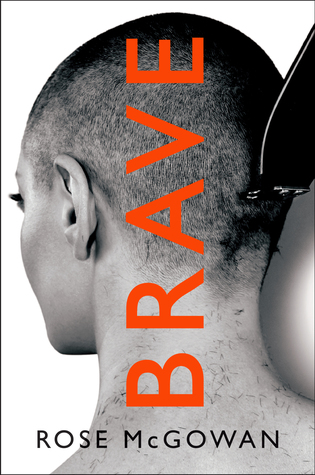
Review: Brave

35068683
Review for "Brave" by Rose McGowan (2018)
Rating: 3 out of 5 stars

Oh dear, three stars here. And that’s being generous.

I’ve always been a fan of Rose McGowan–I loved her in the films “Scream,” “Jawbreaker,” the tv show “Charmed,” and when I saw that she had written a book I decided to take a peep. Overall, it’s not a horrible book, it’s just one that espouses an obnoxious brand of feminism that I find problematic. I’ll get to this later though.

Rose gives a lot of details into her early life. She grew up in a commune with the Children of God, a religious cult that would be later known for its physical and sexual abuse of women and children. She manages to escape with her father and move to America, where she moves around often. She eventually reunites with her mother, whose boyfriends were abusive to Rose. She later auditions for an extra in a movie and her career as a Hollywood actress begins.

About midway through the book, McGowan details a meeting with a well-known movie industry executive who sexually abuses her. She never names the exec but we know she’s obviously talking about Harvey Weinstein. She also talks about her relationship with Marilyn Manson, whom she started dating because, in her words, he was a really “sweet” guy. Fair enough, I thought. I never fell for his contrived, shock-rock bs either.

Anyway, toward the last quarter of the book, McGowan spends a great deal of time dishing on her relationship with another famous film director known as “RR” (obviously Robert Rodriguez). She characterizes him as an emotionally abusive man who allowed her to be seriously injured on a movie set, among other bad things. After this she lectures us on and on about cults, groupthink, the virtues of #RoseArmy (her social media followers who can’t get enough of her), why men continue to abuse women, etc. When she started to plug some EDM music album she’d created, I stopped reading. Zzzz.

Which brings me back to Rose’s “feminist” problem. I place “feminist” in quotes because before this book came out, Rose has been noted on the record multiple times with negative statements about trans women, commenting that “they don’t live in this world as women.” This is false. It’s also terribly ignorant. Trans women are raped, discriminated against, murdered, abused, and beaten quite often–exactly because they do live as women. Fortunately, Rose does not get to decide who is and isn’t a woman. It’s also exactly why I, as a feminist myself, can’t embrace her exclusionary brand of “feminism,” which seems to privilege being straight and cisgendered above all else.

So I’m giving this three stars. I like to think I’m a person who can separate the person from the book, but both of these had issues. Meh…

Review: Lockdown on Rikers: Shocking Stories of Abuse and Injustice at New York’s Notorious Jail

Skipping Top Ten Tuesday again…I’ve got a backlog of reviews, so enjoy!

23848584
Review for "Lockdown on Rikers" by Mary E. Buser (2015)

Rating: 2 out of 5 stars
I went into this book based solely on its title, thinking it would be a critique of one of the largest and most dangerous prisons in America, the notorious Rikers Island jail complex located in New York City. The author spent time as a mental health therapist on the Island, a site of continuous controversy over its bureaucracy, officer corruption, violence, and the inhumane treatment of inmates. I also thought that this book would discuss solutions on what we could do as a society to reform jails and prisons. With both of these things in mind, I had high hopes for this book. However, this book does none of those things. What you get here is a therapist-in-training’s daily account of her interactions with inmates and her frustration with system bureaucracy and its treatment of mentally ill inmates.

I certainly understand Ms. Buser’s point in writing her story. It is a fact that many jail and prison inmates are mentally ill, and should be getting treatment and care for their conditions instead of jail time. However, this story is not particularly new or unique. We know that prisons aren’t good places for the mentally ill, and there’s been numerous exposes already written and filmed on this subject. While I commend the author for staying so long on this job and her compassion for the inmates, I am a bit disappointed that the focus of this book wasn’t more solution-based. If jail isn’t the place for the mentally ill and locking them in asylums aren’t either, then what, according to her professional opinion, is? Ms. Buser never tells us and stops far ahead of offering any kind of insight into this problem. Also disheartening is that the events here took place in the 90s, yet she is telling this story over 20 years later (this book was published in 2015). Wouldn’t this story have had much more of an impact 20 years ago? She does write an update of sorts in the epilogue, telling us very generally that “abuse on Rikers continues” but she cites few examples to back up this point.

The writing here is nothing special. I wouldn’t be surprised if the author took her therapy notes, copied them, and reconstructed it as the dialogue and events that you read about here. Overall, this is a very underwhelming story that could have been a lot more, had new insights been presented.

Review: Hand to Mouth: Living in Bootstrap America

21944886

Review for "Hand to Mouth: Living in Bootstrap America" by Linda Tirado (2014) 
Rating: 1 out of 5 stars

Ladies and gentlemen: this is a long review. I also have a potty mouth. Don’t say I didn’t warn you.

I wanted to read this book all the way through but I just couldn’t. I did finish it (thank God it’s short), but skimmed through most of it. I’ve never read a book in which the author’s tone is so negative, angry to the point where the arguments they are attempting to make are almost laughable because its obvious that they’re affected by their emotions. I got this over as quickly as possible.

Linda Tirado was an average “poor” person on the internet one evening when she came across a message board where a poster asked why poor people make bad choices (smoking, drinking, having children they cannot afford). She responded to the poster in a strongly-worded diatribe on why life is hard for poor people. Her post went viral and apparently she started a GoFundMe account and raised $60k. She promptly went on a Vegas vacation got herself a book deal.

In “Hand to Mouth,” Tirado takes us on a kind of “tour” of what it means to be poor. In the introduction, she breaks down poverty as “when a quarter is a miracle,” poor as “when a dollar is a miracle,” working class as “being broke, but in a place that’s not broke down,” and “middle class” as “being able to own some toys and to live in a nice place–no leased furniture.” “Rich,” according to Tirado, is anything above this.

[Pause]

From this page forward I knew that this individual was completely insane, but I decided to give her a chance.

Anyway, I call BS on this book for the following reasons:

— Despite the “poor-middle class-working class-poverty” distinction Tirado makes in the intro, she spends the entire book only talking about two types of people–rich and poor. If she’s just going to speak in a dichotomy, then her definitions are meaningless, because by doing so everyone who is not rich is, in her own view, “poor.” In applying the term “poor” to such a large swath of the population, she falsely attributes the same attitudes she has to everyone who is not rich. This is a classic logical fallacy. It is also simply not true, and it permeates the whole book.

— Tirado was going to college, but admits that she dropped out because, financially, she “didn’t think it would amount to anything.” While I’m not one of those snooty folk who believe college is for everyone (it’s not), I am curious to why the author did this with no apparent backup plan for a career. She also does not bother to learn a marketable trade or skill (i.e., paralegal, nursing, auto mechanic) in the place of college. Instead, after dropping out, she complains to us about working a series of low paying jobs that she hates. With no advanced degree or training, how then, can she expect better than low-paying work? Does she seriously expect, by stroke of luck, to land a job making $25 an hour despite not having demonstrated any kind of skill to do it? I’m a bit confused with her logic here.

— Tirado also admits that she was mediocre at several of the jobs she’s held, even screaming at her boss once because she was stressed and has “anger issues.” Putting anger issues aside, I am not sure what “being poor” has to do with simply being a bad employee. The “poverty” she’s referring to here seems to be one of the spirit.

— The author also attributes every unfortunate thing in her life to “poor” financial circumstances. Her lawn is shitty because she can’t pay someone to fix it. There’s tires in her grass because she can’t pay someone to haul them away. She can’t land a nice secretarial job because she’s poor and not pretty. She doesn’t want to open a bank account because they take a monthly fee, and she’s poor. There’s roaches at her house because, well, she’s poor. At some point you wonder where a sense of personal responsibility sets in, or the strength and amazing resilience of people like my grandparents (who, trust me, were dirt poor, Black, and living on a cotton field in the Mississippi Delta) and still managed to keep a clean house, a nice lawn, arrive on time to maintain stable jobs, and raise 10 law-abiding children in the process. Yes poor people are poor, but they still thrive. They find meaning in their lives, they get out of bed in the morning and yes, they manage to keep up a decent looking lawn. Fuck that.

— Makes no point at all about race and/or privilege. Despite how “poor” Tirado claims to be, her being White still gives her a privileged existence over many minorities who could write this same story. At least she doesn’t live in the projects, or live in a violent, gang-infested neighborhood. At least she speaks English. At least she is a documented U.S. citizen, and doesn’t have to deal with the fear of being deported every time she leaves her house. At least her and her husband don’t have a juvenile criminal record which would prevent gainful employment. At least she doesn’t have a physical disability or a severe mental illness that completely prevents her employment. I could go on and on, yet she mentions nothing of the fact that even she has it a lot better than some because of the systemic racism and discrimination that privileges Whites and able-bodied individuals over minorities.

Now Tirado does make some points that I agree with:
— Yes, universal health care is needed.
— Yes, the myth of meritocracy (the idea that anyone can be rich, all they have to do is try hard; as well as the idea that if one is not rich, they did not try hard enough) is very real and is still very much bullshit.
— No, we shouldn’t judge poor people’s decisions to have children. We may not like the fact that a poor woman has more kids than we’d prefer, but that’s not my decision to make.
— I also agree that poor people aren’t the only ones who get hand outs from the government (bail outs and corporate tax cuts are the wealthy person’s welfare).
— No, rich people should not look down upon people in service industries (cooks, washers, retail workers, food service).

But this book is simply too angry, too simplistic, and far too emotional in its tone to be taken seriously. I don’t advise reading it.

Review: Hell is a Very Small Place

25159286

Review for "Hell is a Very Small Place: Voices from Solitary Confinement" by Jean Casella, James Ridgeway, & Sarah Shourd (2016)

Rating: 4 out of 5 stars

As an educator I’ve always been interested in the criminal justice system–how so many people get caught up it, how they survive there, and of course, how they can stay out. This book is a collection of essays about the subject of solitary confinement, otherwise known as administrative segregation (ad segs), special housing units (SHUs), and various other names depending on the state and institution responsible for their use. Regardless it’s all the same–23 or 24 hours a day in a small cell alone, often with no books, tv or radios, communication with outside people, papers to write with, or any form of stimulation other than the concrete walls. It is such a mind numbing and soul crushing experience that the UN has declared it torture and countless doctors and mental health experts have denounced its use. Yet, it continues on an unprecedented level in our nation’s jails and prisons.

There’s a really good historical perspective on solitary confinement in the U.S. in the beginning of the book. Solitary confinement was used widely in the 1800’s and then abandoned due to its terrifying psychological effects. In the 1970’s, the practice was picked up again, mostly due to prison overcrowding, lack of educational and training programs, higher levels of violence, etc. The essays in this volume are particularly powerful, all of them either from people currently in solitary who have been there for long periods of time (20 years or more) or from people who are now free individuals, living with the psychological effects of this practice. The last section is a series of articles by experts, all of which condemn the practice and offer solutions.

It is easy to dismiss this book and the issues it brings up with the Trump-era view that criminals are terrible people who belong in prison. It’s even easier to say that these terrible people deserve punishment on top of the punishment they’ve already received for not following the rules. This is simply not true. Many of the people who are sent to solitary are sent there for non-violent offenses, sometimes for something as simple as “possessing too many postage stamps,” “associating with known gang members” (California), or in New York state, for “wearing shower shoes outside of the shower” or “using profanity.” Time in the SHU is usually given by prison officials and the prisoner often has no right to a defense. And the punishments can be as long as the officials deem necessary–weeks, months, even years. Or, in some cases, life.

I definitely recommend this book. Despite what we think of the people in the correctional system, the fact remains that many of these “terrible” people will get out–someday. They will live next to us and share our social spaces. The question becomes one of whether we would prefer someone who’s been rehabilitated with kindness or someone who’s been locked in a cage like an animal. I personally prefer the former.

This is a great book. Read it!