Review: The Hunger

30285766
Review for "The Hunger" by Alma Katsu (2018)

Rating: 4 out of 5 stars

First of all, I have to admit that frontier-sy stories have always appealed to me. Like many kids, I grew up reading “Little House on the Prairie” books, stories about Daniel Boone, and playing “The Oregon Trail” in school. “The Hunger” has got all of that and more in this retelling of the infamous Donner party.

In April 1846, a group of settlers left Independence, Missouri headed for a better life in California. The party was led by George Donner and his brother, Jacob. For the first several months, they followed a well established wagon trail, The California Trail, and reached Fort Laramie, Wyoming without incident. There, they took the advice of a trail guide who suggested that he knew of a quicker route. This route proved treacherous and hard to navigate, and the settlers wasted much-needed time chopping their way through dense forests and idling through deserts to get to the other side. They reached the Sierra Nevada mountains late in the year, and became trapped by snow. After killing all of their oxen and horses, they ran out of food. Those who survived the famine ate the bodies of those who died in order to survive. In the end, only half of the original group of settlers arrived in California.

Anywho, this is what history tells us what happened to the Donner party. “The Hunger” fictionalizes this account and gives you a much more terrifying version of the journey. In Katsu’s version, the na’it, or the hunger, is a contagion that causes men to become monsters and cannibalize one another.

This book is strongly character based. There is no romanticizing of historical figures, they are realistically portrayed as flawed, people with secrets. I wouldn’t call this a ‘scary’ book per se, but the tone is definitely a creepy one. People disappear, animals are attacked, and bodies are discovered, picked clean of flesh. The horror took a while to build as the settlers realize that not only are they running out of supplies and hope, but that they are being hunted by an unseen force.

This is an easy 4 stars for me. This book is definitely not one to miss. A blurb on the author’s website reveals that the film rights have been purchased for this book, so I look forward to seeing this on the big screen soon.

Review: The Grip of It

31574739

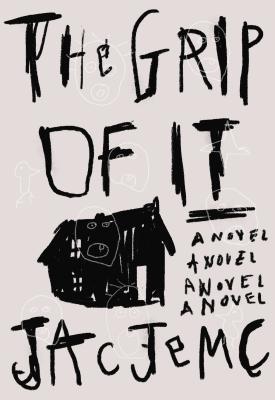
Review for "The Grip of It" by Jac Jemc (2017)

Rating: 2.5 out of 5 stars

This book is the cliche of all cliches: the Haunted House. Of course I was aware of this before proceeding, because who knows, perhaps there was Something New in these pages, a grand twist on The Oldest Plot Known to Man. Needless to say, I was grandly disappointed. Not only is there nothing added to this classic genre that’s worthy of note, there’s really nothing here at all.

James and Julie are a pair of married yuppies who move out of the city and into the perfect country house. There’s a small beach nearby, room for a garden, surrounded by quiet woods, and to top it all off–the house is practically a steal. Immediately after they move in they notice strange things–ominous breathing sounds, secret passageways, child-like drawings on the walls, an old journal with indecipherable writing. Julie develops strange bruises all over her body. Their creepy old man neighbor can’t stop watching them from across the street. I have to admit that I did get swept up in the weirdness of this tale, because the occurrences are never really explained. Are they really experiencing something supernatural? Or is it just a dream?

But anyway, that’s where the enjoyment of this book ended. The story is told in short, alternating chapters of the POVs of Julie and James. There is very little discernible difference between the voices of the two. There were many times where I had to stop, flip back a few pages, and figure out who was speaking. There are also long passages where the characters’ actions run on and on and nothing’s really gained as far as knowledge to what’s going on.

And oh yeah, the writing…I didn’t like that either. The tone here was too objective, too matter of fact, and far too emotionally detached. There’s nothing inherently wrong with this kind of storytelling, but I don’t think it fit this narrative. There are no real thoughts or emotions given with either character, it’s just a kinda hmmm…there’s drawings on the wall we didn’t put there and the other’s nod of agreement. It’s weird.

The horror here is rather PG too. At no point in this book was I even remotely scared (pronunciation: “scurred”). I was just weirded out, counting the pages left, and wondering when it would be over with.

Review: When My Heart Joins the Thousand

35098416

Review for "When My Heart Joins the Thousand" by A.J. Steiger (2018)
Rating: 4 out of 5 stars

I really really liked this book.

Alvie Fitz is a 17-year-old girl with Asperger’s syndrome. When the book begins we learn that her mother has died several years before, and after a series of unsuccessful stays in residential care centers and foster family placements, Alvie now lives alone in her own apartment and works a stable job at a local zoo. She is checked on weekly by a psychologist, Dr. Bernstein, in preparation for her request to be legally emancipated. Typical of people with Asperger’s, Alvie has above-average intelligence but difficulty with the most basic of social interactions. She has an obsessive interest in animals, scientific facts, and the book Watership Down (where the title of the novel is from). She also suffers from anxiety and depression, which she copes with by turning to animals and avoiding people altogether.

At its core, this is a love story. Despite Alvie’s difficulties bonding with other people, she falls for Stanley, a very shy college student also with a disability. Life has not been kind to either of them, yet what they find together is extraordinary.

I have to admit that I struggled with Alvie through a lot of this book. During certain scenes where she attempts to interact with people I found myself shaking my head in frustration, sighing. Her difficulties interacting with people are extreme, and even though I was aware of how large her hurdles would be, I don’t think I was prepared for just how much of her motivations, reactions, and thoughts are due to Asperger’s. Stanley has an incredible amount of patience with Alvie, even though her efforts to be “normal” at times seemed like acts of self sabotage.

I think this book really challenged me to move past my ableism and develop empathy, as well as understand what life is like for people with autism. The author has incredible insight into this disability, and although I’ve read many books about people with them, this one really moved me.

Do read this book.

Review: Tyler Johnson Was Here

35604682
Review for "Tyler Johnson Was Here" by Jay Coles (2018)
Rating: 3 out of 5 stars

From the moment I saw this book I knew I had to have it. I’m always down for YA books by and about people of color that are overtly political in nature, as well as books that challenge young people to think critically social issues. And yes, THAT cover. Gor-juss…

“Tyler Johnson Was Here” is just such a book that is destined to provoke conversation, particularly on police killings and the role of Black Lives Matter movement. The novel centers on the lives of twins, Tyler and Marvin, growing up in the fictional town of Sterling Point. The twins are raised by their single mother while their father, who is incarcerated, makes frequent appearances throughout the book in the form of letters written to Marvin.

Even though this is the story of twins, the story is told through Marvin, the more grounded of the two. Marvin hangs out with his friends Guillermo and Ivy, makes decent grades, watches reruns of “A Different World” and hopes to get into MIT. Tyler is the more restless twin, directing his energies toward social pursuits and hanging with a tough crowd. Much to Marvin’s dismay, he notices a rift between him and his brother and cannot convince Tyler to stay away from trouble. One night, after a party thrown by a local drug dealer, Tyler does not return home. Several days later, he is found deceased. A leaked video reveals that Tyler was unarmed when he was shot by police. As Marvin deals with his grief and anger over his brother’s death, he turns his efforts to protest and making sure that his brother’s memory isn’t forgotten.

What’s wrong with this book? A lot. Hell, I’m just going to bullet point here:

— The pacing of this novel was a problem for me. We’re told on the front flap of the book that Tyler is going to disappear and later be discovered dead. However, the characters do not discover Tyler’s death until well over halfway into the book. I felt as if the author could have skipped the ‘missing’ part, because it slowed the pace of the novel significantly. You’re literally just sitting around waiting for the inevitable for the first 150 pages. That’s not fun.

— Characterization fell a bit flat in this book as well. Even though I felt I understood Tyler, when I finished this I realized that I really didn’t. The limitations of a single perspective (Marvin’s) is apparent here. We know he was a good kid who got mixed up in a troubled crowd, but we’re never told the exact nature of his last days, his dealings with his friends. The author spends a great deal of time making the point that although Tyler may have been troubled, this was no reason for the manner of his death. While this is true, I think this point would not have required so much emphasis with more character-building as far as Tyler was concerned.

— There’s also a side character that goes absolutely nowhere: an aunt who’s a police officer, mentioned several times in the novel, who’s “always on the phone” with Marvin and Tyler’s mom. Considering that the police are the bad guys here who murdered Tyler and all of law enforcement in this book is portrayed as the epitome of evil, a relative of Marvin’s who happens to be a cop may have added to the complexity of this book. But that’s never explored. Weird.

— Marvin meets a girl, Faith, through his attempts to discover his brother’s whereabouts after the fateful night at the party. They eventually become involved with one another, but I never got a sense of their chemistry, her relevance to the story beyond the standard YA romance requirement, or really why she is in the book at all.

— The multitude of references to the tv show “A Different World”: Marvin is obsessed with this show, viewing it as a way to “understand” diverse Black characters. I’m not sure why this is, especially when there are more modern (and diverse!) shows with Black characters that could have been referenced here. I’m an 80’s baby, so I watched “A Different World” as a teenager (it went off the air in 1993, right as I went into high school). A teenager in 2018 still fixated on characters from a show from well over 25 years ago seemed strange, kinda like a kid who watches a dated show like “Hogan’s Heroes” expecting to find enlightenment. Yikes.

Comparisons to “The Hate U Give” are inevitable (both have Black main characters, both are about the subject of police violence), and if I had to pick between the two I’d say in a heartbeat that “The Hate U Give” is the much better book. Despite my criticisms, however, I won’t go lower than 3 stars for “Tyler Johnson Was Here.” I also wholeheartedly recommend this to other people to read. Even though TJWH has problems in its execution, I respect what it does accomplish successfully, and that’s place the narrative surrounding police violence in the hands of Black youth, within the context of their own language and culture. The value of those things in and of itself is immeasurable, respectable, and deserves notice.

And yes, the cover. It’s quite beautiful.

*sigh*

Review: Sometimes I Lie

36112959

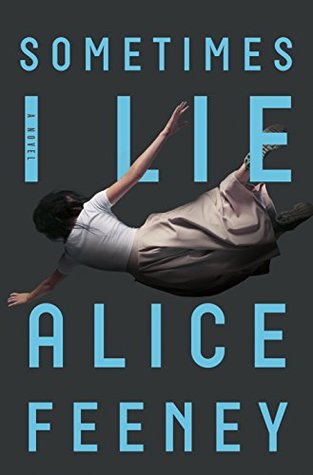
Review for "Sometimes I Lie" by Alice Feeney (2018)

Rating: 4 out of 5 stars

Ahhh…man. THIS book.

To tell you anything specific about the plot or the characters of this novel is to ruin it–so I won’t. It’s gotten really good reviews online, and this time I must say that the hype is well deserved. There is a blurb on the author’s website that this book has been green lit for television, which is cool because as I read this I could totally picture this on Netflix or Hulu or something. Bingeable TV. There’s also a sequel being written, which is set to come out in 2019.

So here’s the basic “basics”: When the book begins, Amber, the main character, is in a coma. She confesses immediately that she tells lies, and that her husband doesn’t love her. She hears everything going on around her (her husband and her sister’s visits, for instance) though she doesn’t remember the event that landed her in the coma. She eventually discovers that she’s been in a car accident.

This book is essentially split into three parts that are narrated interchangeably: now (Amber’s observations while in her lucid, comatose state), then (events leading up to the week before the accident), and before (childhood diary entries). Throughout much of the novel, I have to admit that I was completely in the dark about what each strand of the narrative had to do with the other. Gradually, however, the connections came into focus and lemme tell ya…things (and people!) were not what they seemed. There are several twists here, and even though I’m not a “twist-a-plot” lovin’ kinda person, it worked perfectly here.

As I finished this book I immediately realized that it plays with two very common tropes–the unreliable narrator and the complex nature of female friendships. It’s really nothing new in fiction, but both of these things are mashed up here in a really hip, interesting way.

I loved this book. If you do read it, try to do so in as few sittings as possible–I guarantee it’s better that way.

[A digital copy of this book was provided to me by the publisher, Flatiron Books, as well as NetGalley in exchange for an honest review.]

Top Ten Tuesday: Books that Take Place in Another Country

For this Top Ten Tuesday I had to go back in my mental filing cabinet for a moment. I try to keep my reading choices diverse–plenty of books about people of different races, ages, religions, cultures, social backgrounds, ethnicities, sexual identities, dis/abled persons. I’ve ready plenty of books ABOUT and BY people from countries outside the U.S., but how many have I read that take place IN another country, where the entire context of the narrative is outside of the U.S.?

So in order to be consistent with my interpretation of this topic, here’s the criteria I followed:

  • The book had to take place entirely in another country. America could not be a point of reference at any time (i.e., immigration to or from the U.S. was a no-no)
  • The book could not be about Americans in countries outside the U.S. (that would make it an American experience, wouldn’t it?)
  • The book could not take place in another industrialized, European influenced nation that’s kinda like the U.S. (i.e., Canada, Britain)
  • The country could not be unnamed. There are a lot of books that have foreign settings, but for whatever artistic reason, the author does not specifically name the country where the action takes place. For example, “Beasts of No Nation” is framed in this way (the setting is understood to be Africa, but the actual name of the country is never given).
  • The country could not be fictional. I love Wakanda too, but because it technically does not exist, it wouldn’t count. I know, I know… (*frowns*)
  1. Prayers for the Stolen, Jennifer Clement. Locale: Mexico. Didn’t really care for this book, but it’s a very interesting story set in the Mexican countryside about a girl who lives in fear of kidnapping by narco-traffickers.
  2. Golden Boy, Tara Sullivan. Locale: Tanzania. Very informative, well written YA story about a young boy with albinism. Due to cultural beliefs, he is shunned by his community and sought out by shamans for slaughter for his body parts’ use in special potions. There’s a good ending here, fortunately. I loved this story!
  3. Hold Tight, Don’t Let Go, Laura Rose Wagner. Locale: Haiti. Story about two cousins, raised as sisters, who lose their family in the Haitian earthquake of 2010 and work to survive the next day, and the day after that. I cried when I read this. (*sigh*)
  4. Things We Lost in the Fire, Mariana Enriquez. Locale: Argentina. Very macabre, but well written short stories that take place after Argentina’s “Dirty War.”
  5. Stay With Me, Adebayo Ayobami. Locale: Nigeria. An interesting novel about the life of a middle-class Nigerian couple who cannot bear children. Lots of twists and turns here, along with cultural expectations and a whole lotta drama.
  6. Lotus, Lijia Zhang. Locale: China. Novel set in modern-day China about a young woman who, rather than go home and face shame for losing her factory job, chooses a life as a sex worker. I really liked this book.
  7. Men Without Women, Haruki Murakami. Locale: Japan. Insightful set of short stories about men who, at some time or another, either could not or would not have a successful relationship with a woman. I did the audio version of this and loved it.
  8. Every Falling Star: The True Story of How I Survived and Escaped North Korea. Locale: North Korea. Great YA nonfiction book about a young boy’s life in North Korea and eventual escape to South Korea.
  9. The Vegetarian, Han Kang. Locale: South Korea. Beautiful book about a young woman’s choice to become a vegetarian. Things don’t go well for her. There’s a whole lot more to this book though, and mannnn…it’s good.
  10. The Story of a Brief Marriage, Anuk Arudpragasam. Locale: Sri Lanka. Short novel about a young man and woman’s marriage during the Sri Lankan civil war. Very excessively detailed, but it’s a great read if you’re patient enough.


Review: Speak No Evil

35396904
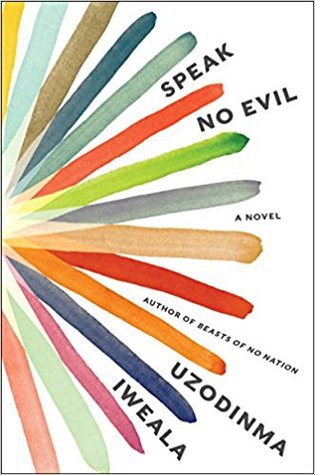
Review for "Speak No Evil" by Uzodinma Iweala (2018)
Rating: 2 out of 5 stars

Nah, I didn’t like this book. Thankfully it’s a short one (about 200 pages), so I was able to muster the courage to get through it quickly without chalking this one up as a DNF.

“Speak No Evil” is the story of Niru, the first generation, American-born son of conservative, upper class Nigerian parents. Although he lives a life of material wealth, he cannot escape the realities that cause him considerable distress: impossibly high standards set by a successful older brother, police harassment due to driving while Black, the racist microaggressions by White classmates at the prep school he attends. The one person he relates to is Meredith, a classmate to whom he confesses that he is gay. His father discovers his secret and, after a violent confrontation, takes his son to Nigeria to visit a special preacher to “pray the gay” out of him. Niru returns to school but his spirit is even more troubled, restless, and confused. He is a shadow of his former self.

The story doesn’t end there. Niru goes continues struggling with his sexuality before meeting a violent end, the circumstances of which did not seem to go with the premise of the book. It is obvious that the author wanted to prove a point about race with Niru’s demise, but I dunno…this kind of “switch” seemed uncalled for. There is also a shift in narrative–when Niru stops talking, Meredith steps in and ends the book. I didn’t like this either. I think he could have stayed with the original voice. The inclusion of Meredith’s voice seemed rather sloppy to me, kinda like he originally drafted two novels and put them together in the same book.

Strangely, I also found this book terribly hard to read. I shouldn’t have, though. Iweala writes this book in the same way he did his last, “Beasts of No Nation.” There is no speech punctuation in that book either, whole conversations appear within huge blocks of text. Though the lack of punctuation didn’t bother me in BoNN, for some reason, it bothered me immensely here. Perhaps it is because there was more description and internal thoughts with “Beasts of No Nation,” less dialogue. I don’t know. Hmmm.

I won’t give this book one star, I respect Iweala greatly as a writer. I just don’t think this particular book was my cup of tea.

Review: An American Marriage

33590210
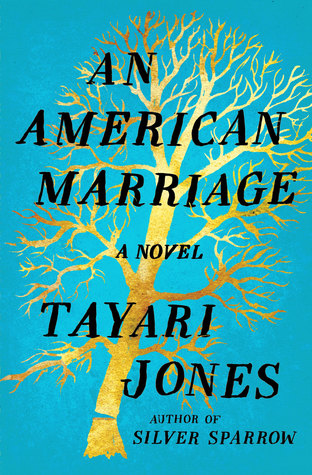
Review for "An American Marriage" by Tayari Jones (2018)
Rating: 4 out of 5 stars

Because there’s such a long waiting list to check out this book at my city’s library, I ended up getting a hold of the audiobook version of this through Hoopla. Ultimately I’m glad I did that, because I thoroughly enjoyed the audio version. The two actors reading the story breathe a kind of life into it that I don’t think I would have experienced had I chosen to read it.

“An American Marriage” is the story of Celestial and Roy, a newly married couple residing in Atlanta. For all intents and purposes, they are a mismatch: Celestial is well-grounded and from an urban upper class family; while Roy has a roaming eye for trouble and is from a rural working class upbringing. Despite their differences, they are happy. The couple is only a year and a half into their marriage when Roy is falsely arrested for rape and sentenced to 12 years in prison. From here the novel goes into epistolary form, with the separated couple writing letters back and forth to one other. Roy finds himself adjusting to prison life, while Celestial makes the most of her loneliness and despair in Roy’s absence by creating dolls with her husband’s likeness. She also finds success as an entrepreneur, traveling the country and selling her dolls.

Eventually, Roy is released from prison after 5 and a half years due to a technicality with his trial. He returns home, but both Celestial and Roy find that the terrain of their marriage, as well as who they are as people, have vastly changed. I won’t give away the rest of the story, but I will say that Roy’s release from prison happens early on, at about 35% into the book. There is literally an entire story line after this event that gets very messy for both Celestial and Roy, and not in a good way.

This novel is not a quick read. It’s a slow burn of emotion, with a marriage disintegrating at the center. Both the motives and lives of Roy and Celestial are explored in detail, both characters take turns being both right and wrong.

This book is a solid 4 stars. I can definitely understand why it’s getting the press it’s getting, because it’s definitely well deserved. This one’s a triumph, definitely read it!

Review: Gun Love

35758074
Review for "Gun Love" by Jennifer Clement (2018)
Rating: 2 out of 5 stars

Meh, didn’t really like this book.

“Gun Love” is the story of Pearl France, a 14-year-old girl living with her mother in a parked car in a derelict Florida trailer park. Intriguing characters abound in and about the Indian Waters Trailer Park: Pearl’s best friend April May and her parents, Rose and Sergeant Bob, the clergyman of gun buy-backs, Pastor Rex, and Corazon, a Selena-loving, gun toting Mexican woman.

Pearl and her mother share a special bond until she forms a relationship with a mysterious man who hangs around the trailer park named Eli. I won’t tell you what happens specifically with this character for the purposes of this review, but I will say that after he comes into the novel (about 30% of the way in) the narrative begins to fall apart completely. Characters come and go after this point, and none of them are fleshed out enough to move the story along. I also skimmed the last 10% of this book, the events of which seemed totally pointless.

Overall, I liked the writing here but I think the plot could have been handled better.

[Note: I received a free digital copy of this book from the publisher, Hogarth Press, and NetGalley in exchange for an honest review.]

Review: A Land of Permanent Goodbyes

35082445
Review for "A Land of Permanent Goodbyes" by Atia Abawi (2018)

Rating: 3 out of 5 stars

This is a heartbreaking, modern day story about a young man named Tareq from Syria who loses his mother, several of his siblings, and his grandmother in the tragic bombing of his home during the Syrian war. He flees with his father and sister to his uncle’s home in Raqqa, though he soon discovers that it is not safe in this location either. Tareq eventually leaves Raqqa with his cousin and escapes to Turkey. However, due to the large amount of Syrian refugees like himself, there are few job opportunities available. Deciding to continue his journey into Europe to gain asylum, Tareq travels to Greece, hoping to gain some kind of sense of normalcy.

I liked the premise of this book but its execution was a firm ‘no’ for me. Though the story itself is extremely compelling, the author’s choice to go with an omniscient narrator, “Destiny,” was a strange one. “Destiny” interrupts the story often, giving us its thoughts on war, the human condition, people’s sufferings, insights on various unconnected character’s lives, etc. I didn’t like this. As a matter of fact, every single time “Destiny” began to narrate I found myself skimming pages and disengaging from the story. I feel there was no need for this kind of storytelling, Tareq’s story was certainly strong enough to maintain its own narration.

Also included in this story is a young Greek woman’s account of her interactions with Syrian refugees. Although she is connected to the events of the novel, the author’s choice to include her narration (in addition to “Destiny”) was odd as well. Other than a shallow representation, her account of the events were pointless and really seemed to serve no purpose other than to propagate a kind of ‘kind White savior’ trope.

When I got to the end of this, I noticed this was a YA book. This book is pretty graphic in its descriptions of war–there are descriptions of beheadings, executions, and other pretty harsh realities that a child is in for should they decide to read this. But as an educator, I don’t believe in censorship, so this is a very eye-opening and timely book.